

A Boerboel puppy, a teenager and a settled adult each need a different amount of movement, which is why timing is the question owners ask first. The answer is moderate in quantity but real in kind, and it shifts as the body and the mind mature.
Misjudge the balance toward too much and young joints take a pounding from hard running. Misjudge it toward too little and a bored, watchful dog starts inventing projects, usually involving your furniture. Judge it well and you share your home with a calm companion who settles easily indoors.
In this article, we'll go through the breed's true energy level, why puzzle work matters as much as walking, how limits change from puppy to adult to senior, and how to build a steady daily rhythm. We have trained this breed for many years, so the advice stays practical.
A Moderate-Energy Boerboel Is Not a Couch Mastiff
Giant dogs are often assumed to be slow, heavy sleepers who need a stroll to the corner and little else. The Boerboel does not fit that assumption. Their energy level scores 3 of 5, where 1 means couch potato and 5 means high energy, so they sit squarely in the middle. Moderate describes the volume of activity they need, not how much they care about taking part.
A second rating on the same breed profile shows why the distinction matters. Mental stimulation needs score 4 of 5, and the high end of that scale is reserved for dogs who want a task to keep them busy. Side by side, the numbers describe a dog who sleeps well after a sensible outing but still wants something to think about. A walk satisfies the body, and on its own it rarely satisfies the mind.
The breed's history supports the numbers. Boerboels are utilitarian South African farm dogs, described as having the structure, temperament and heart to work in the fields by day and then live as a trusted family companion. That is a dog made for long, varied days beside people, not for lying about between meals.
Because the breed is large, the common error is to read size as laziness. A capable, watchful dog with spare brainpower tends to make their own entertainment, and the usual results are.
Digging in the yard is common when they are left alone outside, away from the people they care about. Barking at every sound is another, since the breed scores 3 of 5 for barking and a bored dog has time to notice everything. Shadowing you from room to room is just as typical, because affection with family scores 5 of 5 and company is their favorite activity.
Plan for a moderate body and a busy mind.
Puzzle Work Counts as Much as Walking Exercise
Exercise for the body and exercise for the mind draw on different resources, and a Boerboel needs both every day. A leashed walk delivers movement, fresh smells and time with you. Puzzle work delivers problem-solving, focus and the satisfaction of earning a reward. Schedule it as a regular part of the day, not as a rainy-day backup.

Trainers call this category enrichment, meaning any activity that lets a dog use natural skills such as sniffing, searching and working things out. The breed's trainability scores 4 of 5, where 3 means agreeable and 5 means eager to please, so new tasks usually stick when rewards are clear. Cut rewards small and take them from the day's food allowance so they do not add up.
These games suit a moderate-energy dog because they cost the joints very little:
- Feed some meals from a puzzle feeder, a snuffle mat or a towel with kibble rolled inside, so a quick meal becomes a short search.
- Play find-it by hiding treats under cups or in cardboard boxes, starting easy so success comes fast, then making the hiding places harder.
- Teach a mat cue and practice it while someone walks past the door, which gives a watchful dog a calm job when visitors arrive.
- Fit in a few brief training sessions on cues your dog already knows, teach one new trick, and finish while they are still eager for more.
- Let the dog lead with their nose on a leashed sniff walk, using a cue that marks sniff time as different from walking time.
Loose-leash walking belongs on the list too, because it is a thinking task. If pulling continues after you stop, change direction and give praise and a treat when the dog comes along with you. The lesson is that a slack leash moves you forward and a tight one does not.
Build difficulty in small steps. A puzzle solved in seconds teaches little, and one that is never solved teaches frustration, so aim for a dog who succeeds after a short, visible effort. Raise the challenge only after several easy wins, and retire a game before the dog tires of it.
A short walk plus a good puzzle can settle a Boerboel better than a long walk alone.
Boerboel Puppy Exercise Limits Against Adult Stamina
Age is the largest variable in how much a Boerboel should do. Fixed minute counts differ between sources and between dogs, so it helps to think in stages instead of stopwatches. A heavy frame takes time to finish growing, and habits set in the early months carry into the adult. The contrast to hold onto is a growing body against a mature one.
The table below sets the stages side by side, using descriptions in place of fixed minutes.
| Stage | What to build | What to hold back |
|---|---|---|
| Young puppy | Short, frequent outings on level ground, sniffing, gentle play, handling practice and calm settling | Long walks, repeated jumping, fast stairs, rough play with larger dogs |
| Adolescent | Leashed walks lengthened gradually, training games, puzzle meals, foundation skills for later sports | Sustained hard running, repetitive fetch, sudden jumps in length or intensity |
| Settled adult | A steady daily routine of walks, brain work, play and optional sports | Weekend-only bursts and hard work in hot weather |
The Young Puppy
For a puppy, the aim is little and often. Short outings on level ground, plenty of sniffing, gentle play, handling practice and calm introductions to the world all count. Hard, repetitive impact does not: long forced walks, leaping on and off furniture, stairs taken at speed and endless ball chasing put the most strain on the least finished parts of the dog.
Handling practice is exercise for the future. Boerboels shown in competition are expected to allow examination, and the same skill makes vet visits easier. Ask your breeder and your veterinarian for age-specific limits, and keep regular vet visits so growth is checked as it happens.
The Teenage Stretch
Adolescence deserves its own note. The dog is bigger, stronger and often more confident, and may test the manners you built. Resist the urge to burn energy with hard running and spend it on training games, because mental effort tires a teenager without the joint load. Lengthen leashed walks gradually and let age, not size, set the pace.
A teenager who seems tireless is usually under-occupied rather than under-exercised. Build the habits now and the stamina follows later.
Agile Boerboel Movement, Not Endless Running
The Boerboel is described as the most agile of the molosser breeds, and they often enjoy obedience, rally, weight pull and agility. A molosser is a heavy, broad, mastiff-type dog, so it makes sense to think of their agility as short bursts of balanced power rather than long-distance running. The same guidance says never off leash, which is why every outing in this article happens on a leash or inside a secure space.
Agile does not mean built for distance. The breed standard describes the movement as powerful, purposeful, buoyant and fluent, with comfortable reach in front and rear. Those words describe balance and control, not lap running. Agility here means quick, balanced footwork and good body awareness, and you can train both at a walking pace.
These low-impact exercises build coordination without the pounding. Use them on a leash or in a fenced yard with you present:
- Walk slowly over low poles laid flat on the ground, so the dog learns to place their feet.
- Step onto a sturdy, non-slip platform and pause, then step off calmly on cue.
- Turn around cones or chairs in a figure eight at a walk, rewarding smooth, balanced turns.
- Hold a stand or a sit on a raised mat, which builds core control and patience together.
Hard running is the tempting alternative, because a large, muscular dog looks as if they would love it. Endless fetch, jogging beside a bike and long sprints load a heavy body again and again, and they teach very little. Check with your vet before adding jumping, weight pull or other heavy work.
Ask for control, not mileage.
Weekend Marathons Versus Steady Daily Exercise
A weekend marathon looks generous, because the dog gets a huge outing after a quiet week. It works against a moderate-energy breed, though. Cramming for an exam the night before produces a tired student and shaky results, and the body treats a sudden long hike the same way. Muscles and joints adapt to what they do regularly, so a heavy dog who does little on weekdays and a great deal on Saturday is the one most likely to end up sore.
There is a behavior cost as well. Battersea notes that dogs may react because they are worried, but sometimes because they are excited or frustrated. A dog wound up by a dull weekday and then overstimulated on a crowded trail has plenty of both. Getting along with other dogs scores only 2 of 5 for the breed, so a big outing in busy places can turn into pulling and lunging.
For scale, the PDSA says some breeds need one to two hours of daily activity at minimum, and working breeds considerably more. A moderate energy rating suggests most Boerboels sit below the top of that range, though dogs vary. What matters is spreading activity across the day, with sniffing, training and play counted alongside walking.
A steady day for a healthy adult can follow this order:
- Start with a calm leashed walk that includes some sniffing, followed by a meal from a puzzle feeder.
- Hold a short training session at midday, or a find-it game indoors if the weather is poor.
- Offer supervised play in a fenced yard, or take another quiet sniff walk, in the afternoon.
- Finish with mat work and a chew near the family, since the breed settles best close to their people.
Consistency, not the size of any one outing, is what a Boerboel's body and mind respond to.
Adult Exercise Needs Against Senior Slowdowns
Adulthood and old age ask different things of the same routine. The adult can carry the full daily rhythm, while the senior needs the same structure delivered more gently. Knowing which changes to make, and when, keeps a heavy dog comfortable and engaged for as long as possible.
The Settled Adult Routine
A mature Boerboel can handle the full rhythm described above, and this is the stage when sports such as obedience, rally and agility are most realistic, with your vet's go-ahead. Keep training regular even when the dog seems to know everything. Practiced cues give a watchful dog a calm way to respond when something new appears.
Company counts too. The breed is known for devotion to family and has also succeeded as a gentle therapy dog, so time near people is part of the routine and not a reward you add at the end.
What Changes in the Later Years
In later years the plan changes shape rather than ending. Walks become shorter and more frequent, sniffing takes a bigger share, and puzzle work carries more of the load because it costs the joints very little. Non-slip rugs on slick floors, a ramp for the car and a supportive bed help a heavy body move comfortably.
Regular vet visits matter more, not less, as the years pass. Mention these signs to your veterinarian instead of assuming they are only age.
Watch for stiffness after rest that takes longer to ease than it used to, and for slowing down or lagging behind on walks the dog once enjoyed. Reluctance to climb stairs, jump into the car or settle on a favorite spot is another sign worth mentioning.
Trade distance for variety, and the older dog stays interested in the day.
Where Boerboel Exercise Questions Lead Next
Once the daily rhythm is working, owners tend to ask a handful of follow-up questions, and each has its own article on the site:
- Which activities fit this breed's instincts once the basics are steady? Boerboel sports and jobs builds on the agility and obedience ideas above.
- How do walks and outings go around children, visitors and other dogs? Read about raising a Boerboel around kids, where leash manners and calm introductions come first.
- Why does a watchful dog bark or stiffen on walks, and what helps? The guide to guarding instinct at home explains the reasons and the management.
The thread through all of them is where this article began. A Boerboel is a moderate-energy dog with a mind that wants work, so the best plan is steady daily movement, careful limits while the body grows, and real mental effort every day. Meet those needs and the dog has little reason to look for an outlet of their own making.
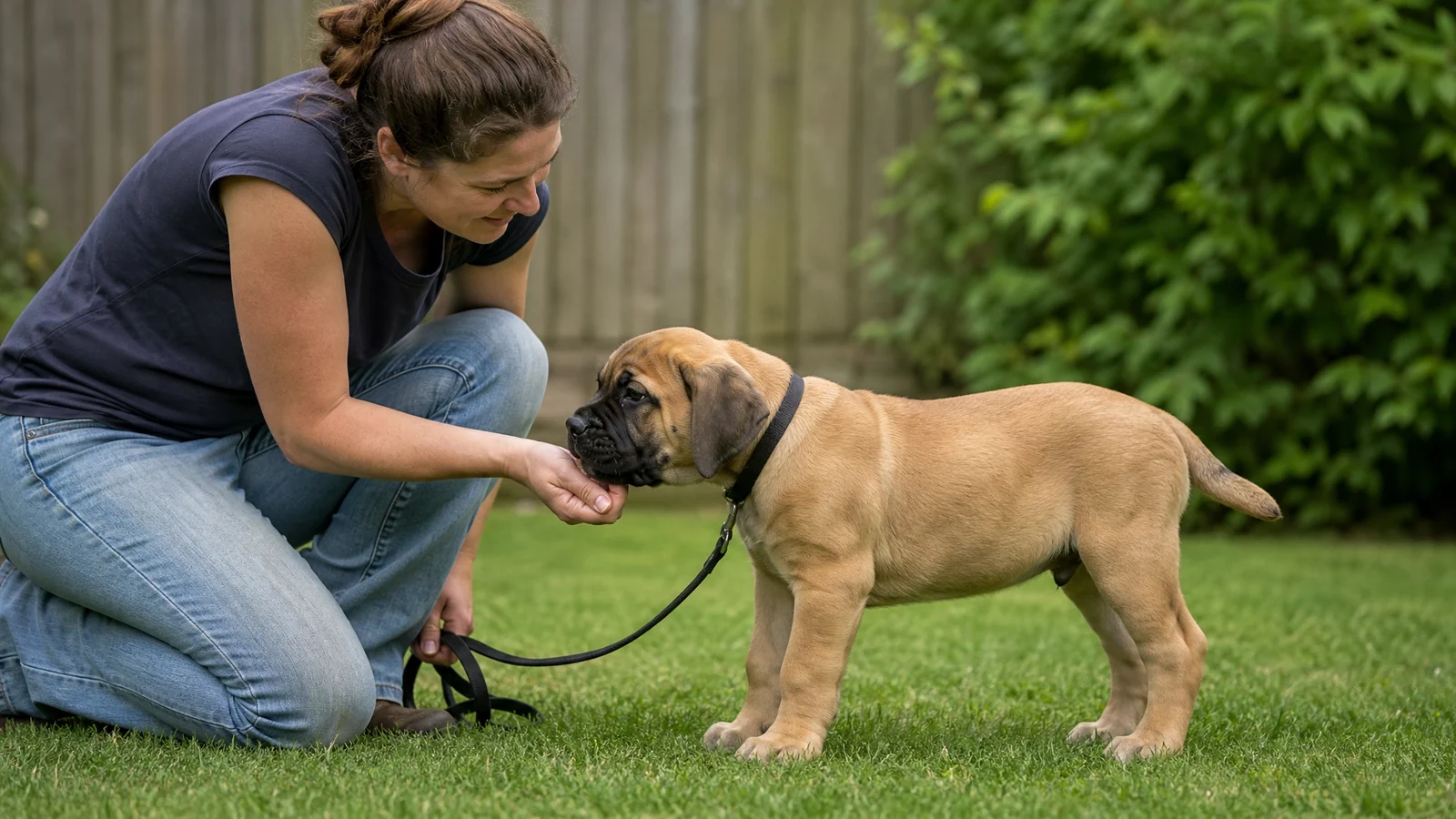 Training basicsHow to Potty Train a Boerboel Puppy
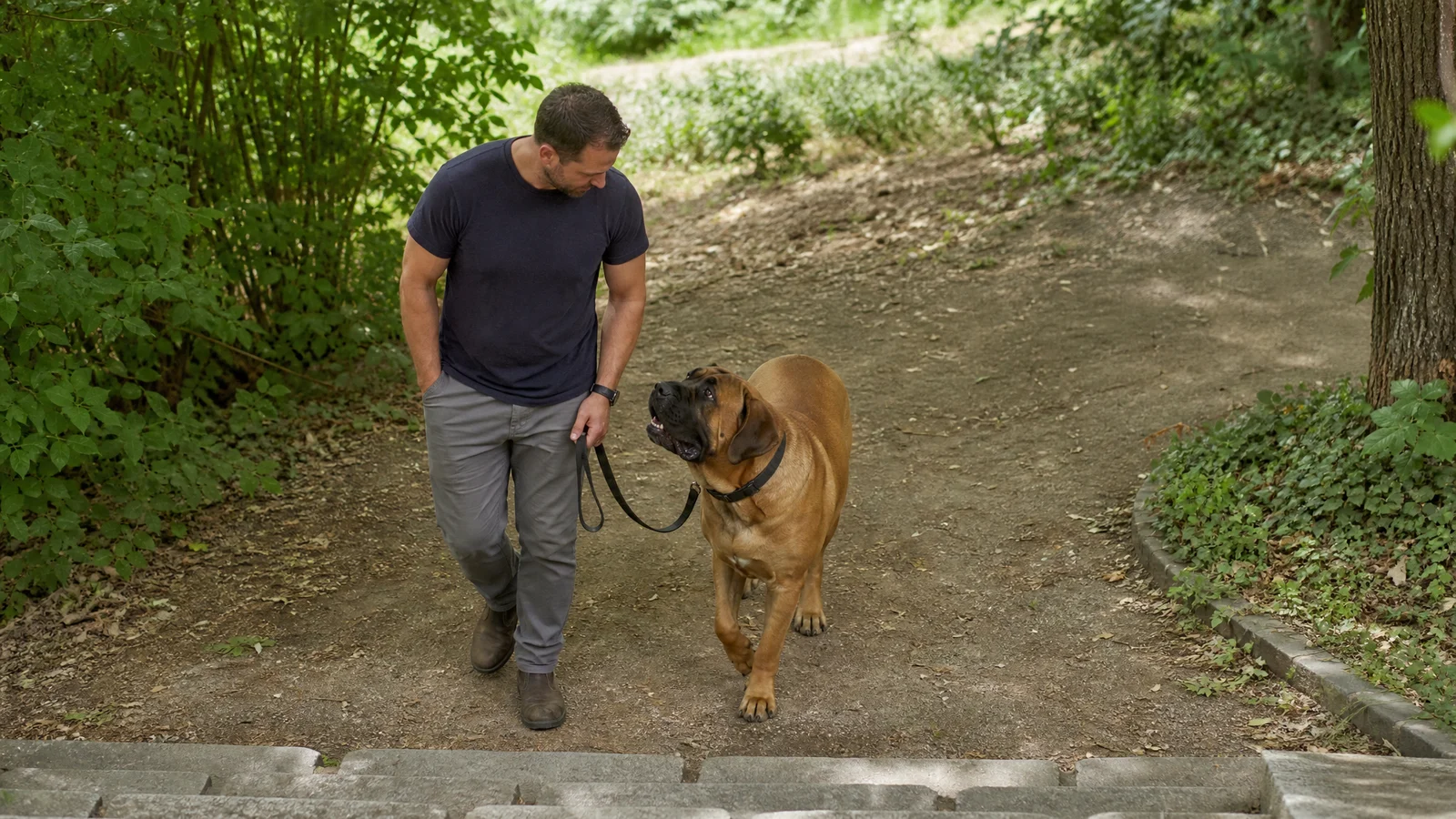 Training basicsLeash Training a Boerboel: Pulling, Lunging and Loose-Leash Walking
 BehaviorIs a Boerboel a Good Family Dog Around Kids and Other Dogs?