
A Boerboel does not need the most dramatic job available. They need an outlet that makes daily life calmer, gives their mind a clear problem to solve and leaves their body ready to move comfortably the next day.
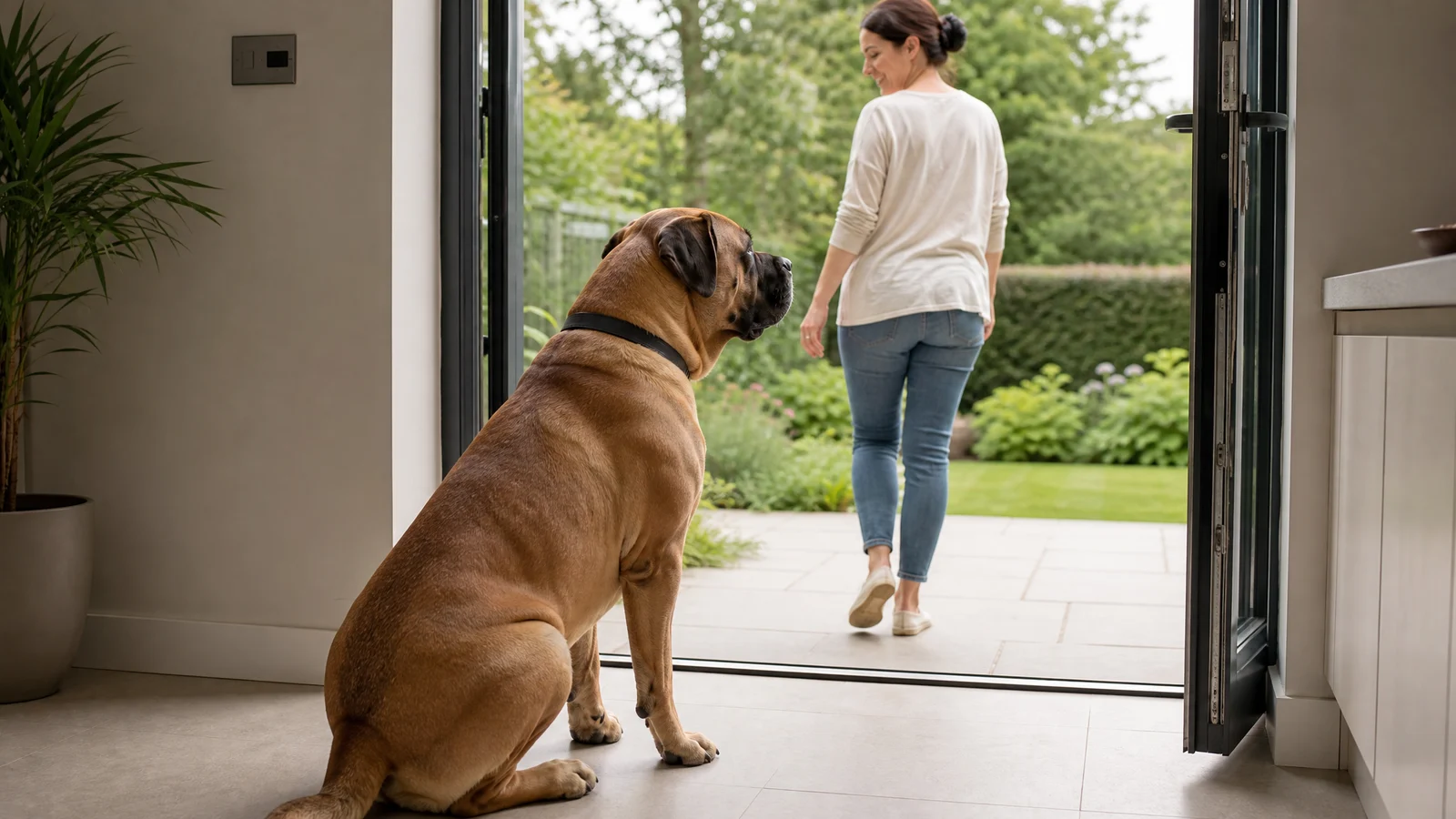
The breed's farm history can tempt people to chase intensity. In a companion home, useful work begins with ordinary participation: waiting at a door, finding a hidden treat, following a handling cue and settling after activity. Those habits turn strength and attention toward safe cooperation rather than toward deciding what the household needs.
This guide zooms from the home routine to sport category and venue fit, then closes in on recovery and movement detail. The aim is a sustainable activity that improves the dog beside you, not a title that looks impressive from a distance.
The Boerboel's Household Routine Comes First
A sport is an addition to a stable day, not a substitute for one. Before enrolling anywhere, look at whether your Boerboel can eat, rest, walk on leash and return to a calm state in a predictable rhythm. A dog who arrives already overexcited will not gain much from a busier setting.
The useful baseline includes reward-based manners and balanced exercise and brain games. It also includes quiet time near the family. The breed is strongly connected to household life, so an activity should support that relationship rather than keep the dog continually wound up.
Give simple home jobs before formal sports. Carrying no special risk, these tasks teach the pattern of hearing a cue, making a choice and settling afterward:
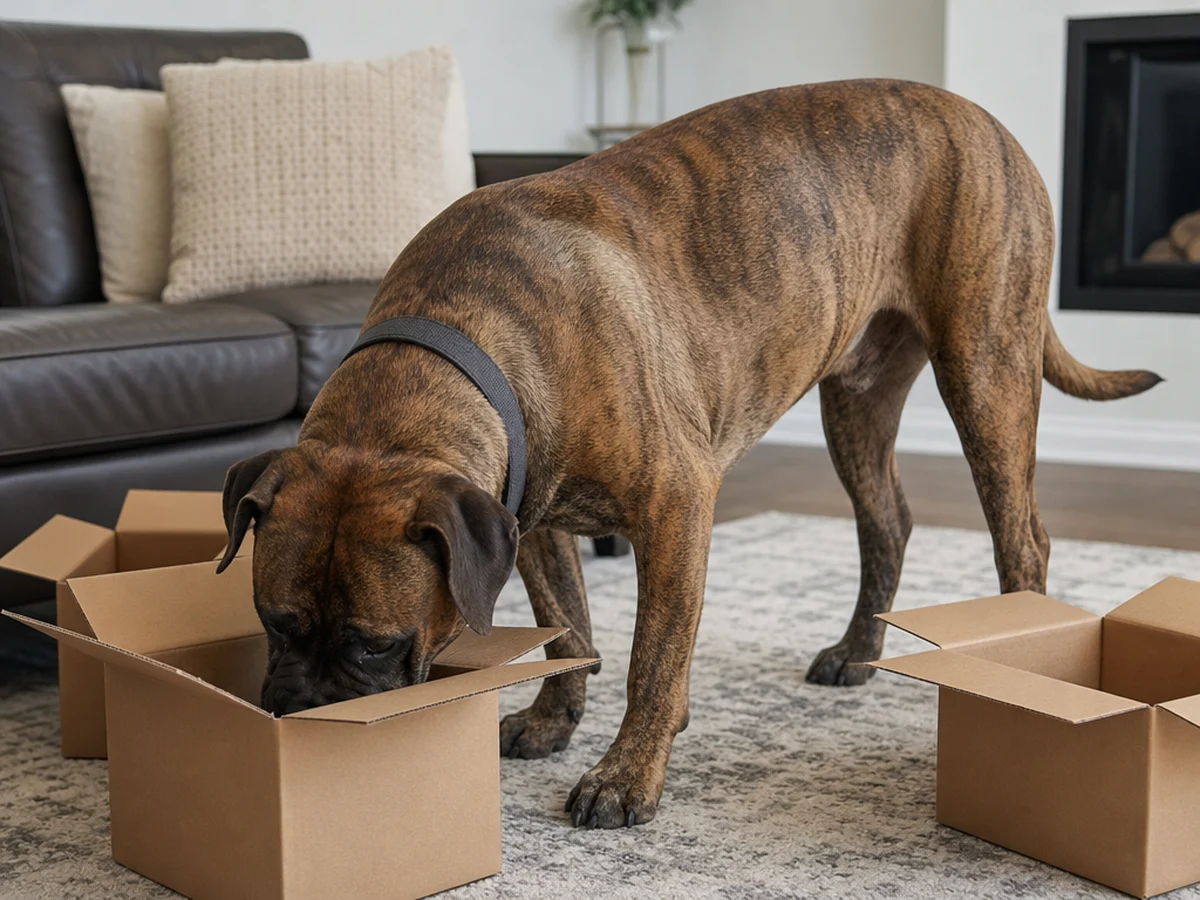
- Find food hidden in open boxes, then return to a mat while the boxes are cleared away.
- Wait while a door opens, walk through on a loose leash and check back for the next cue.
- Step onto a stable platform, hold a comfortable position and step off when released.
- Bring a household toy to hand for a trade, then relax while another item is chosen.
These jobs are small enough to repeat without turning the day into one long lesson. They also reveal preferences. A dog who keeps using their nose may enjoy scent work, while a dog who watches every hand and foot movement may prefer rally or obedience.
Safe Dog Sports Categories for Boerboels
Safe companion outlets fall into broad categories rather than one perfect sport. Choose by what the dog enjoys, what the household can practice and what the body can do comfortably. Regular veterinary visits help you notice physical changes before raising the difficulty of any activity.
Scent Problems Without a Chase
Nose work lets the dog search a defined area for a hidden odor or food reward. A first nose work game can use open boxes, with food placed in several so the search pays quickly. The handler stays out of the solution while keeping the space controlled.
This category suits a home because it needs little speed and can be practiced indoors. Build from obvious finds to less visible ones, and change only one feature at a time. A successful search ends with a calm reward and a short rest, not an immediate demand for another round.
Precision and Communication
Rally and obedience turn familiar cues into a sequence. The interest comes from transitions, positions and shared attention rather than from physical force. A Boerboel's intelligence and willingness to please can serve this work when the rewards are clear and the handler keeps the steps understandable.
Start with one station or cue, then join two pieces only after each is fluent. Reward at the place where you want the dog to stay, often close to your side or on a mat. Foundation cues make this category enjoyable because the dog recognizes each small part before meeting the full sequence.
Precision work also offers many ways to lower difficulty without abandoning the session. Remove a station, widen a turn or practice beside the course while another team works. The dog still learns to orient to the handler, and the handler learns which adjustment restores thoughtful participation.
Controlled Movement Skills
Agility foundations can mean walking around a cone, placing paws on a stable target or moving between low, widely spaced markers. The breed standard describes the Boerboel as notably agile among molosser breeds, but agility does not require frantic speed or repeated jumping.
Keep growing dogs on low-impact foundation work and ask your veterinarian what suits the individual dog. For adults, choose smooth paths and deliberate turns before adding height or speed. The handler's first job is to protect balance, not to push for a faster run.
Venue Fit for Boerboel Dog Sports
The same activity can be a good fit in one venue and a poor fit in another. A useful class gives a large dog room to turn, wait and leave without squeezing past unfamiliar dogs. It also lets the handler work at a distance where the Boerboel can still notice cues and take rewards.
Visit without the dog when possible and watch how the room operates. The comparison below keeps the choice focused on practical conditions rather than the sport's name.
| Venue feature | Good fit | Reason to pause |
|---|---|---|
| Waiting space | Separate stations or visual barriers | Dogs crowding entrances |
| Floor and equipment | Stable footing and adjustable setups | Slippery turns or fixed high obstacles |
| Class flow | One working team with others resting | Constant close group movement |
| Coaching | Rewards, small steps and flexible distance | Pressure to advance on a fixed schedule |
| Exit access | A clear route to a quiet break | No way to leave without passing dogs |
Ask how instructors handle a dog who needs more distance. The answer should allow the team to step back, simplify the task and reward success. A venue that treats space as sensible management will usually teach more than one that mistakes proximity for progress.
Travel and waiting count as part of the session. Practice calm car exits, loose-leash movement into the building and rest between turns. Guidance on rewarding a slack leash applies here because pulling should never be the route to the training floor.
Read Recovery After Dog Sports
An outlet is suitable only if the dog can recover from it. Excitement during the task is not enough. Watch what happens during the trip home, after water and rest, and when ordinary household cues return.
Good recovery looks like a dog who can disengage from the equipment, walk away with you and settle without patrolling for more action. Appetite and normal movement should look familiar. The dog may be pleasantly tired, but they should not remain restless, avoid ordinary movement or seem reluctant to participate next time.
Mental recovery matters too. A Boerboel who spent the whole class watching other dogs may have practiced vigilance rather than the named sport. Increase distance, shorten the visit or use a quieter time. If the dog cannot work comfortably even after those changes, a home version may be the better outlet.
Recovery is easier to judge when the same questions follow every session. Use this brief check before deciding whether to repeat or increase the work:
- Notice whether the dog can take a final reward and orient back to you before leaving.
- Watch for smooth, familiar movement on the way to the car and later at home.
- Record how readily the dog settles and whether ordinary cues still feel easy.
- At the next session, note willingness to enter without pulling forward or hanging back.
A single unusual day is information, not a verdict. Repeated difficulty is a pattern worth acting on. Lower the challenge and discuss persistent physical changes with your veterinarian before returning to demanding movement.
Recovery can also guide the weekly mix. Follow a physically active class with easier scent puzzles or familiar obedience at home, then keep the next day ordinary. Alternating demands helps reveal which part of the work taxed the dog instead of stacking every kind of challenge together.
Refine the Boerboel's Movement
Close movement detail is where an activity becomes safer and clearer. Instead of asking whether the dog completed an exercise, watch how they entered it, where their weight traveled and whether they could leave the position without scrambling.
Balance Before Speed
Use a stable surface and reward deliberate foot placement. Wide turns, straight approaches and pauses between repetitions let the dog organize a large body. Speed can hide a missed step, while slower movement shows whether the dog understands the path.
Change the route before adding intensity. A cone approached from another side or a platform placed in a new room asks the mind to work without adding impact. Keep the reward low and close enough that collecting it does not pull the dog off balance.
Orientation Before the Next Repetition
After each movement, wait for the dog to reconnect with the handler. That glance or return to position is part of the exercise, not dead time between attempts. Rewarding orientation prevents equipment from becoming the only thing that matters.
The same detail improves life outside class. A dog who turns back after a scent search, checks in after circling a cone and waits before moving again is rehearsing the skills used on walks and around visitors. Sport earns its place when those ordinary moments become easier.
Keep Jobs Useful and Companion-Safe
Boerboels have a documented history as farm dogs and as a first line of defense against predators. That working history explains strength, awareness and confidence. In a modern companion home, it is context for careful management, never a reason to rehearse confrontation.
Choose nose work, rally, obedience, controlled agility foundations or therapy preparation only when the individual dog and setting suit the role. Formal service, detection, search and rescue, or therapy work requires appropriate selection and professional programs. Home games do not confer a working credential.
The best job returns you to the place where this guide began. Your Boerboel should come home able to rest, respond and share ordinary space more comfortably. We recommend the outlet whose venue protects that goal, whose movement stays sound and whose recovery leaves the dog ready for family life.
A modest activity can remain valuable for years because skills may grow without forcing the body harder. Add new search locations, longer cue sequences or slightly different movement paths only when the familiar version stays smooth. Useful work is measured by durable cooperation, not by escalating difficulty.
 Training basicsHow to Start Boerboel Training Before the Puppy Phase Fades
 BehaviorAre Boerboels Aggressive? Guarding Instinct at Home
 Training basicsCrate Training a Boerboel and Preventing Separation Anxiety