
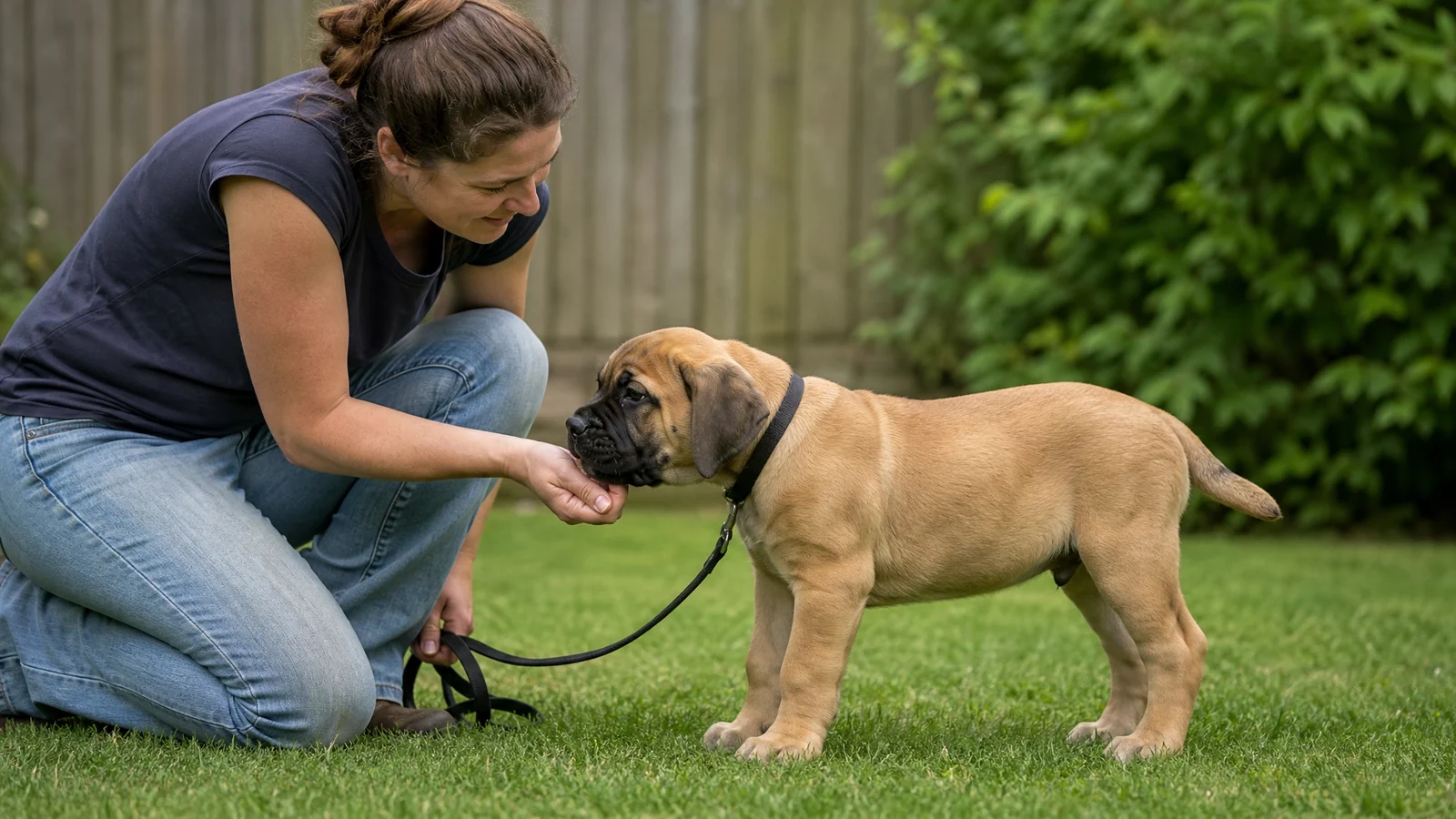
Potty training a young Boerboel puppy starts with prevention. Choose one outdoor destination, take the puppy there before the need becomes urgent and reward immediately after they finish. Cleanup teaches much less than arranging the next success.
The breed's easygoing, pliant puppy phase is the right time to establish this rhythm. Consistency needs to be underway before that early flexibility fades. The trainability FAQ explains why early consistency matters.
In this article, we follow each household decision from location through supervision, confinement, reward timing and accident patterns. The path ends with progress checks and the signs that warrant veterinary help. Each practical branch changes what the household does next, so the plan stays practical rather than calendar-driven.
The Boerboel Potty Training Location
The first decision is where every trip will end. A consistent destination reduces wandering and gives the puppy familiar surface, scent and routine. Pick a place adults can reach quickly in poor weather as well as on an easy afternoon.
Direct Yard Access
With a private yard, use the same door and a small practical area. Walk the puppy there on leash, stand quietly and keep play for afterward. The sequence should make elimination the first available job, not something that happens after a tour of the property. Repeating the route also helps adults notice when the puppy is searching differently or appears distracted.
Return indoors if nothing happens, supervise closely and try again soon. Free play after an unfinished trip can produce an indoor accident because movement stimulates the puppy while attention moves away. A calm reset keeps the decision clear. Keep the puppy beside you during the indoor interval so an unnoticed corner does not become the alternate destination.
Before changing locations, test the chosen one across several ordinary trips. Morning quiet, evening noise and wet weather may change the puppy's focus. A workable destination still lets an adult wait calmly and reward promptly under those less convenient conditions.
A Longer Route Outside
An apartment hallway, elevator or shared entrance adds travel time. Prepare shoes, leash, rewards and keys before the puppy wakes or finishes an activity. Carrying a small puppy may reduce delay, but use safe handling and transition to calm walking as the body grows.
Choose a legal, low-traffic spot and follow veterinary guidance about public areas while the puppy is young. Regular vet visits help you plan safe exposure. Keep the route boring on the way out, then offer sniffing or a short walk only after success. On difficult days, shorten the route rather than changing the destination, because familiarity helps the puppy understand what comes first.
Use one neutral cue once the puppy begins to eliminate, not while they are searching. Repeating a word through the whole trip turns it into background noise. The cue gains meaning by appearing beside the behavior and the reward that follows.
Supervision in Potty Training
The next decision is whether an adult can actively watch. Supervision means eyes on the puppy and the ability to move immediately, not being somewhere else in the room. When that is impossible, safe confinement prevents unsupervised wandering from becoming a habit.
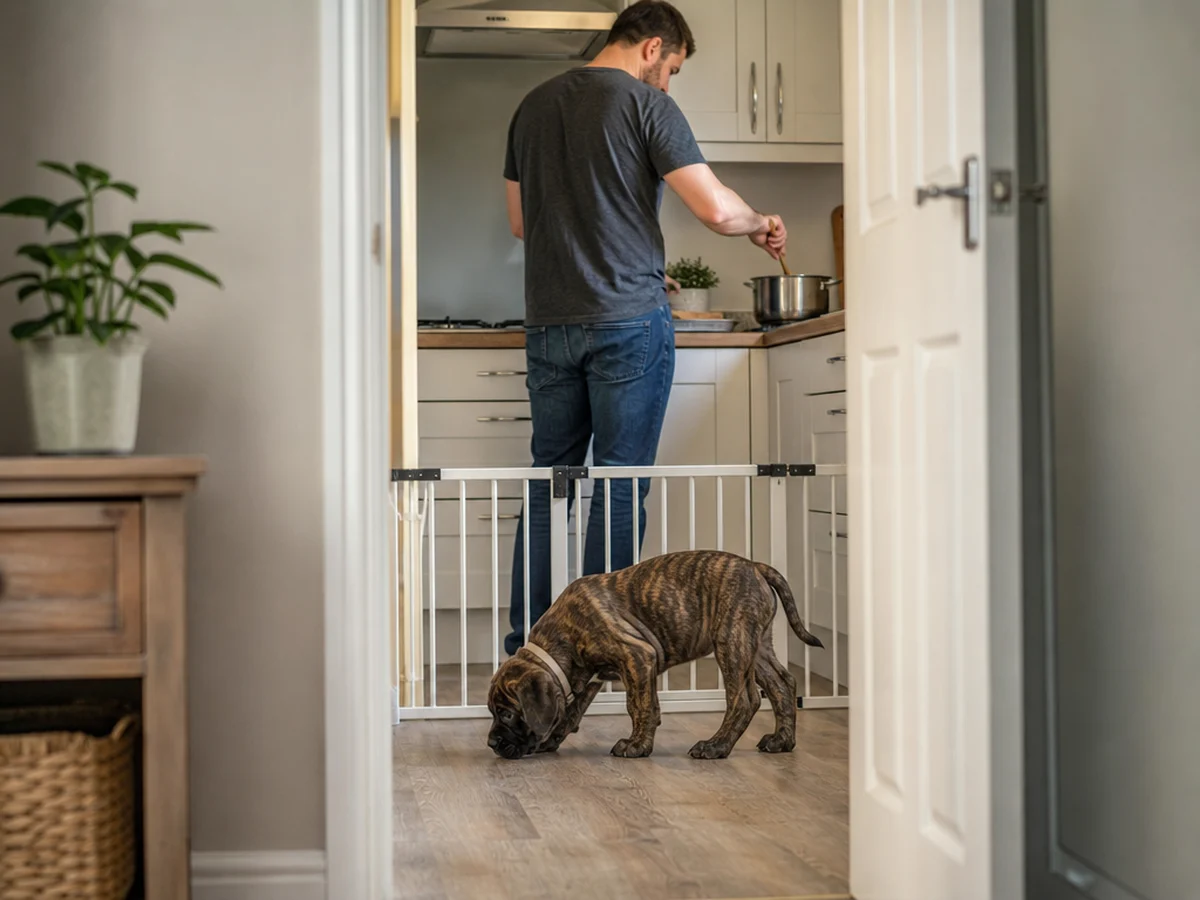
When an Adult Can Watch
Keep the puppy near you with gates or a light household leash used under direct supervision. Watch for a sudden pause in play, floor sniffing, circling, drifting toward an edge or leaving the room. Those changes are prompts to go outside, not proof of misbehavior. Calm observation matters because early signals can be brief, especially when play or household movement competes for attention.
Planned trips should happen around predictable transitions. The puppy's individual pattern matters more than a rigid clock. Use these moments as decision points:
- Go out promptly after waking, including naps during the day.
- Offer a trip after eating or drinking and before the household becomes distracted.
- Interrupt play for an outdoor opportunity when movement or excitement rises.
- Take the puppy out before confinement and again as soon as they are released.
- Add a trip before bed and whenever the puppy's recent record shows a recurring need.
Record the time of success, meals, rest and accidents for a few ordinary days. The notes reveal the puppy's current rhythm without inventing a universal schedule. They also show which transition repeatedly needs an earlier trip. Review the notes at the end of the day and move that trip forward before adding any more freedom.
When Supervision Is Impossible
Use a puppy-safe pen, gated area or positively introduced crate for brief management. The space should suit rest, not ask the puppy to ignore a known need. Place it near normal family life and introduce it during calm periods before using it for management. Crate training is its own skill, so build comfort before relying on that option.
Confinement does not extend physical capacity by determination. Arrange relief before the puppy is likely to need it, and have an adult return when the plan requires. If the schedule cannot meet the puppy's needs, change the human schedule or safe setup.
Release leads directly outside. Greeting, play and household freedom can wait until after the trip. That order prevents excitement from consuming the short window in which the puppy was ready to eliminate. After success, greet and play normally so the management sequence does not make release feel socially empty.
Did the Potty Reward Land Outside?
The reward decision is about timing and location. Mark the completed behavior while still outside, then deliver food promptly. Waiting until the family reaches the kitchen rewards coming indoors, while outdoor delivery connects the result to the act you want repeated. Keep several rewards ready so searching through a bag does not create a long gap after the behavior.
Immediate Outdoor Rewards
Stay quiet while the puppy chooses a spot. As they finish, use a marker word and provide a small reward. Marker training guidance emphasizes precise timing and quick reward delivery, which is why the treat should already be in your pocket.
Then give a modest life reward, such as sniffing or returning to the family. If every successful trip ends the outdoors immediately, a puppy may delay finishing to keep the outing going. A little calm freedom makes prompt elimination compatible with getting more outside time.
Keep praise warm but not overwhelming. Some puppies pause when people become loud or move suddenly. The ideal response tells the puppy the choice worked without disrupting the final moment. Then move away from the spot before play begins, which keeps the bathroom area clear and predictable.
Boerboel Accidents Change the Potty Plan
An accident answers a management question: the puppy had more freedom, more delay or a less readable transition than the current skill could handle. Respond by changing the next setup. The floor is not a place for a training confrontation. Your useful information is the preceding meal, nap, game, confinement period or missed signal that now needs a different decision.
Cleanup Without Drama
If you notice the puppy beginning, calmly move outside if that can happen without alarm. If the accident is already finished, take the puppy away from the area and clean thoroughly. Attention after the fact cannot explain which earlier decision should have changed.
Use a suitable pet-accident cleaner according to its label and block access while the area dries. Removing residual odor reduces the chance that the spot continues to signal a bathroom area. Keep the dog away from cleaning products. Reopen the area only when it is safe and dry, then supervise there until the new routine has a stronger history.
Reward-based teaching builds the wanted response by making success worthwhile. Apply that principle to the next outdoor trip rather than focusing energy on the previous mistake.
After cleanup, restore the normal routine without granting extra freedom. Take the puppy outside at the next planned opportunity and reward success as usual. A neutral response protects trust while the revised management prevents the same timing error.
Patterns That Change the Schedule
One accident after play suggests an earlier post-play trip. Repeated accidents near the exit may mean the route is too slow or the signal is noticed too late. Accidents after confinement point back to duration, timing and whether the puppy eliminated before entering.
Change one variable, then watch the result. Move the trip earlier, shrink the supervised area or prepare the exit before the transition. Several changes at once make it harder to learn which decision solved the problem. Hold the revised plan steady across ordinary days before judging whether another branch needs attention.
The early puppy temperament can make progress look secure before the routine is fully learned. Breed guidance says consistent training should be established before the easygoing, pliant qualities fade. Maintain the potty structure after a good stretch rather than expanding freedom suddenly.
Freedom Decisions After Potty Training
We judge progress by whether successful trips become predictable and supervision catches fewer urgent signals. It does not mean the puppy earns the entire house at once. Expand access by one manageable area while keeping the same exit, destination and reward.
Review the plan through a short set of decisions. The answer determines whether freedom grows or management tightens:
- If accidents have stopped in the current area, add a small amount of supervised freedom.
- If a new room produces an accident, return to the previous area and arrange earlier trips.
- If the puppy signals at the exit, respond promptly instead of testing how long they can wait.
- If frequency, effort or comfort changes suddenly, contact the veterinarian rather than treating it as a training lapse.
Ask for veterinary help when a puppy strains, appears uncomfortable, drinks or urinates much more than usual, has diarrhea, or suddenly loses previously reliable habits. Those signs need an individual assessment. Training should never replace an individual assessment of a possible health change.
The next useful action is simple. Prepare the leash and reward, identify the next transition and take the puppy to the chosen spot before the need becomes urgent. Boerboel potty training advances through that repeated decision: arrange success first, then reward it where it happens.
That choice protects the habit while the easygoing puppy grows into a much larger companion. Keep the route, cue and reward familiar as freedom expands, and return to the last successful branch whenever circumstances change. Small management choices create the durable result.
 Training basicsLeash Training a Boerboel: Pulling, Lunging and Loose-Leash Walking
 BehaviorIs a Boerboel a Good Family Dog Around Kids and Other Dogs?
 HealthHow to Muzzle Train a Boerboel for Calm Vet Visits