
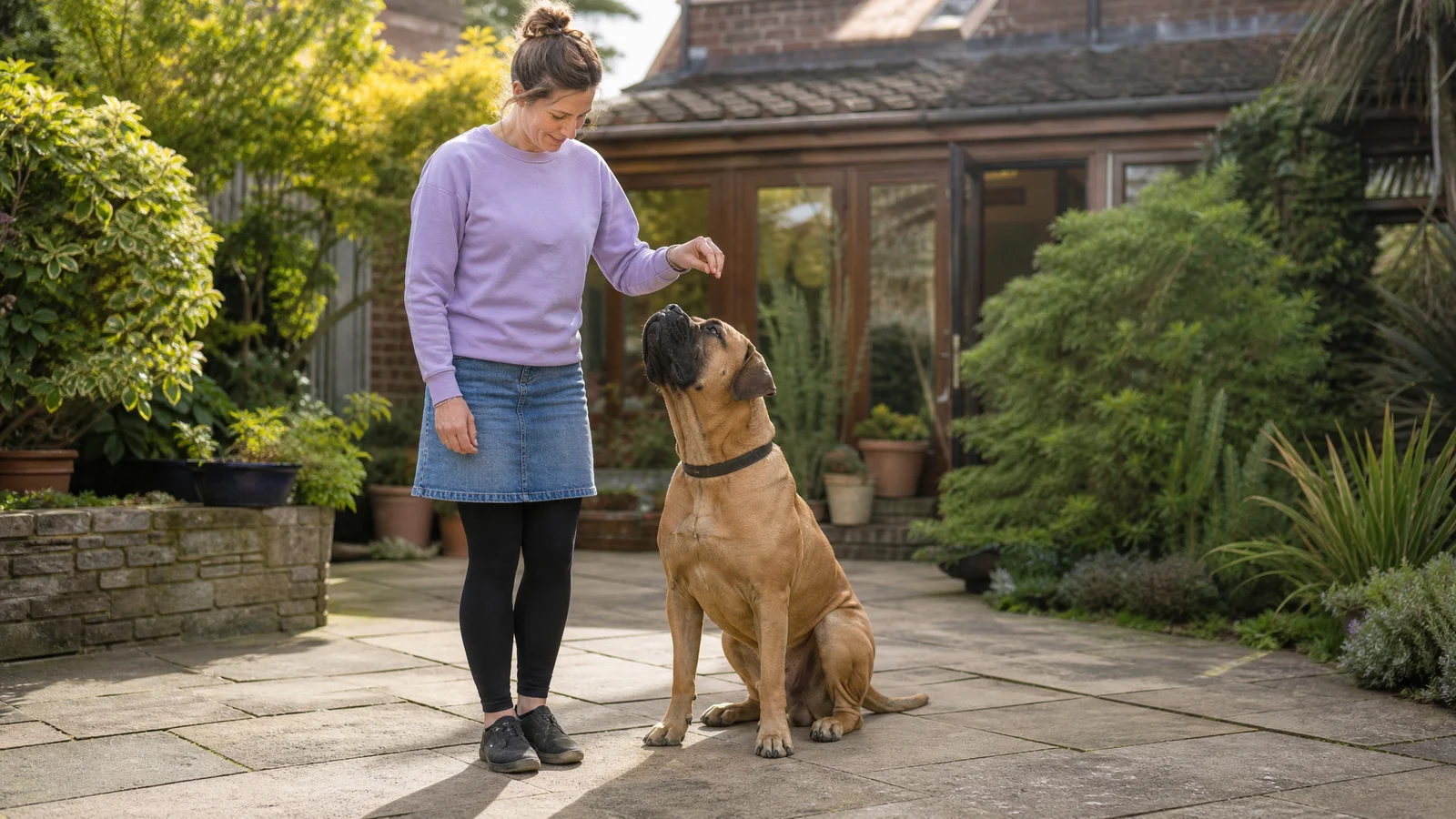
You say sit, and a 150-pound Boerboel simply looks at you. So you say it again, then louder, then a third time in a pleading tone, and by now the word has turned into background noise. Repeating a cue like this teaches a big dog that the first one never counts.
The fix is quieter than you'd think. Say the cue once, lure the position with a treat, and pay the instant your dog gets there. We have trained this breed for many years, and that simple loop steadies a powerful dog faster than any amount of volume.
This guide covers the full starting sequence of Boerboel training, from choosing the treat your dog loves most to short daily sessions, then sit, down, a clear release word and finally stay. Built well, these basics let you steer a dog of 150 to 200 pounds calmly through doors, visitors and busy days.
Pick a Reward Your Boerboel Values Most
Walk into your kitchen and shop the way your dog would. A dry biscuit that crunches loudly and crumbles across the floor can interrupt the moment. Cooked chicken, small cubes of soft cheese or a moist training treat are quicker to deliver, so your dog's eyes can swing back to your face for the next rep. Cut each piece small, since you will pay dozens of times in a session.
Keep the treats in a pouch at your hip, because the reward has to arrive within a heartbeat of the behavior. Reward-based training works because something your dog really likes, delivered right after a behavior, makes them likelier to repeat it. Add praise every time, a warm low voice and a slow scratch down the chest, and let it grow into a second paycheck as the cue becomes familiar.
Why Willing Is Not Automatic
The breed is described as intelligent with a willingness to please, and trainability is rated at 4 out of 5. That is encouraging, but willing is not the same as automatic. A dog of 150 to 200 pounds can lean on any cue they find dull, so make the payoff worth their attention. Our Boerboel trainability FAQ explains how that temperament plays out day to day.
That settles the first decision. Choose the softest, smelliest treat your dog adores, carry it in a pouch, and pair it with praise every time.
Treats add to your dog's daily food. This is general information, so check with your veterinarian about your dog's diet and how much to feed.
Training Sessions Run Five Minutes, Twice Daily
Set a timer for five minutes and run one round in the morning and one in the evening. That is the whole schedule. A Boerboel's need for mental stimulation is rated 4 out of 5, so their brain wants real work, and it lands best in short, bright rounds that finish while your dog is still keen. Stop on a rep they nailed, hand over the last treat, and walk away with their eyes still fixed on your pouch.
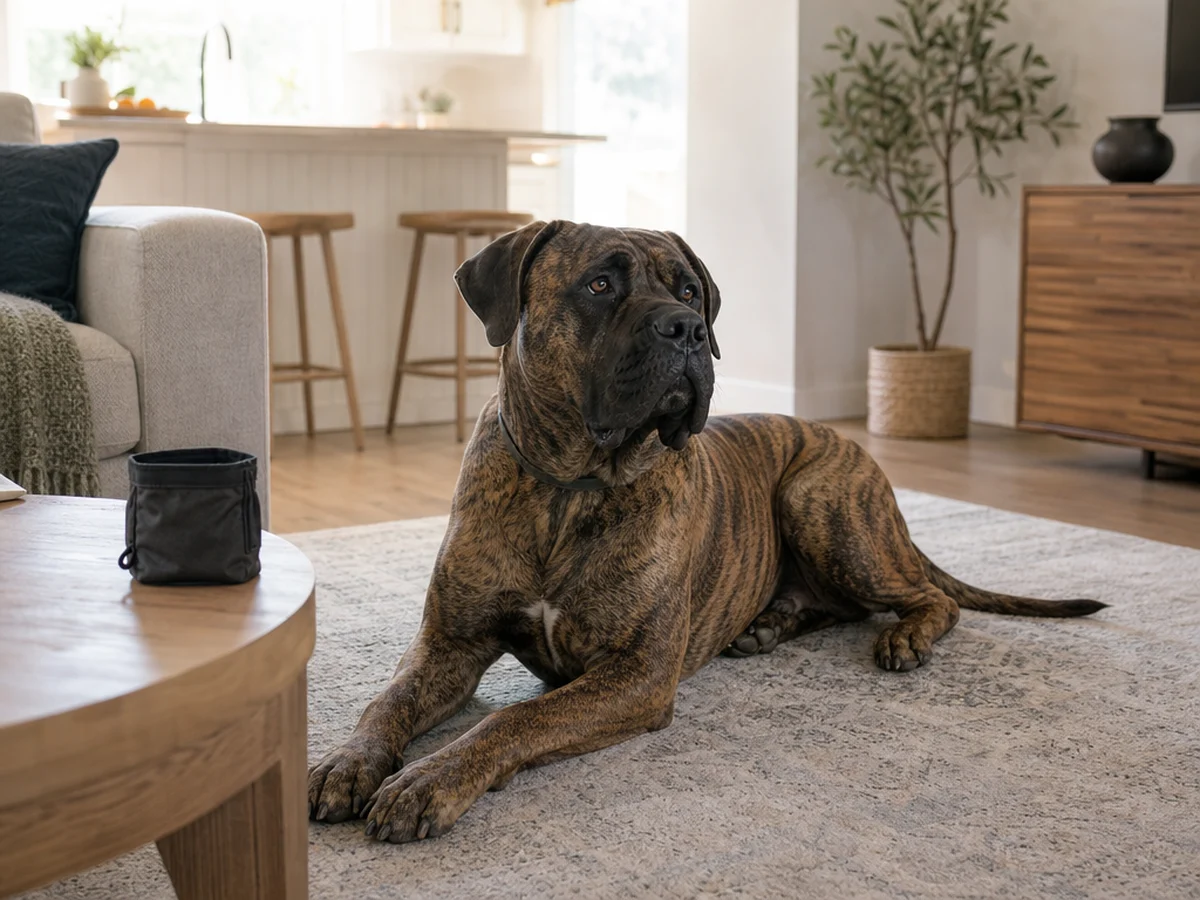
Short rounds suit a dog's nerves as well as their attention. Research on study of 92 companion dogs found that reward-based schools left dogs calmer: they showed fewer stress signals, panted less, and their cortisol climbed by less once the session ended. A relaxed dog learns more cleanly, and a five-minute round that ends happily keeps them relaxed.
They also fit the puppy window. Boerboel puppies are easygoing and pliant, and it is tempting to assume they will stay that way, yet consistent training has to be well underway before those qualities fade. Our guide to starting Boerboel training early covers that timeline. To keep both daily rounds going, hang them on moments that already exist:
- Run the morning round before breakfast, when your dog is hungry and a soft treat feels like a prize.
- Run the evening round before dinner in the same quiet room, so the setting itself tells your dog it is time to focus.
- Between rounds, ask for a single sit at doors and before the food bowl, and pay each one with one treat.
- Keep every family member on the same cue words, so your dog never has to decode three different languages.
The choice is two rounds of five minutes a day, always ended on a win. That schedule keeps practice clear and manageable.
Sit Comes First in Training Because It Is Easiest
A lure sit is the friendliest first lesson because your dog's own nose does the steering. Hold a small soft treat at their muzzle and the rest follows. The method rests on a simple idea from small rewarded steps: decide the final behavior, break it into little pieces, and pay for each piece in sequence. Work in your quietest room, turn off the TV and shut the other pets in another room, so the only interesting thing is the treat.
- Stand or kneel facing your dog with a treat at their nose and the pouch at your hip.
- Slowly sweep the treat up and slightly back over their head, so their nose follows and their rear lowers.
- The instant their rear touches the floor, say a bright yes and deliver the treat low, right at the chest.
- Repeat until the motion is smooth, then say sit once, just before the lure begins.
- Shrink the lure into an empty hand making the same sweep, and pay from the pouch, so the hand becomes a signal.
Say the word one time and then wait. If nothing happens, resist the urge to repeat it. Simply lure again and pay. A heavy dog who hears the cue three times learns to wait for the third, while a dog who is paid after the first learns that the first one counts. Listen for the soft thump of that big rear settling, and mark it right then.
So the choice is to lure first, add the word only once the motion is easy, and fade the lure into a hand signal. This sequence makes the cue easier to understand.
Down Training Follows Sit on a Non-Slip Floor
Down is a bigger fold than sit, so choose the surface before you choose the moment. Under the breed standard, an ideal male stands about 26 inches at the shoulder, and the body runs slightly longer than tall. Lowering that long, dense frame onto glossy tile means sliding elbows and a worried dog. Pick carpet, a rubber-backed mat or a thick bed with grip underneath, and your dog can lie down without bracing.
Start with your dog in a sit and hold a treat right at their nose. Move your hand straight down until it rests between their front paws, and slide it slowly out along the ground in your direction. The chest follows the nose, the elbows bend, and the hindquarters settle. A big dog needs a moment to fold, so reward any progress, such as shoulders dipping or elbows nearly touching. If they pop back up, reset and lower the lure more slowly.
When the whole body is down, say yes and feed low between the paws so they stay there. Add the word down only once the movement is smooth, and keep your voice quiet and warm. If a dog who folded easily last month suddenly refuses, think comfort before stubbornness, and keep regular vet visits on your calendar so sore joints get checked.
The decision here is the lure path and the floor: from the sit, straight down then out, always on grippy flooring. That setup protects the joints while the dog learns.
Releasing a Boerboel From Each Cue
Every cue needs an ending, or your dog will invent one. Pick a single release word, such as free, and use the same bright voice each time you say it. The moment you say it, step back or toss a treat a short way off so the body moves. Your dog quickly learns that sitting or lying down lasts until they hear that word, and not a moment longer.
This matters more with a breed this size. A Boerboel has strong protective instincts and is watchful by nature, so a dog who waits for permission at the front door is much easier to live with than one who decides when a visitor is allowed in. Waiting for a release at doors, curbs and the car also lays the groundwork for polite walks, which our guide to leash training a Boerboel builds on.
Use the release the same way after every cue, including the very first sit you teach tonight. Sit, mark, pay, release. Down, mark, pay, release. If your dog jumps up early, quietly reset them into position and try again with a shorter wait. Nothing is lost, and the pattern gets clearer every time.
The choice is one word, used the same way by everyone in the house, every single time. Consistency makes the release cue predictable.
Stay Training Grows by Seconds Before Steps
Stay grows out of a sit or down your dog already does happily. Say stay once, count a breath or two, return to your dog, pay in position and release. Always walk back to deliver the treat instead of calling them to you, so the stillness itself is what earns it. Lengthen the wait in small increments, and notice how a Boerboel's whole body softens when they understand that holding still is the winning move.
Once the time is solid, add distance: a small step back, then straight back to pay. Then step to the side, then go farther. Mild distraction comes last, such as a dropped spoon or a family member walking past, and only after the first two are easy. Change one variable at a time. If you add distance and distraction together, a dog who was perfect a minute ago will break, and that tells you about your plan, not about their character.
When they miss, step back a level. Reset without fuss, make the next try easier, and rebuild. Because the breed is naturally watchful, the outdoors is a bigger leap than it looks, so carry the cue outside gradually and keep your dog on a leash every time, since a Boerboel should never be off leash. Our guide to recall on a long line shows how to stretch distance safely.
The choice is to add one variable at a time and drop back a level after any miss. That keeps mistakes informative instead of frustrating.
Tonight's Single Sit Rep With Your Boerboel
A Boerboel is intelligent, devoted and built like a small tank, which is exactly why a reliable sit matters. Everything above grows from the same loop: a cue said once, a treat the instant it happens, and a release that says the job is done. You do not need a free weekend or special gear. You need one repetition.
So tonight, before dinner, load your pouch with soft treats and take your dog to the quiet room. Ask for one sit. Lure it, say yes the moment their rear lands, pay low at the chest, then say your release word and let them stand.
One is enough, though a few more are fine if they are still keen. Tomorrow, do the same, and the day after that. Down, stay and every later cue are stacked on this one small habit, and a dog as willing as a Boerboel will reward you for every day you repeat it.
 Training basicsThe Mat Cue: Teaching a Calm Boerboel to Settle on Command
 Puppy trainingBoerboel Puppy Socialization: A Practical Early Plan
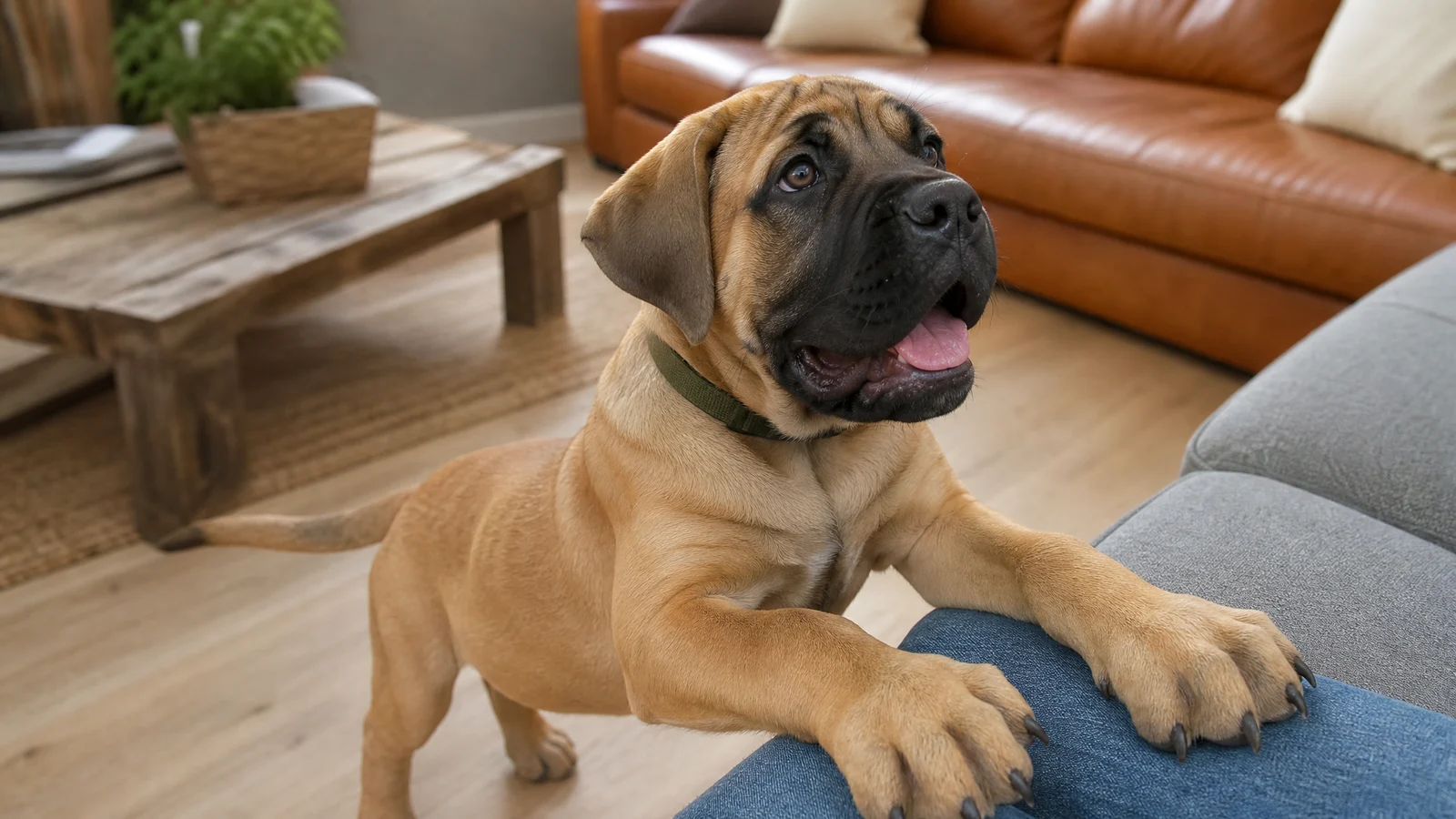 Puppy trainingStop the Jumping and Mouthing Before Your Puppy Hits 100 Pounds