
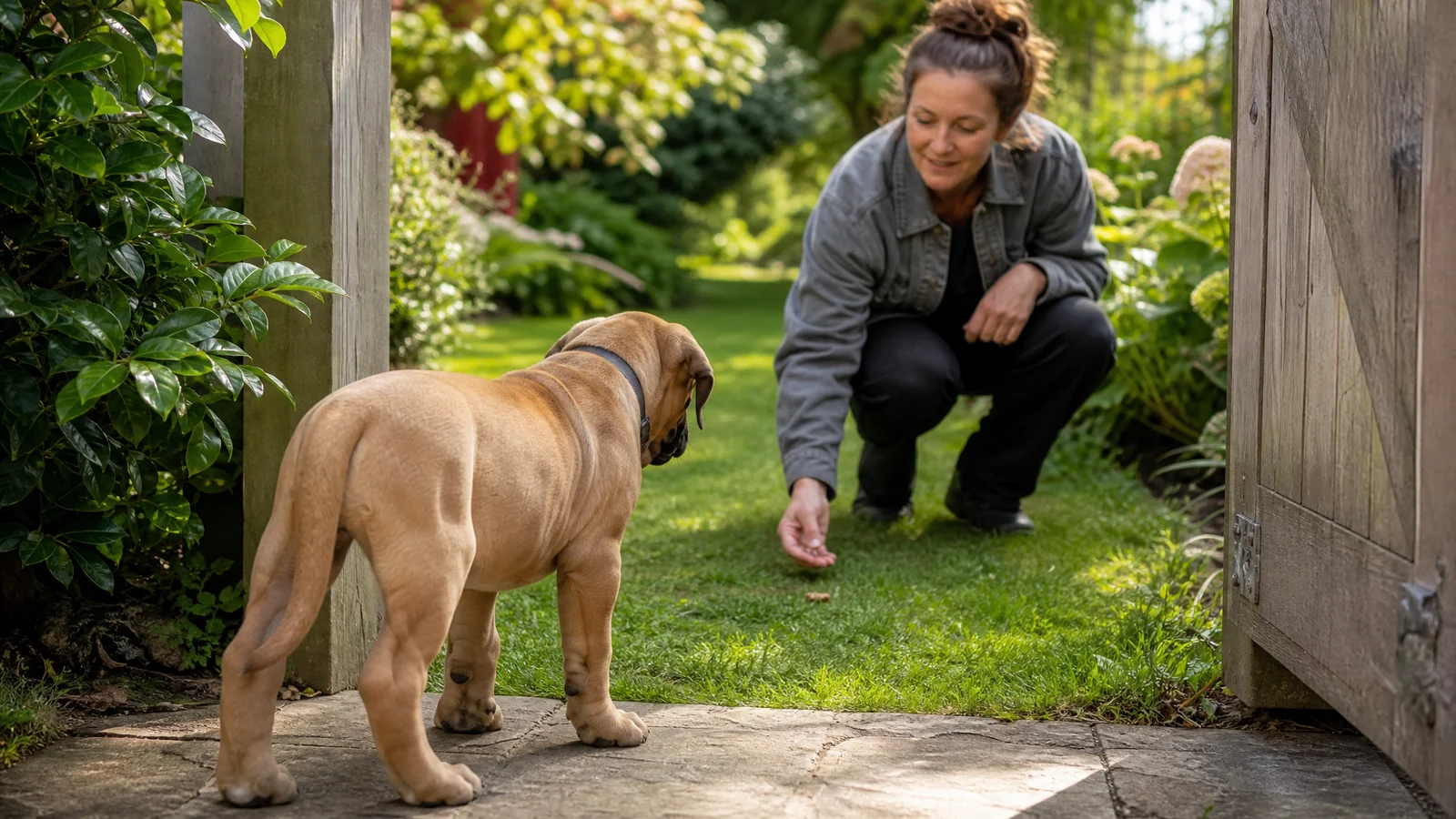
Your Boerboel puppy has spent the afternoon tumbling around the yard, all wiggles and oversized paws. A stranger steps through the gate and everything stops. Your puppy goes still, stiffens and stares.
That stare is the first flicker of the inborn guarding instinct this breed carries, and early exposure shapes what that instinct grows into. Handled well, you raise a dog who glances at a newcomer, judges the situation and relaxes. Handled badly, you get suspicion with no off switch in a very strong body. We specialize in Boerboel behavior and training, and this plan comes from that work.
We'll walk you through the first weeks and how to stay safe while vaccines finish, then treat-paired introductions to people, new places and sounds, the wary phase around six months, and the routine that keeps it all working through year one.
Weeks Eight to Twelve of Boerboel Puppy Training
Boerboel puppies arrive easygoing and pliant, and that is your window. Many new owners assume the sweetness will hold without effort, but consistent training has to be well underway before those qualities fade. Treat the day your puppy comes home as the start of the plan, not a settling-in period. Keep sessions brief, and end each outing while your puppy is still curious.
Aim for many small, pleasant firsts rather than one big experience. Let your puppy step across tile, carpet, a level baking sheet and an overturned laundry basket, and give a treat on each new surface. Turn on the dishwasher while they work on a chew toy. Play a doorbell recording and feed the moment they notice it. Park the car, switch the engine off, and scatter treats on the seat while your puppy explores.
Staying Safe While Vaccines Finish
Vaccine worries lead many owners to wait too long, and holding off until the whole series is done costs you the easiest weeks. Veterinary behavior specialists note that puppy socialization classes can generally begin at 7–8 weeks. Before that first class, your puppy should have had one round of shots, given no later than 7 days earlier, plus a first deworming. They then need to stay up to date for as long as the class runs.
Until your vet clears more, skip dog parks, pet-store floors and any ground that unfamiliar dogs use. Bring your puppy to busy spots by carrying them or rolling them in a wagon, and invite friends to your home. Watching a bus stop from a wagon seat counts as exposure when treats come along. Regular vet visits belong in this plan from the start.
Vaccine and deworming schedules differ from puppy to puppy, so this is general information. Check with your veterinarian about when your puppy can safely go where.
One Food Habit to Start Now
Boerboels are protective of what is theirs, and the food bowl is the easiest place to teach that an approaching person predicts good things. While your puppy eats, walk past the bowl at least six feet away and toss 3 to 5 favorite treats without stopping. Use this exercise sparingly so mealtime stays relaxing. Your puppy should never have a reason to tense up over dinner.
Treat-Paired Introductions to People in Puppy Training
People are where the guarding instinct shows first, so plan visitors like training sessions. Your job is to make strangers predictable and mildly rewarding while your puppy decides how close to get. Run every introduction in this order:
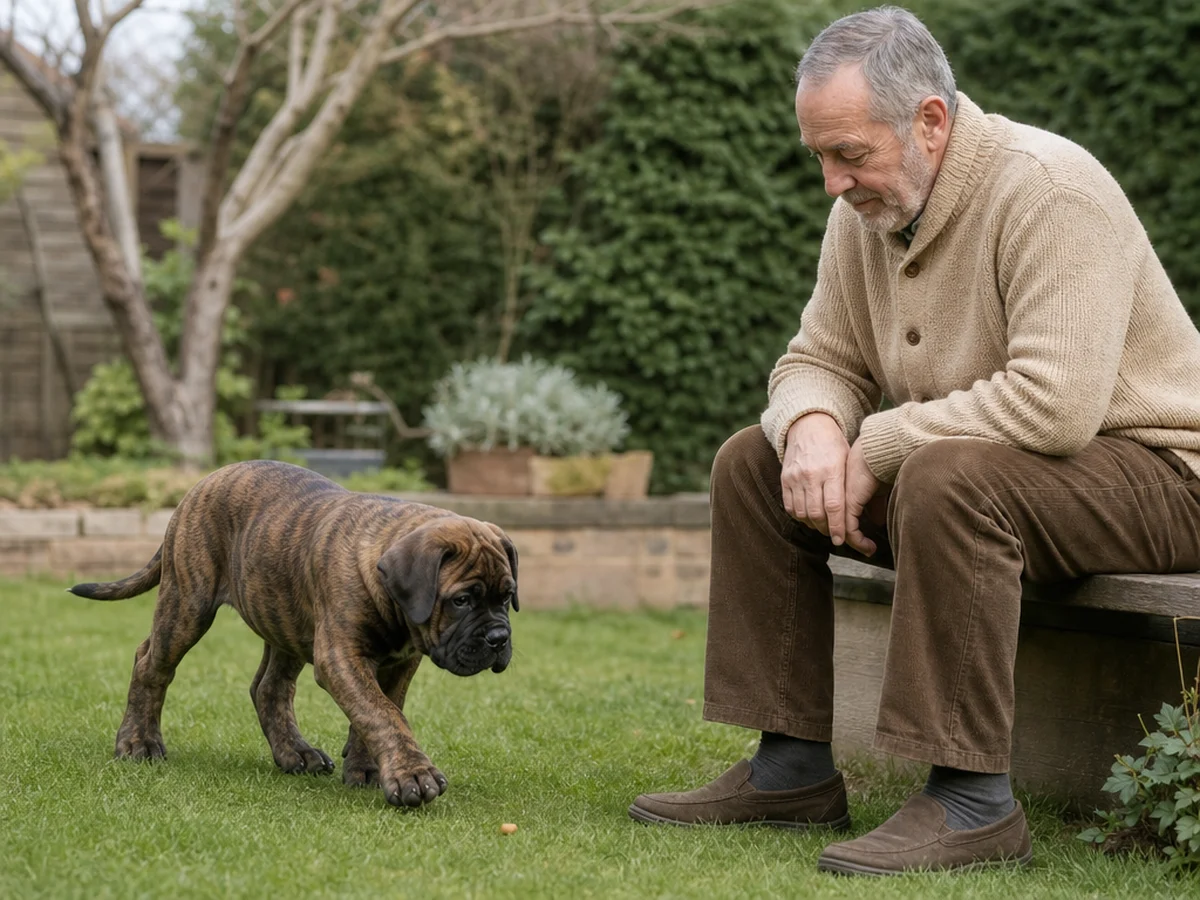
- Brief the visitor before they walk in: no reaching over your puppy's head, no staring, no squealing and no scooping up for a hug.
- Start with your puppy on a leash at a distance where they still eat treats happily and look loose in the body, even if that means the far side of the room.
- Feed the moment your puppy notices the visitor, before any stiffening starts, so a new person becomes the signal that food is coming.
- Let your puppy decide whether to approach. If they do, the visitor turns sideways, drops a treat near their own feet and keeps their hands low.
- Finish while your puppy is still comfortable, and allow them to walk away.
The last step matters more than it looks. The aim is to reward positive or neutral engagement, let a puppy withdraw when uncomfortable and keep moving at their own pace. A cautious puppy who is allowed to leave learns that people are not pushy, and that lesson outweighs any single greeting.
Change the cast over the following weeks: tall people, people in hats or sunglasses, someone carrying a box, a visitor who sits quietly and another who walks in briskly. If your puppy locks onto a person with a hard stare, back up until they can eat again, then reward any soft glance away. Once greetings turn happy, enthusiasm becomes the next challenge, so start work on jumping and mouthing early.
Skip the common advice to have every guest pet and feed your puppy. A Boerboel does not need to love strangers. Calm is the goal, and dull visitors build it.
Adding Places and Sounds to Puppy Training Through Four Months
Once your puppy eats readily around visitors, widen the world. Use the same formula everywhere: begin at a distance where your puppy stays relaxed, feed for noticing the new thing and leave before they tire. The checklist below grows by stage, so keep adding items and never drop back to zero.
- In the early weeks, cover household surfaces and noises such as stairs, the vacuum, a blender, a slamming cabinet and a ringing phone, each paired with a treat.
- Also early on, make car rides pleasant by driving a short loop to somewhere fun, so the car does not only mean the vet.
- Midway through, add outdoor footing like gravel, metal grates, wet grass and slick floors, and let your puppy sniff and step at their own speed.
- Midway through, sit well back from a quiet street and treat for each truck, motorcycle and siren, then inch closer over several days.
- As four months approaches, add moving sights at a distance: bikes, strollers, umbrellas, rolling carts and children at play.
- Throughout, meet other dogs only as a known, vaccinated, steady adult, because Boerboels do not need a wide circle of dog friends and one rude greeting can set you back.
Run each outing as a short mission with a single goal, such as a new sidewalk or a bench near a school. Carry soft treats in a pouch, keep your puppy on a leash and read their body. A loose, wiggly, sniffing puppy can go closer. A stiff body, a clamped mouth or a refusal to eat means you went too far, so retreat and retry from a better spot. A good outing ends before your puppy wants it to.
Adolescent Boerboel Wariness at Six Months
Around six months, many Boerboels change. The puppy who greeted everyone starts hanging back, barking at things they once ignored or studying strangers longer than you would like. This is not proof your early work failed. It is the breed's protective character maturing, so plan for it.
What the Phase Looks Like
Expect sharper reactions to unfamiliar people, odd silhouettes and changes around the yard. Your puppy may bark at a delivery driver they met happily a month earlier. The breed standard describes a calm, stable, confident dog who at times shows a self-assured aloofness, so some wariness is normal. What you shape is how your dog expresses it. A larger body makes a stiff stare matter more, so take it seriously from day one.
Responding Without Forcing Contact
Never push your puppy toward a stranger, hold them still for a pat or ask a guest to win them over. Forced contact teaches a big dog that scary things cannot be escaped, and that dog learns to push back. Instead, widen the distance until your puppy can look, breathe and eat. Reward calm looking, then walk away together. Close the gap later, as confidence returns.
Return to easy wins from earlier months. Visit places your puppy already loves, keep greetings short and let familiar visitors toss treats again. Add plenty of exercise and brain work so spare energy does not turn into worry or destructive chewing. Read the stare as information, not misbehavior.
Keeping Puppy Training and Socialization Going Through Year One
When the wary phase eases, the work becomes maintenance, and owners drop it first. Early gains fade without use, especially in a breed already inclined to be selective. Build a weekly rhythm of a few short outings, each with one goal: a new sidewalk, a spot near a café patio at a distance, a friend's yard, a parking lot with moving cars. Bring treats and leave while things are going well.
Keep your Boerboel on a leash in public, always. Their protective instinct means they should never be off leash, and because Boerboels do not take kindly to challenges from other dogs, dog parks are a poor fit. Arrange walks with a known, steady adult dog instead, and keep greetings short. Dog-to-dog behavior calls for planning and management, not hope.
Training rides along on every outing. Boerboels are trainable and need real mental work, so practice sit, down and loose-leash walking around mild distractions. Our month-by-month training timeline shows how to layer those skills. A sore dog tolerates strangers poorly, so keep up veterinary checkups too. Steady weekly practice beats one giant outing.
Why Adult Boerboels Stay Reserved
It is tempting to measure success by how many strangers your dog adores. The breed's own standard sets a different bar. The UKC says Boerboels should be discerning and accepting of friendly strangers with proper introductions, although many will remain reserved and aloof. That is your realistic target: a dog who looks at a newcomer, finds no threat and settles.
In daily life, calm neutrality looks like this. Your dog passes people on the sidewalk without fixating. They accept a guest you have introduced and then ignore them. They lie on a mat while company visits. They do not need a pat from every friendly face, and you do not need to request one. You decide which introductions happen, and you can decline others on your dog's behalf.
A reserved dog and a fearful dog can look alike from across the street, but up close they differ. A reserved dog looks, evaluates and relaxes. A fearful dog freezes, barks hard or lunges. Patient, treat-paired exposure moves a Boerboel toward the first group, so aim for calm, not popular.
Puppy Socialization That Pays Off for Years
Follow this plan and here is what to expect long term: a confident adult who is polite but reserved with strangers, loving with family and children, and steady when the doorbell rings. Their guarding stays measured. They notice, check and then release. That is the return on the early weeks, when your puppy learned that new people and places are predictable and sometimes rewarding.
Expect to need occasional refreshers. After a move, a long stretch without visitors or a scare, go back to distance, treats and your dog's pace for a few sessions. Keep your leash rules, introduce other dogs carefully and see your veterinarian regularly. A well-socialized Boerboel does not stay that way by accident. They stay that way because you keep showing them the world is safe enough and handle introductions consistently, year after year.
 Puppy trainingStop the Jumping and Mouthing Before Your Puppy Hits 100 Pounds
 BehaviorTerritorial at the Fence? Managing Property-Guarding Behavior
 Training basicsAre Boerboels Easy to Train? Temperament and Trainability FAQ