
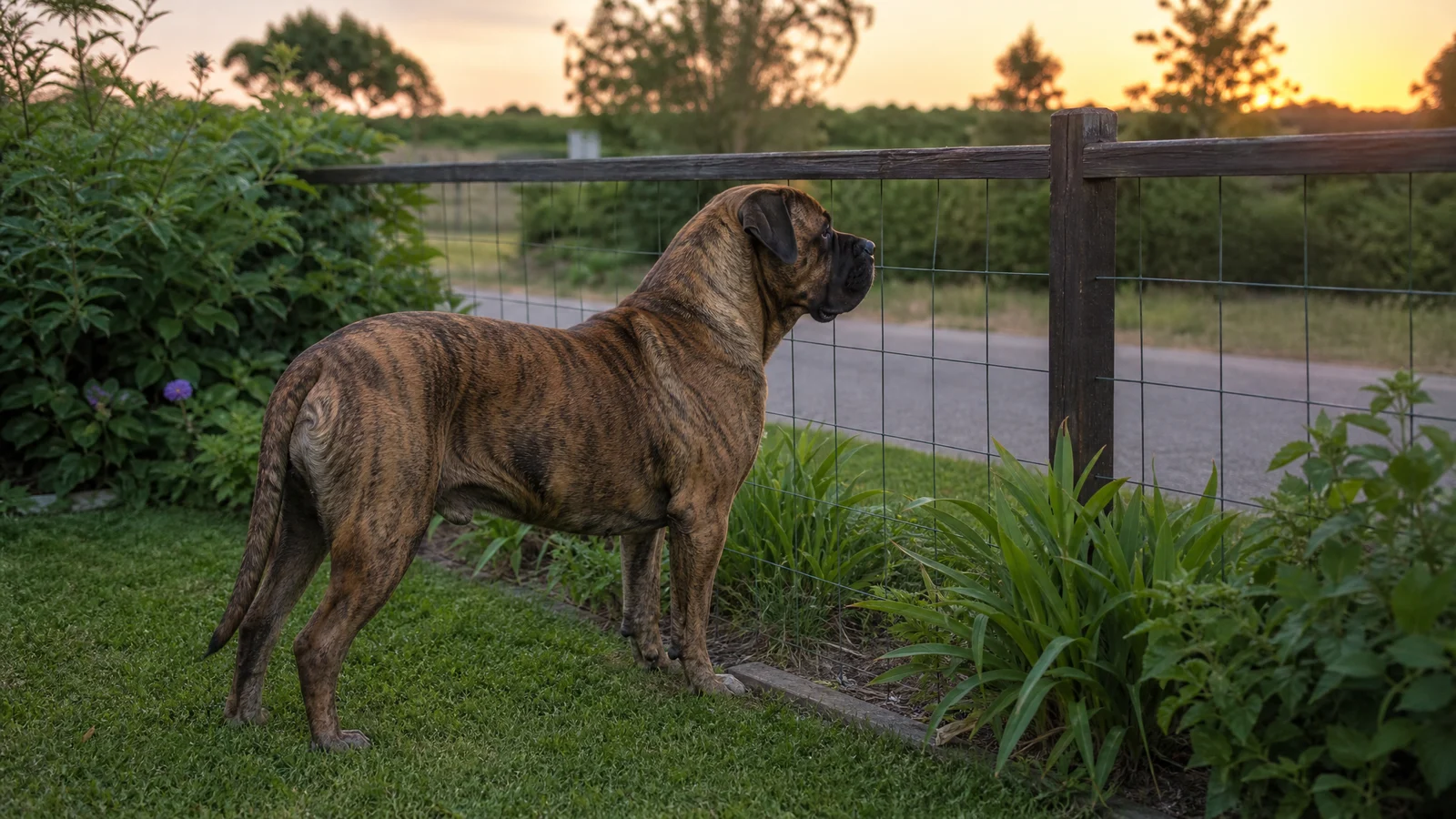
A Boerboel hears footsteps beyond the fence, moves to the boundary and starts a deep bark before the passerby reaches the gate. More exercise alone does not change what that rehearsal pays. The practical test is visibility, patrol access, passing distance and recovery speed. Those four factors show which setup change and calm behavior to practice first. They also keep the plan tied to behavior you can observe.
We'll walk you through four property-guarding criteria, then apply the matching calm tool inside each situation so the setup and the training stay together. Handled badly, a loud routine gets rehearsed every afternoon until it is simply who the dog is. Handled well, you get the calm, confident dog the breed standard describes.
Fence-Line Visibility in Boerboel Guarding
Fence barking is usually the first symptom you hear, and the one most often misread as boredom. It tends to have a plain cause: the dog can see a lot, the same events repeat daily, and the barking appears to work.
Why the Barking Works
Look at it from the dog's side. A person walks along the fence, the dog erupts, and the person keeps walking until they are gone. As far as the dog can tell, the noise made a stranger leave, and that lesson is repeated every day without anyone meaning to teach it. A clear view of foot traffic is an endless supply of practice.
The breed is rated as vigilant, so even a well-exercised dog will notice everything. Noticing is fine. The trouble starts when noticing turns into a loud routine, because a dog who rehearses daily gets very good at it.
Fixes That Hold
Start with the view. Solid panels, privacy slats or dense planting along the busiest stretch take away the audience, and a dog who cannot see the people outside has nobody to chase off. Check from the dog's eye level, because a fence that looks solid to you may be full of gaps to them. Chain link and open rails feed the habit all day long.
Then pay for the alternative. When the dog spots something and swings toward you instead of erupting, mark that moment with a word like "yes" and give a treat well away from the fence. If barking has already started, call them to you in a calm voice and reward the turn, not the arrival. Standing at the fence adding your own noise just joins the party.
Settle on a Mat Away From the Fence
A mat gives the dog a place to be that is not the boundary. Build it in the living room first, where success is likely, in small steps.
- Drop a treat on the mat and mark the instant the dog steps onto it.
- Reward lying down on it, delivering treats low and between the paws so they stay put.
- Add a cue word once the dog walks to the mat unprompted, then stretch the time slowly.
- Move the mat into the yard far from the fence, and bring it closer only when the dog stays relaxed.
A dog who settles beautifully inside may fall apart near the boundary. That just means the step was too big, so shrink it and rebuild.
Patrol Access in Boerboel Guarding
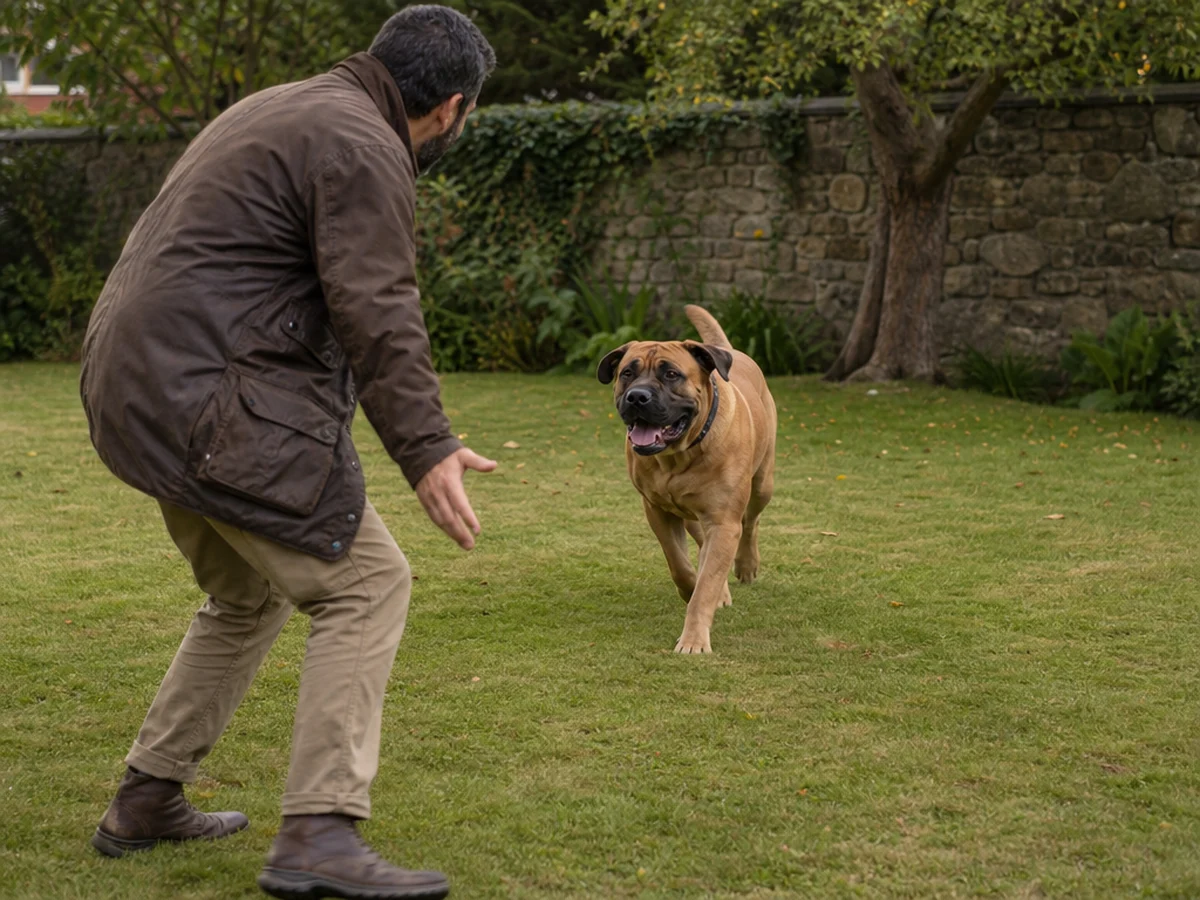
The working breed description presents the Boerboel as a farm dog expected to work fields by day and protect at night while remaining a stable family companion. That history explains why an open boundary becomes a ready-made job. It does not mean patrols should continue unchecked. Shorten access, supervise the route and reward leaving the line before repetition turns it into the default afternoon routine.
Read the Patrol Path
Some Boerboels barely bark at all. They trot the perimeter, check the corners and pause at every spot where something might appear. It looks harmless until you notice a worn path along the fence and a dog who cannot settle anywhere else in the yard.
That path is the symptom. Patrolling is the quiet form of the same instinct, and every lap is a rehearsal of the job that makes the next lap more automatic. A dog left outside for hours with nothing else to do will fill the time the only way their ancestry suggests.
The fix is to change what the yard is for and how long the dog spends in it. Keep outdoor time short and planned, with you present, instead of opening the door and leaving them to run the property alone. Put the good things, such as a chew, a food puzzle and shade, in a spot far from the boundary, so the interesting part of the yard is in the middle.
If the path is already worn, rotate where the dog spends their time so no single corner becomes a post. When you see a lap starting, call them to the puzzle or the mat and reward the switch. Calling a dog off a patrol after they have fully committed rarely works, so redirect before the first lap.
The Supervision Routine
Supervision is the unglamorous part that does the most. Go out with the dog and bring them in when you leave, rather than treating the yard as a parking spot. A few outings a day with something to do, such as sniffing, a puzzle or a calm-cue session, stop the dog from inventing a job.
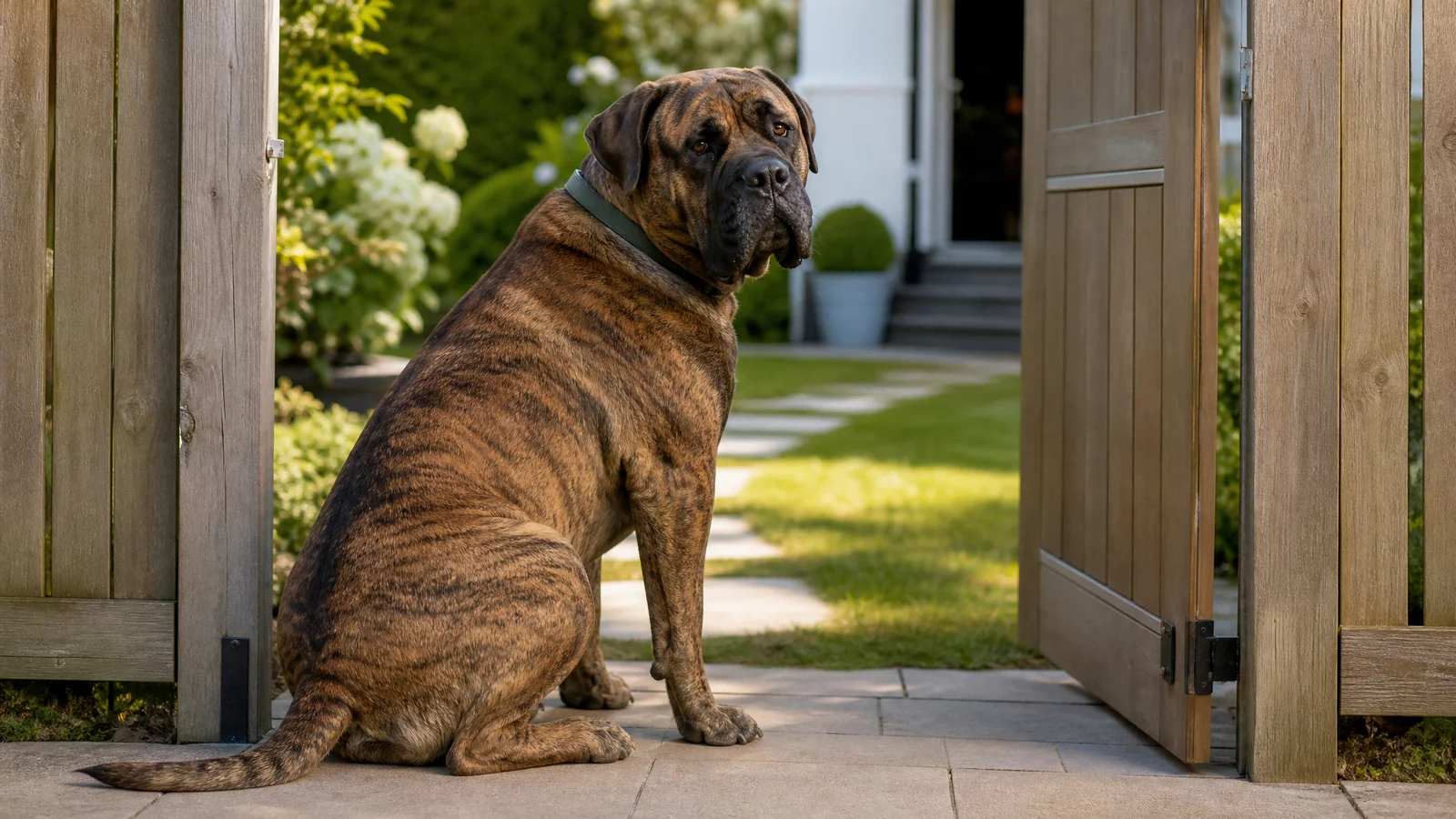
Because of their protective instinct, Boerboels should never be allowed off leash, and an open gate counts as public ground. Skip the dog park as well and plan dog-to-dog contact as careful, controlled meetings.
Passerby Distance and Property Guarding
Rushing or lunging at people passing the fence is where mild fence trouble starts to look serious. It is also easy to misread. The dog is usually not aiming to hurt anyone. They are strongly motivated and physically blocked, and that combination builds frustration with nowhere to go.
How Barrier Frustration Builds
A fence lets the dog charge a trigger, watch it leave and never learn what would have happened next. The passerby moves off, the dog's body stays wound up, and the next passerby arrives into an already tense yard. Over weeks the dog gets quicker to launch and slower to recover. A narrow yard makes it worse, because the trigger passes close and the dog has nowhere to put the energy.
Guarding behavior in general varies in its psychology, but it is typically based in anxiety. That is a useful lens for boundary behavior too. A dog who lunges is often a dog who feels the situation is too much, and calm handling works better than confrontation.
Distance, Screening and Pay
Distance does most of the work. Move the dog's usual hangout well back from the stretch where people pass, and use the solid screening described above so the trigger never arrives at full volume. Lower intensity gives you something to reward.
Then use it. Stand with the dog at a distance where they can see a passerby and still take a treat. Mark each calm look, feed, and go inside before they tip over. Over many repetitions the passerby becomes a cue to check in with you instead of a target. Arrival problems at the door follow the same logic, and our guide to visitor manners at the door covers that side of it.
Mark the First Look Away
The most valuable cue is the unprompted check-in. When the dog notices a person outside and looks back at you instead of reacting, mark it and pay well. Run these as brief games at quiet times of day, which also fills the hours the dog would otherwise spend scanning the property.
Silent Stares and Guarding Recovery
The quiet symptoms are the ones people miss. Freezing, a hard stare and a low sound are early signals that a dog is working hard on a decision, and they arrive before any barking or lunging. A Boerboel true to the standard is calm, stable and confident and able to recognize a threat or the lack of one, so a dog who stays rigid at a harmless visitor is struggling with that call.
Learn the early signs before the display grows. Interrupting here is far easier than after escalation.
- The body goes still and stiff, and the weight shifts forward.
- The gaze fixes on a person or a gap and stays there, ignoring a name or a treat.
- The mouth closes tightly, or a low rumble starts before any bark.
- The dog starts earlier and needs less to set them off than a week ago.
- The behavior spreads from the fence to windows, the car or the front door.
When you catch a stare, don't wait for the next step. Use a cue the dog knows well and ask for a turn away, then reward the moment they look away and soften. If the dog cannot manage it, walk calmly out of the situation. Growls are warnings, not defiance, so stay calm and move away, which shows them they don't need to escalate. Never punish a growl.
If the stares last longer, the warnings arrive sooner or the dog stops answering cues altogether, bring in a professional trainer who uses only reward-based methods, ideally someone experienced with large guardian breeds.
Schedule regular vet visits too, and tell the vet about any abrupt shift in how the dog behaves, since discomfort can change how they respond. Strangers are a big part of this picture, and we cover them in socializing with kids, dogs and strangers.
Choose One Property Guarding Habit
Everything above comes back to a single idea. This dog was bred to watch, so you manage what they can watch and pay them for relaxing. You can't exercise the instinct away or wait for it to fade, but you can make calm the easiest and best-paid choice in the yard.
So start today. Put treats in your pocket, walk out with your Boerboel and stay in the yard with them. The first time they glance toward the fence and then look away on their own, mark it and hand over a treat right there, well back from the boundary. Repeat it tomorrow and the day after, because a dog bred for watching learns fast that the quiet version of the job pays best.
 Training basicsAre Boerboels Easy to Train? Temperament and Trainability FAQ
 Puppy trainingYour Boerboel Puppy Month by Month: Training From 8 Weeks to 2 Years
 Exercise and jobsBoerboel Sports and Jobs: Putting the Breed's Instincts to Work