Typical advice is to tire the dog out and keep repeating a cue until it finally works. A Boerboel needs something else: rules taught early and kept for years, because a strong, confident dog who learns that pushing pays off becomes harder to manage with every pound they gain.
That matters more here than in most breeds, since a Boerboel who cannot pause is a problem at the front door, around guests and at the end of a leash. We specialize in Boerboel behavior and training, and calm comes most easily to dogs whose owners rewarded it from the start.
Read on for the farm-guardian mechanism behind the pushiness, the reward timing that builds self-control, and step-by-step wait, leave it and settle games. The practice starts with simple household setups.
Why Boerboel Impulses Run Strong
Watch a young Boerboel when a car pulls into the driveway. They stop, lock on, and are moving toward the window before you have said a word. That is not bad manners. It is a job description showing up in your living room, and training works better once you understand where it comes from.
The Original Job
The Boerboel was built to guard a farm. Their standard calls for calm, stable and confident composure, and for a dog who should recognize a threat or the lack of one. That kind of dog trusts their own read of a situation, and a dog who trusts their own read acts on it first and checks with you second.
The same standard describes a willingness to please. That is the good news, and it is why rewards work so well. We are not teaching guarding here. We are teaching a dog who is quick to act to pause and look to you.
Instinct Without a Pause Button
Breed ratings put the Boerboel at the top for watchdog and protective nature, and many dogs stay reserved with strangers even when well socialized. Territory, visitors and other dogs all trigger fast reactions. Boerboels are also unsuited to dog parks and should never be off leash, so every bit of self-control you build happens on a leash or behind a fence.
Common advice is to run a Boerboel ragged so they have no energy left for trouble. We are skeptical. Energy is rated moderate, while the need for mental stimulation is rated 4 of 5. A longer walk does not teach a pause. Exercise helps, but rules do the teaching.
Development and Testing Limits
Boerboel puppies are known to be easygoing and pliant, and inexperienced owners may assume the dog will stay that way. Consistent training has to be well underway before those qualities fade. A puppy who nudges past you at the door is charming. The same habit in a grown dog with real mass is a hazard, and they will keep testing whatever has worked before.
Impulse Control Training Basics
A Boerboel who sits politely for a treat in the kitchen and bolts through the front door a few minutes later is not being inconsistent. They are being accurate, because you only paid for sitting in the kitchen. Impulse control is built by paying for restraint in the exact places where you want it.
Structured, long-term obedience training started at a young age is the right call for this breed, and we value the structure part most. Structure here means short, repeatable games with clear rewards and the same rules from everyone in the house.
Reward Timing
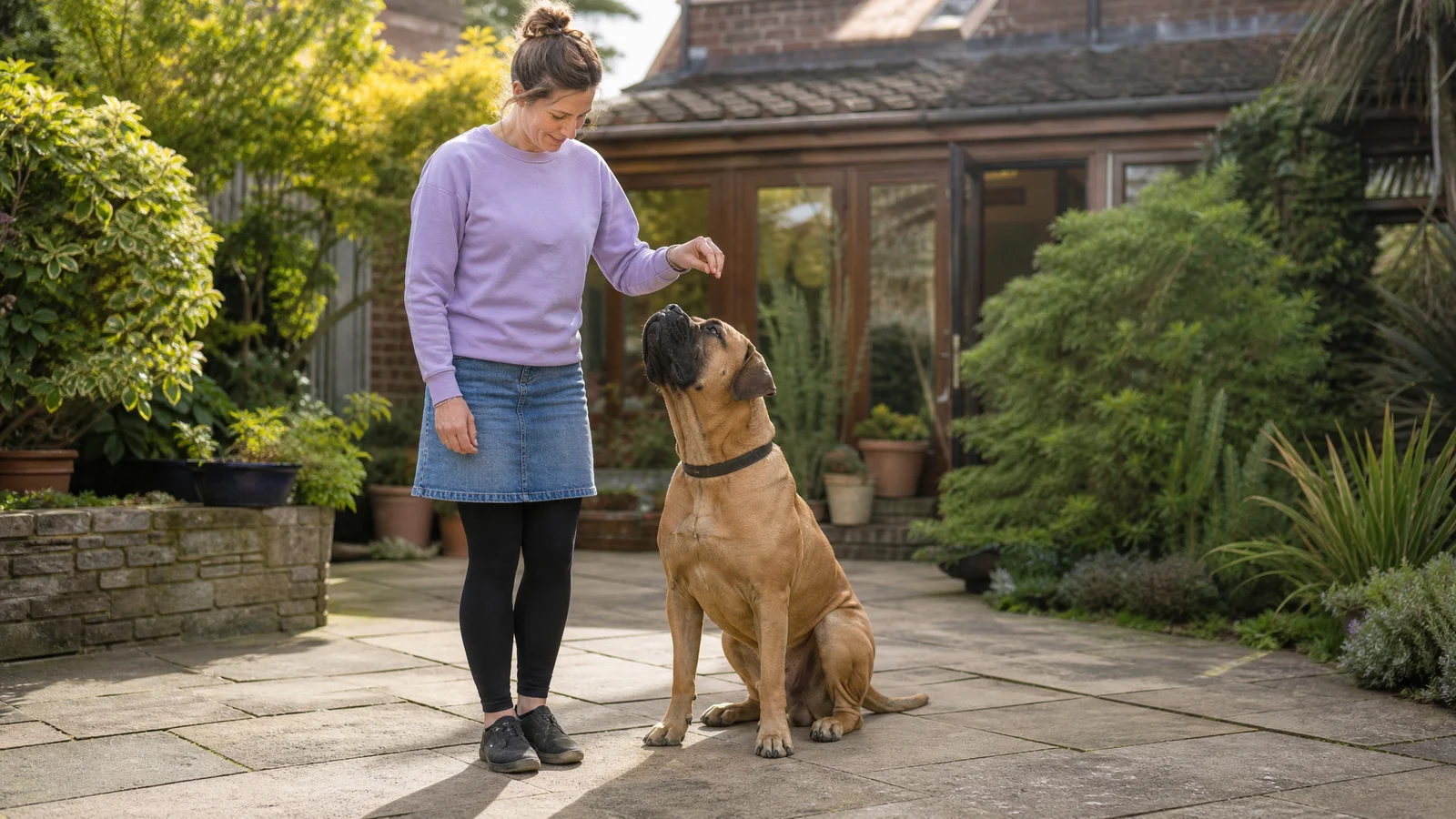
Pay for the pause itself. Say a marker word like "yes" at the moment the dog holds still, then deliver the treat right where they are standing or sitting. If you toss it or hold it far away, you pull them out of position and reward the movement instead.
Brief sessions work best, and stopping on a success leaves the dog eager for the next one. Life rewards count too. The door opening, the bowl going down and the leash clipping on are all paid for with a pause first.
Rules Worth Setting
Decide in advance what the rules are at doors, bowls, furniture and gates, and make sure everyone applies them the same way. A rule that changes with who is home teaches a smart dog to test each person.
When the dog breaks a rule, keep the consequence mild and reward-compatible. Close the door, pick up the bowl, or stop the game for a moment, then set up an easier repetition and pay the right choice.
Consistency Over Years
These rules are not a puppy phase. Keep them as the dog grows, and revisit them as they age. Senior dogs can show behavior changes in senior dogs such as more anxiety, disorientation or wandering, and signs include responding less to known cues. A sudden slide in a well-trained dog deserves a conversation with your vet, and regular vet visits are the best place to raise it.
Boerboel Wait Training Games
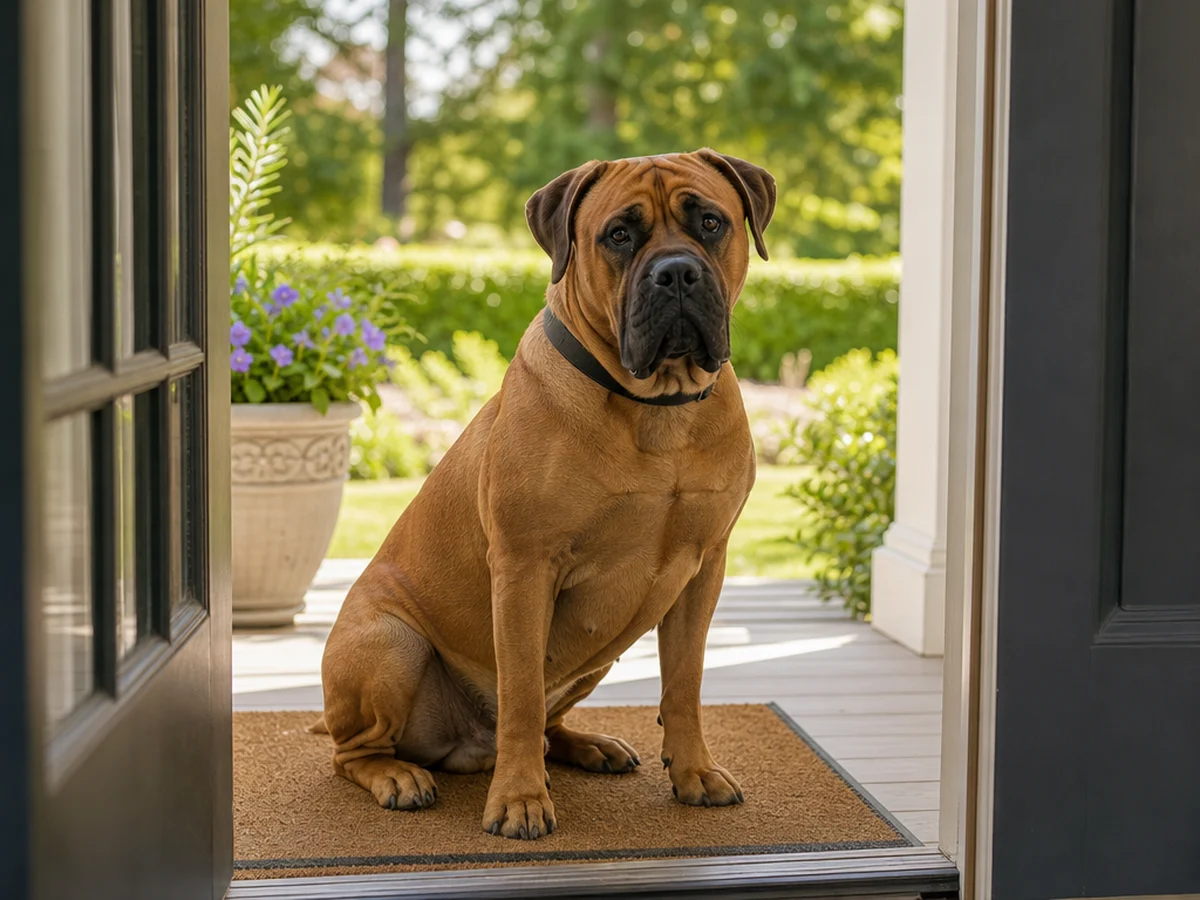
The doorway is where a Boerboel's habits show up first. A dog who learns that the door opens when they surge forward will surge forward for the rest of their life, and a surge from a large dog can knock over a child or a guest. Wait is the first game because it protects everyone at that threshold, at the bowl and at the yard gate.
Stages of Wait
Raise duration and difficulty separately, never both together. If the dog fails, you moved too fast, so drop back a step.
- Ask for a sit at a closed door or in front of the bowl, mark and reward a single second of stillness, then release.
- Stretch the hold to a few seconds, then longer, rewarding while the dog stays in place rather than after they move.
- Add difficulty one piece at a time: the door cracked open, you stepping sideways, or the bowl lowering a little.
- Open the door fully, step through first, and release the dog only when you are ready.
- Take the game to the yard gate and the car door, using a long training line outdoors so the dog has some freedom without free range.
Release Cues
Wait only means something if it ends. Choose one release word, such as "okay," and use it every time, in a calm voice. Keep it separate from your marker so the dog knows the difference between "yes, that was right" and "now you may move."
Never let the dog release themselves. If they break before the cue, calmly reset and ask for an easier hold. The release is the biggest reward in the game, so let the dog earn it. Once wait is solid, your recall training on a long line also has a stronger foundation.
Leave It Training Games
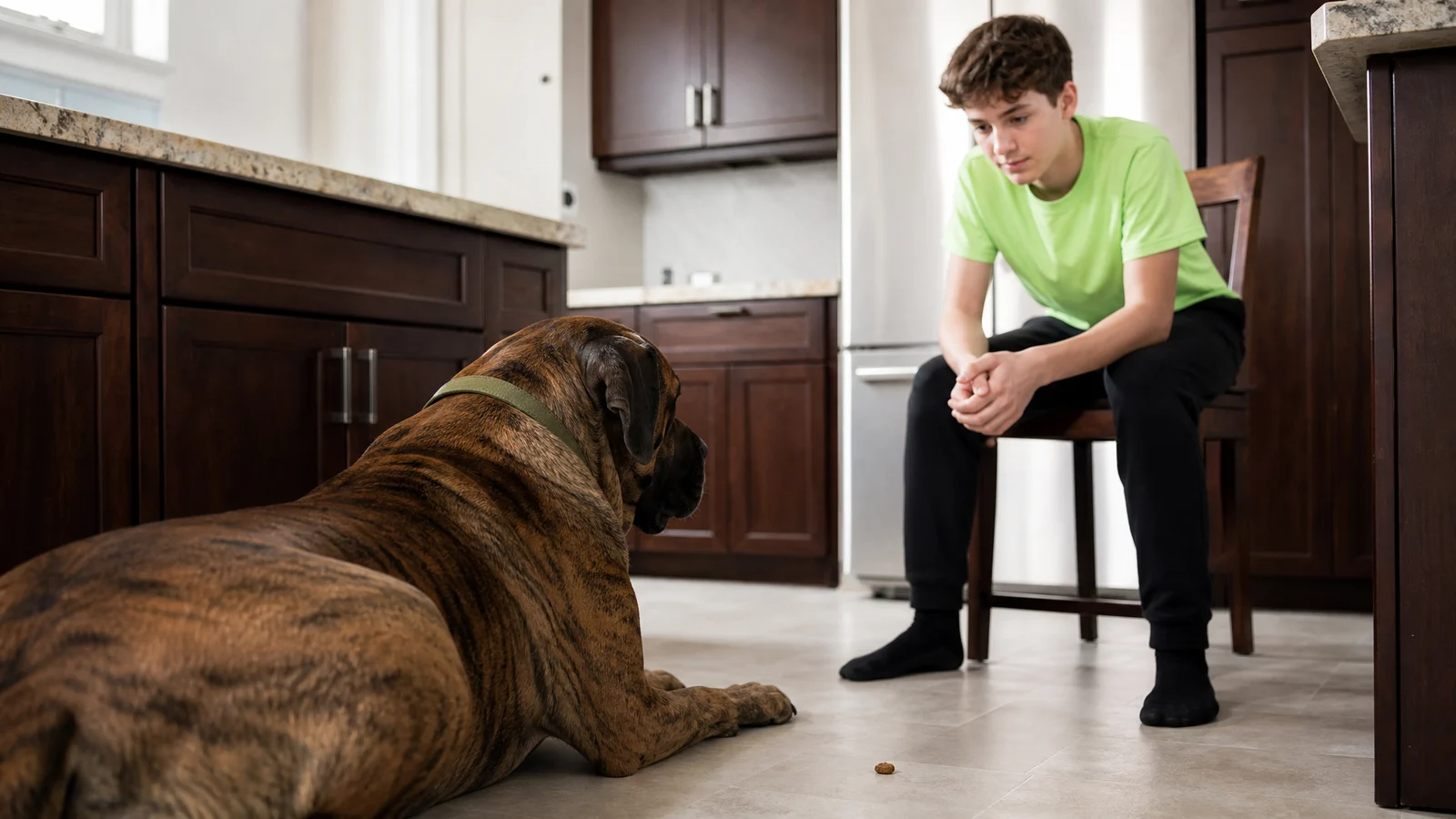
A chicken thigh hits the kitchen floor and a Boerboel crosses the room faster than you would think a dog that size could move. That is why leave it earns its place. The breed has the size to clear a counter and the nerve to guard what they find, so the cue has to work before the dog arrives at the food.
The Closed-Hand Game
Start with a boring treat in your closed fist and let the dog sniff, lick or paw at it. Say nothing. The moment they pull their nose away, mark and give them a better treat from your other hand. That trade-up shows them that ignoring the first treat pays more than taking it.
Repeat until the dog backs off quickly, then add the words "leave it" just before you offer the fist. Open your hand slowly over several repetitions and keep the better reward ready.
Floor Items
Next, put a low-value treat on the floor and cover it with your hand or foot. When the dog looks at you, mark and reward from your hand. Gradually uncover it, and then work up to dropped items with the dog on a leash.
If the dog grabs something, do not make a scene. Calmly trade for a treat, or remove the item and reset the exercise at an easier level. Always keep the trade-up reward better than what is on the floor.
Leave It on Walks
Sidewalks are full of tempting objects, so practice on leash and pay generously for a glance at you. As skills improve, a 20 to 30 foot line can give the dog more room to practice. A Boerboel should not be off leash, no matter how good the cue gets.
Leave it pairs naturally with loose-leash walking. A dog who can ignore a dropped sandwich is a dog who can also walk past a passing dog or a squirrel with your help.
Settle Training for a Boerboel
After a good wait or leave it session, the dog is often buzzing. That is the moment to ask for settle, because the point of the first two games is not a dog who is locked on you but a dog who can be calm around the house. Settle is the counterpart, and in our view it is the most underrated cue for a breed this alert.
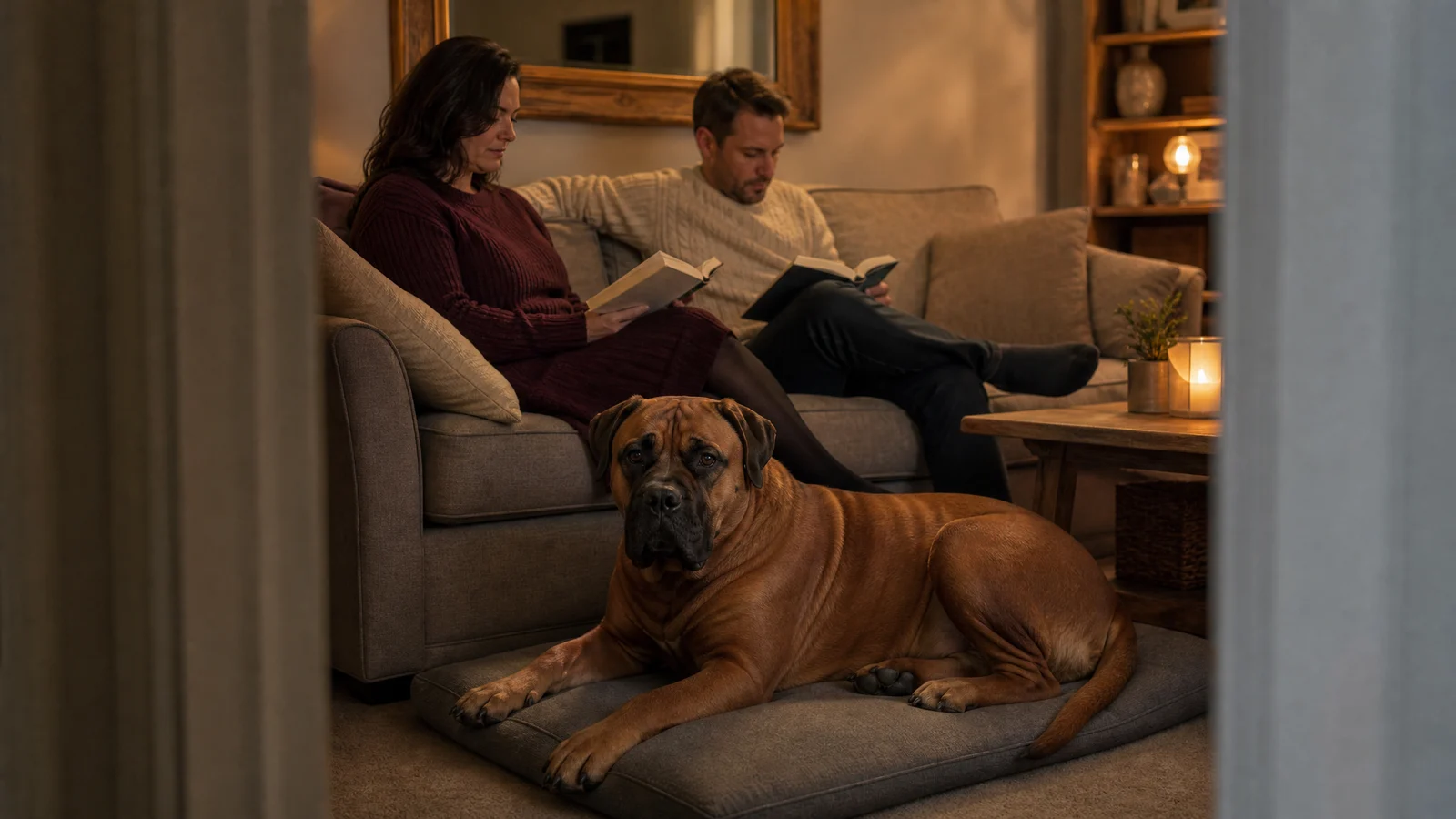
Pick a mat or a bed and reward every step toward it. Mark when the dog lies down on it, and give treats low and between the paws while they stay. Space the treats out slowly, and then add small movements by you, such as walking across the room or opening a cabinet. Reward calm, not just position.
Once the cue is steady, use it in real routines. Send the dog to the mat while you prepare dinner or when the doorbell rings, and combine wait at the door with a settle once guests are inside. Keep visitors at a distance at first, and let the dog decide how close to come. If you use a crate, the same relaxed state carries over to it.
Two Weeks of Boerboel Training Rules
Short sessions beat long ones, and a few minutes each day on wait, leave it and settle will do more than a long weekend marathon. Keep a note of which game wobbles. The plan below runs day by day, and each day includes a few minutes of all three games.
- Day one: Teach the marker word, ask for a one-second wait at the bowl, and reward a few moments on the mat.
- Day two: Stretch the bowl wait to a few seconds, start the closed-hand game, and reward calm on the mat.
- Day three: Wait at a closed door, repeat the closed-hand game, and space out the mat treats.
- Day four: Add the release cue everywhere, cover a floor treat with your hand, and lengthen the mat settle.
- Day five: Open the door a crack during wait, uncover the floor treat while the dog looks at you, and move around during settle.
- Day six: Mix all three games in one short session as if it were a normal evening.
- Day seven: Take an easy review day and note which game is weakest.
- Day eight: Move wait to the yard gate and car door, keeping the dog on a leash or line.
- Day nine: Drop a low-value item on the floor on leash and reward the dog for ignoring it.
- Day ten: Practice leave it on a walk, rewarding every glance away from sidewalk finds.
- Day eleven: Run a doorbell drill, with wait at the door and settle on the mat.
- Day twelve: Add longer holds and small distractions, such as a dropped spoon or a family member walking by.
- Day thirteen: Ask a calm helper to visit while the dog is on the mat and leashed, paying generously for staying put.
- Day fourteen: Do one check of all three games and see what has stuck.
Use the final check to compare all three games. Keep the weakest skill in easy daily practice.
 Training basicsSit, Down, Stay: Reward-Based Basics for a 150-Pound Dog
 Training basicsThe Mat Cue: Teaching a Calm Boerboel to Settle on Command
 Puppy trainingBoerboel Puppy Socialization: A Practical Early Plan