
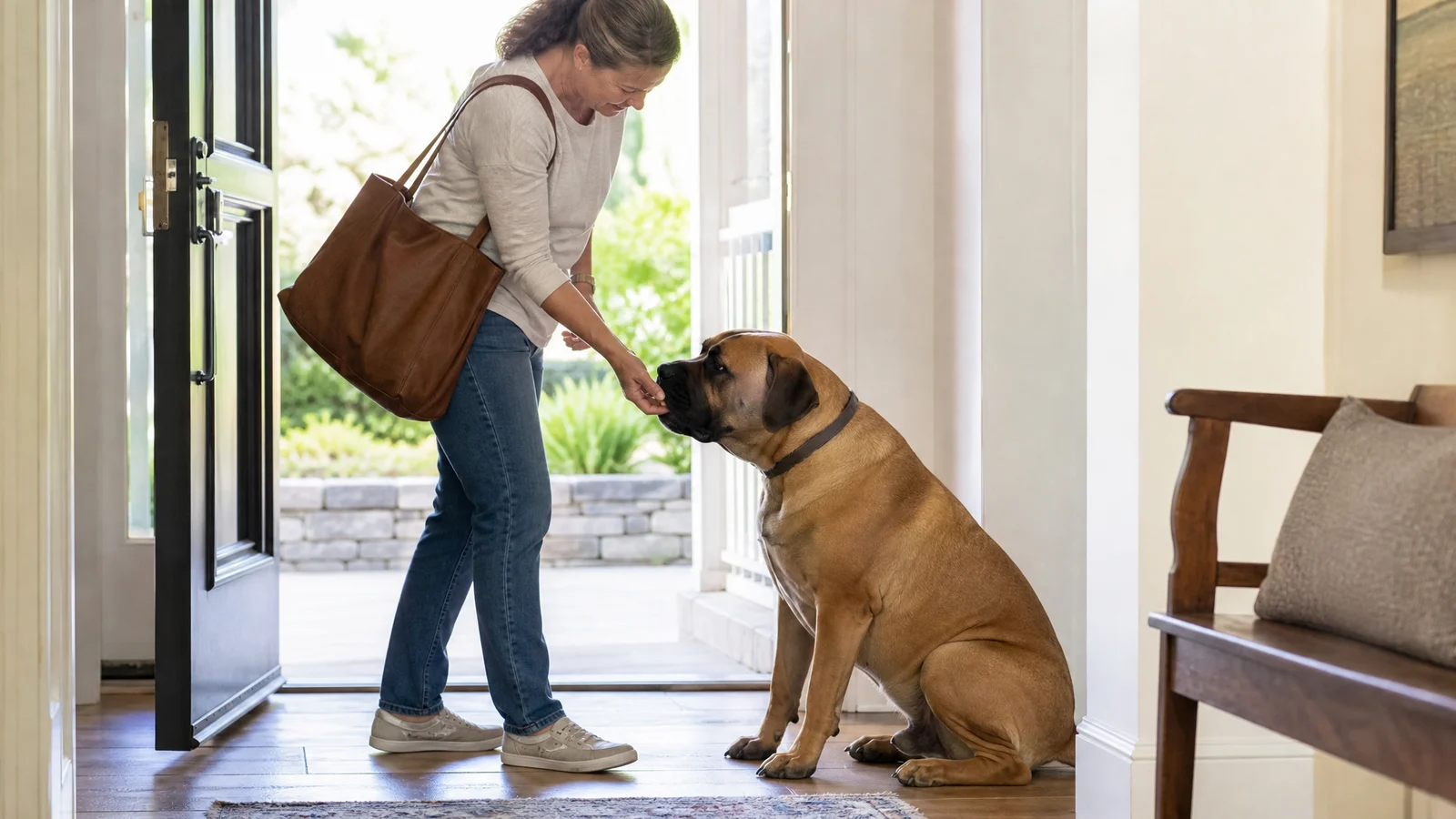
At a year old, some Boerboels greet a guest by sitting, waiting and taking a treat from a calm hand. Others haul their owner across the room toward the same guest. What separates them is rarely temperament. It is whether the manners were built while the puppy was still small, easygoing and easy to guide.
This article looks at puppy training from 8 weeks to 2 years by testing six common beliefs against the facts, so you can see what to teach at each stage and what can safely wait. Because an adult Boerboel reaches 150-200 pounds, habits left to chance cost far more here than in a small breed. Handled well, the same dog becomes the steady, dependable family companion the breed is known for.
Early Puppy Training Is Safe for a Boerboel
The belief goes like this: a puppy of 8 weeks is too small and soft for real lessons, so training can wait. Breed guidance says the opposite. Because of their inborn guarding instincts, structured, long-term obedience training started at a young age is a must, and a young puppy is far easier to guide than a confident adolescent.
What a young puppy needs is gentle, not hard. Keep lessons to a few moments and pay for every one with treats, praise or play. The method matters for the dog's body too. A 2020 PLOS ONE study followed 92 pet dogs and found that reward-based schools produced calmer dogs, with fewer stress behaviors, less panting and smaller cortisol rises (cortisol is the body's stress hormone) after sessions.
A workable plan for the first weeks at home:
- Say the puppy's name and pay for eye contact a few times a day.
- Lure a sit before meals, before doors open and before the leash clips on.
- Handle paws, ears, mouth and collar with a treat for each touch, so exams are easy later.
- Pick one potty spot and one cue word, and reward the instant they finish outside.
- End every session while the puppy is still keen, never when they are tired.
Socialization in Puppy Training Does Not Wait for a Calmer Month
Socialization should not wait until the puppy has settled in or every vaccine is finished. The biology argues against waiting. The AVMA places the ideal starting point between 3 and 14 weeks of age, the stretch in which puppies take in new surroundings most readily. A Boerboel comes home at 8 weeks already well inside that window, so what they meet, or never meet, shapes how they read the world later.
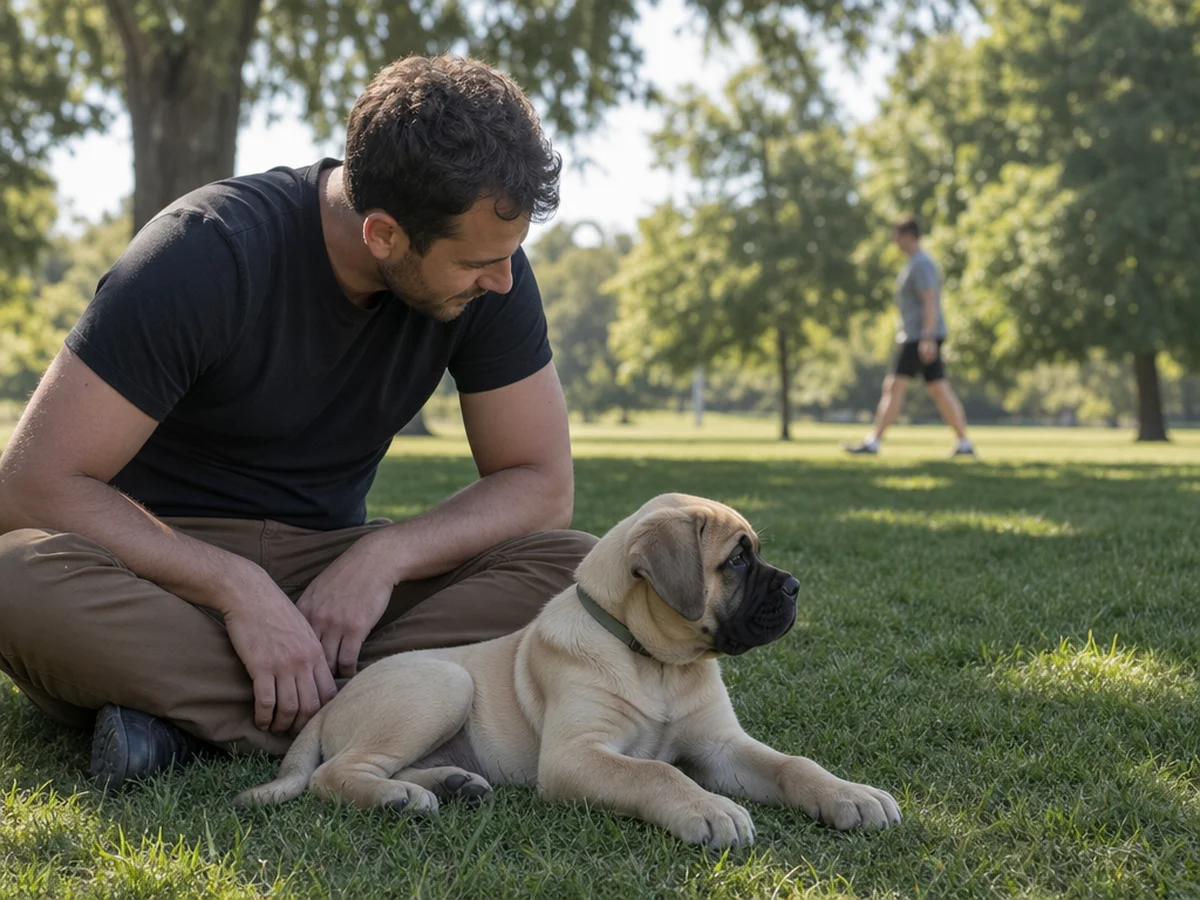
Socializing does not mean teaching the dog to love everyone. The breed standard asks for a dog who is discerning and accepting of friendly strangers after proper introductions, and notes that many stay reserved and aloof. Aim for unbothered, not eager. Reward calm looks at new people and let the puppy decide whether to approach.
Puppy classes can help too. Puppies can generally start socialization classes at 7-8 weeks, after at least one set of vaccines given 7 days before the first class and a first deworming. A sensible order of exposures looks like this:
- First weeks: household noises, different floors, car rides and gentle handling by every family member.
- Next: calm adult visitors, one at a time, who ignore the puppy until the puppy chooses to approach.
- Then: well-mannered children with adults supervising, plus strollers, bicycles and traffic watched from a distance.
- Ongoing: calm, known adult dogs, met one at a time. Dog parks are not a good fit, since Boerboels often take challenges from other dogs poorly.
Our guide to socializing a Boerboel around kids, visitors and other dogs goes deeper on each of these.
This is general information. Ask your veterinarian when your puppy's vaccinations and deworming allow public places and classes, and keep regular checkups on schedule.
A Pliant Boerboel Puppy Stays Easygoing Without Help
Boerboel puppies are easygoing and pliant, and inexperienced owners may assume the dog will stay that way. It does not last on its own. The easygoing, pliant qualities fade, and consistent training must be well underway before they do, so the sweet puppy following every cue today is a starting point, not a finished dog. Having trained Boerboels for many years, we treat the easygoing months as a loan, not a gift.
The reason this window matters is learning history. A behavior rewarded many times while a puppy is easy to guide becomes an automatic habit. When the pliant phase fades, the dog already has a practiced, rewarded answer to doorbells, visitors and leashes. Nobody can name the exact month the easygoing phase ends, and dogs vary, so assume it is already closing. Before it does, set these:
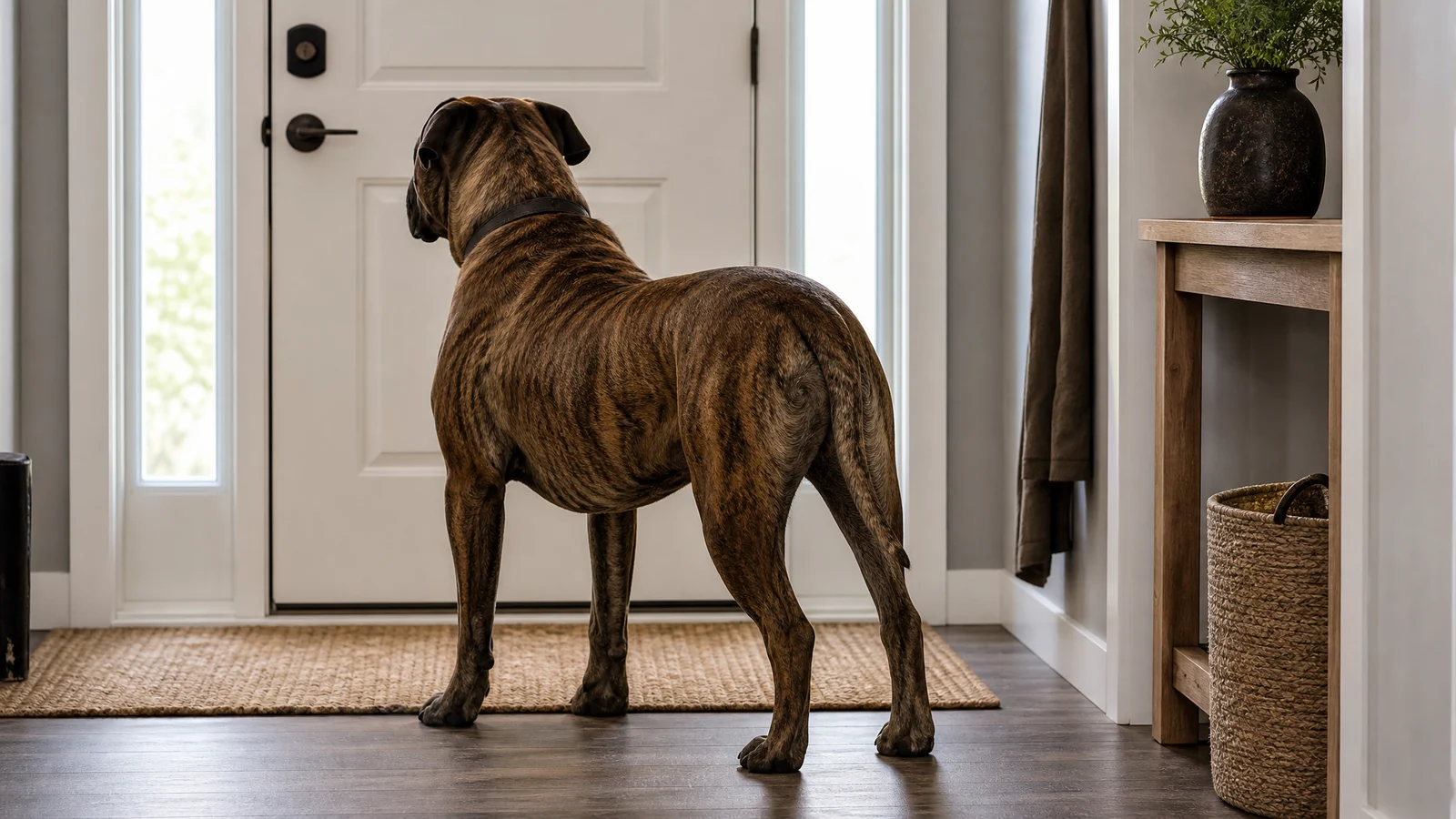
- A sit or a settle on a mat whenever the door opens.
- A reliable wait at doors, gates and car doors.
- A recall paid with the best treats and never used for something unpleasant.
- A drop-it that works by trade, so the dog relaxes around food and toys.
- Calm tolerance of handling by strangers, including the vet.
The full sequence is laid out in our guide to starting obedience early, before the easygoing phase fades.
Size Does Not Excuse Skipped Puppy Rules
Jumping, mouthing and leash pulling are not harmless while the puppy is small, and leaving them to be fixed later is a mistake. A Boerboel reaches 150-200 pounds, with preferred heights of 24 to 27 inches for males and 22 to 25 inches for females. That makes the adult version of every habit a safety issue for children, visitors and you.
Dogs repeat what works. A puppy who learns that pulling gets them to the interesting smell will keep pulling at full size, with far more force behind it. So write the adult rules down now and have the whole household follow them: four paws on the floor for greetings, a loose leash, a wait at every door and a trade for anything picked up. This breed should also never be off leash outside a secure area, which makes loose-leash walking a core skill, not a nicety.
Growth deserves care as well. Heavy, fast-growing puppies strain their joints on slippery floors and repeated jumps off furniture or out of cars, so teach calm entries and exits. Ask your veterinarian what exercise suits each stage rather than relying on a general rule.
Is the Teenage Boerboel Training Window Closed?
In adolescence, the dog who sat perfectly in the kitchen seems to forget every cue outdoors, and it can look as though the window has shut. The cause is usually changed conditions, not lost learning. Dogs learn cues in a context, so a sit on kitchen tile does not automatically carry over to a busy sidewalk, and rising confidence adds more distractions. The training has not vanished. It needs rebuilding in harder places.
Make the work easier, not firmer. Go back to the quiet yard, pay at a higher rate, then add distance, duration and distraction one at a time. This is what proofing means: practicing the same cue in steadily harder settings until it holds. Good teenage priorities include:
- Practicing cues at the edge of busy places before entering them.
- Keeping a mat settle going for every visitor.
- Rewarding a calm look at strangers, then rewarding the dog for turning back to you.
- Keeping walks leashed and keeping greetings optional for the dog.
Stiff posture, hard stares and growling are information, not defiance. Reward-based handling keeps those warnings visible, while a dog who learns to hide them is harder to read. If you see them, talk to your veterinarian to rule out pain and bring in a reward-based behavior professional. Our piece on the guarding instinct and how to manage it at home explains what sits behind these signals.
Year Two Still Counts as Puppy Training
A Boerboel who looks grown at a year is not finished. We know of no single age at which the breed is fully mature, and dogs vary, so treat months 12 to 24 as a continuation of puppy training. Once the easygoing puppy qualities have faded, the habits you built get tested, and consistent training is what carries them through.
Keep rewarding, but mix it up, paying some repetitions and not others, and give the dog real work. The standard describes a dog with a willingness to please, which suits obedience, scent games and everyday good-manners exercises. Hold off on jumping sports until your veterinarian says the joints are ready. Real-world practice for this stage.
Calm waits in a vet waiting room and relaxed rides in the car are worth practicing now, along with passing other dogs at a distance and rewarding the dog for staying relaxed. Visitors should follow the same rules as the household, so the dog gets one clear message from everyone. Regular veterinary checkups throughout growth round out the plan.
Life expectancy is 9-11 years, so the manners you cement now serve for most of the dog's life.
One Puppy Training Step to Take Today
Pick one doorway. The next time you are about to go outside today, ask for a sit, wait for a moment of stillness, say your marker word, open the door and reward. A young puppy can be lured into the sit with a treat. An older dog can add a short wait after the sit and a release word before walking through.
That tiny routine carries the whole plan. It teaches impulse control, it makes a calm response the way through every door, and it repeats many times a day. An easygoing puppy now will be a 150-200 pound adult later, so do it at the next door you open today, and again at every door after that.
 Exercise and jobsBoerboel Sports and Jobs: Putting the Breed's Instincts to Work
 Training basicsHow to Start Boerboel Training Before the Puppy Phase Fades
 BehaviorAre Boerboels Aggressive? Guarding Instinct at Home