

Is your Boerboel wrecking one thing after another, and how do you stop it for good? Most advice tells you to add exercise and chew toys. For a powerful, guardian-bred dog that falls short, because a Boerboel who has been walked and handed a toy can still take apart a door frame an hour later if the real driver is worry, an idle mind, or a house that lets them reach everything.
Our work centers on the way Boerboels think, behave and learn, and the damage almost always traces back to a few repeatable causes. Handled badly, the habit gets rehearsed daily and one swallowed scrap of fabric can end in an emergency clinic visit. Handled well, you get a settled dog who saves that strength for better things.
Below, you'll find the damage mapped to its likely causes, including furniture, chewing when you leave and chewing at night, followed by management for today and a staged practice plan.
Shredded Furniture and Chewed Door Frames
Begin by walking the house and noting exactly what was damaged and where, because a large, muscular dog leaves a very readable trail. Chewing that lands on the trim along the route you take when you leave says something different from chewing spread across whatever happened to be within reach, and both differ from a single favorite cushion that smells strongly of the family.
The breed is rated 4 of 5 for mental stimulation needs, so a dog with nothing to think about will often invent a project, and a sofa makes a very convincing one.
Chewed Wood and Trim
Door frames, baseboards and table legs are usually chewed for one of two reasons. Either the dog is trying to reach you, which makes the damage cluster at exits, or the wood is simply the most satisfying texture in the room and has been free for the taking.
In both cases the fix starts with access. Close the door, gate the room, and put a better chew in the dog's mouth before they ever pick at the trim. The skills plan later in this article then teaches them what to choose instead.
Torn Fabric and Cushions
Cushions, blankets and shoes are soft, scented and easy to shred, which makes them popular with dogs who are lonely, under-occupied or still in a mouthy stage. The danger is not only the mess, since fabric and stuffing can be swallowed. Pick up anything soft before you leave the room, and offer a sturdy chew whenever you see the dog carrying fabric around.
Gouged Walls and Drywall
Chewed corners and gouged drywall often appear when a dog is aroused, frustrated or watching something they cannot reach, such as a delivery person at the window. This is a vigilant, protective breed, and the wall beside the window or gate takes the strain. Block the view, move the dog's resting spot away from the trigger, and reward calm behavior in that room so the frustration has somewhere better to go.
Boerboel Destructive Chewing That Starts When You Leave
If the damage only appears while the house is empty, the cause is usually less about boredom and more about how the dog feels on their own. Boerboels are highly affectionate with their families, and a dog this attached to their people may never have been shown that time alone is safe and ordinary.

Chewing clustered around doors, windows or the crate, often with drool, pacing or noise, points to isolation stress. Chewing that is calm, thorough and scattered across the house points more toward under-occupied time.
Practice Being Alone
The right changes are about practice, not punishment. Leave in tiny steps the dog can succeed at, return before worry builds, and reward calm behavior while they work on a long-lasting chew. Keep departures and returns quiet, because a dramatic goodbye makes the next absence feel bigger.
Exercise and a meal before you go help a tired, satisfied dog settle, but they will not cure real distress on their own. If the dog panics, hurts themselves on a door or crate, or gets worse each week, skip ahead to the final section and bring in a professional.
Cut Off the View
A guardian breed who patrols windows and hears every sound may also be reacting to the outside world while you are out. It helps to read about the instinct behind common Boerboel behavior problems, then close curtains or move the dog to an interior room so there is less to react to.
Why Does Your Boerboel Chew at Night?
Night chewing has three common sources, and they call for different responses. Restlessness comes first, when a dog who had a dull day or too much late excitement wanders and mouths whatever is nearby. Developmental chewing comes second, and it often seems worse in the evening as the household winds down. Unmet needs come last, such as a full bladder, thirst or a bed that is too warm, and these can be fixed in a minute once you think of them.
An Evening Routine That Works
Most night chewing eases when the day is allowed to finish gradually. The exercise and brain games article covers the daytime half of the picture. For the evening itself, a moderate-energy breed who needs mental work does well with a sequence like this:
- Finish the main activity early, then switch to something quiet such as a sniff walk or a puzzle feeder.
- Offer a toilet break and fresh water so the dog's body is settled before bed.
- Give a safe chew on their bed while the house quiets, so chewing becomes part of winding down.
- Clear the sleeping area of anything shreddable and check that the room is comfortably cool.
- Keep lights low and interaction calm until the dog is clearly relaxed.
When Night Chewing Is New
If night chewing begins out of nowhere in a dog who used to sleep quietly, do not file it as a training problem. A new nighttime pattern can be the first sign of discomfort, so the veterinary section below comes before any more training does.
Swallowed Fabric and Stuffing From Chewing
A big dog can swallow a surprising amount in a moment, and fabric, stuffing, rope fibers and pieces of toys are the items most likely to cause trouble because they do not break down and can lodge in the gut. This is why we treat soft items as a management matter rather than a training matter. You cannot rely on a cue like "drop it" to protect a dog who is alone, so keep fabric out of reach and retire any toy that is coming apart.
Watch for repeated vomiting, a refusal to eat, unusual tiredness, a tight or painful belly, straining without producing stool, or a dog who cannot get comfortable. Any of these signs after you know or suspect a swallowed item should be treated as an emergency.
Call your veterinarian or an emergency clinic right away and tell them what is missing, rather than waiting to see whether the dog improves. If you can, bring the remains of the item or its packaging with you.
Management That Stops Destructive Chewing Today
Management protects your house this afternoon, and it asks nothing of the dog. Every successful chew on the wrong object strengthens the habit, so the first goal is to stop the rehearsal while training catches up. The AKC notes that Boerboel puppies are easygoing and pliant, and it is tempting to assume that sweetness means the problem will fade by itself. It will not, since consistent training has to be well underway before those qualities fade.
- Keep the dog only in rooms you have already prepared, using a gate, a shut door or an exercise pen as the barrier, and watch them whenever they are loose.
- Lift shoes, remote controls, cushions, blankets and anything stuffed out of reach, and keep the trash closed.
- Offer a small supply of sturdy chews and food puzzles sized for a large breed, and swap them out so none goes stale.
- Replace any chew that is breaking into pieces, and take it away before it can be swallowed.
- Pair each departure with a long-lasting food chew so the empty house starts to mean something good.
- Add daily mental work such as scent games or short training sessions, which tire a Boerboel more than another lap of the block.
Rotation matters more than quantity. A chew that has been out of sight for a few days looks new again, so keep only a few items out at a time. When you catch the dog with something they should not have, calmly trade for a better item rather than chasing or grabbing, and praise the moment the new chew is in their mouth.
Is Teething or Pain Behind the Destructive Chewing?
Developmental chewing is a normal stage in a growing puppy, and it tends to ease as adult teeth settle in and the dog matures. It is usually widespread and eager rather than distressed, and the dog is otherwise bright and eating well. The puppy training timeline shows how mouthiness fits into the larger picture, so it is worth knowing which stage your dog is in.
A physical cause looks different. Chewing that starts abruptly in a settled adult, a dog who drops food, paws at their mouth or chews on one side only, or one who eats non-food items, vomits or shows appetite changes, is a reason to call the vet before training anything. Boerboels vary in how much they drool, so the change from your own dog's normal is the clue, not the amount.
Regular veterinary visits are the simplest way to catch mouth and stomach trouble early, and a dog who feels well is far easier to teach. Report any sudden change in chewing or appetite.
A Boerboel Chew-Skills Practice Plan
Once the house is protected, you can start teaching what to do instead. Current evidence, summarized in a position statement from veterinary behaviorists, supports only reward-based methods, and that suits a breed rated well on trainability and known for willingness to please.
Work through each stage below in short, calm sessions, and move on only when the dog is reliable at the current one. If they struggle, stay longer, since a large dog who gets frustrated learns very little.
- Marker and food. Choose a word or a clicker and, in a quiet room, pair the marker with food: sound it, then deliver a treat inside 3 seconds, repeating the sequence until the dog looks up expectantly.
- Trade. Offer a treat beside a low-value item the dog already holds, mark the moment they release it, and reward. Hand the item back sometimes so giving it up never feels like losing it.
- Leave it. Start with a treat under your hand, mark the instant the dog backs away, and reward from your other hand. Build to household objects and finally to things on the floor.
- Settle with a chew. Show the dog how to relax on a mat, rewarding them each time they stay put, then add a long-lasting chew. You will lean on this skill at night and during departures.
- Chew through movement. Walk about, open doors and handle things while the dog stays put with their chew, then begin short absences.
Keep sessions brief and end on a success. A Boerboel is strong and quick when excited, so practice when the dog is calm, with a leash or gate handy, rather than at the end of a busy day when arousal is high.
Signs Destructive Chewing Is Fading and When to Call Help
Progress rarely arrives as a clean stop. It shows up as a gradual change in the pattern, and you can read these signs as proof the plan is working:
- Incidents become less frequent, and the damage that does happen is smaller and in fewer places.
- When you redirect the dog, they release the item and take the chew faster than before.
- The dog heads for their own chews first and settles in their spot without a cue.
- Time alone gets calmer, with less pacing, drooling or noise, and you come home to an intact house.
- Evenings end with a relaxed dog instead of one searching for something to destroy.
Some signs mean you should not wait. Call a veterinarian at once if the dog swallows fabric, stuffing or a toy fragment, shows vomiting, a painful belly or loss of appetite, or if chewing appears out of the blue in a dog with no history of it.
Ask a professional for help if panic when alone is worsening, the dog injures themselves on doors or crates, or chewing continues despite sound management and practice. Only a board-certified veterinary behaviorist may formally use that title, so check the qualifications of anyone you hire and make sure they use reward-based methods.
A Boerboel is a powerful, intelligent, people-attached dog, and their chewing is usually a message about unmet needs: mental work, safe rest, and practice at being alone.
Meet those with a managed house, a good supply of chews and a patient, reward-based routine, and the destruction tends to fade into a dog who settles beside you with a chew of their own. If the red flags above appear, whether swallowed items, a sudden start or panic that keeps growing, let a veterinarian or behavior professional step in early.
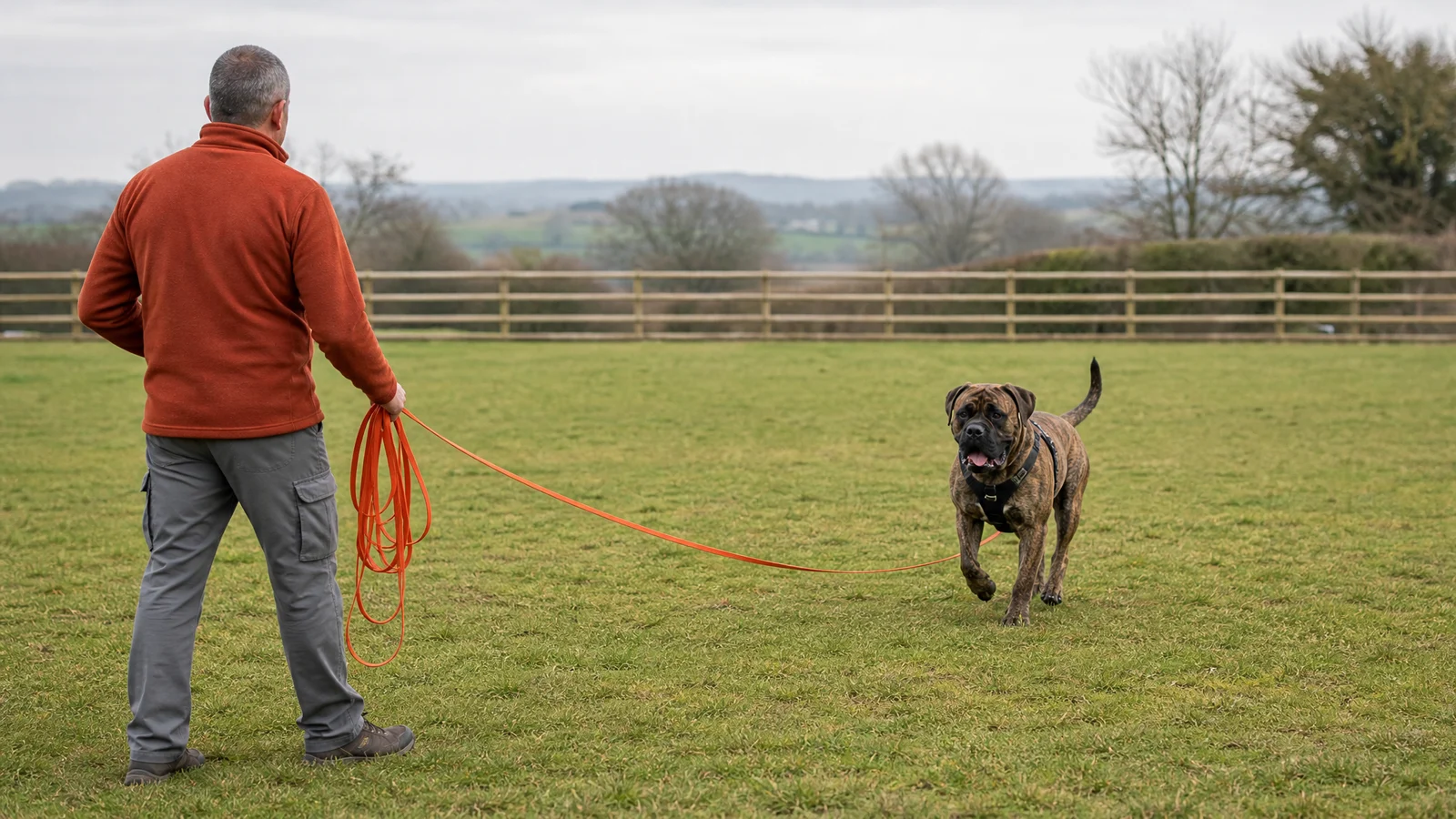 Training basicsRecall Training for a Boerboel Who Never Gets Off-Leash
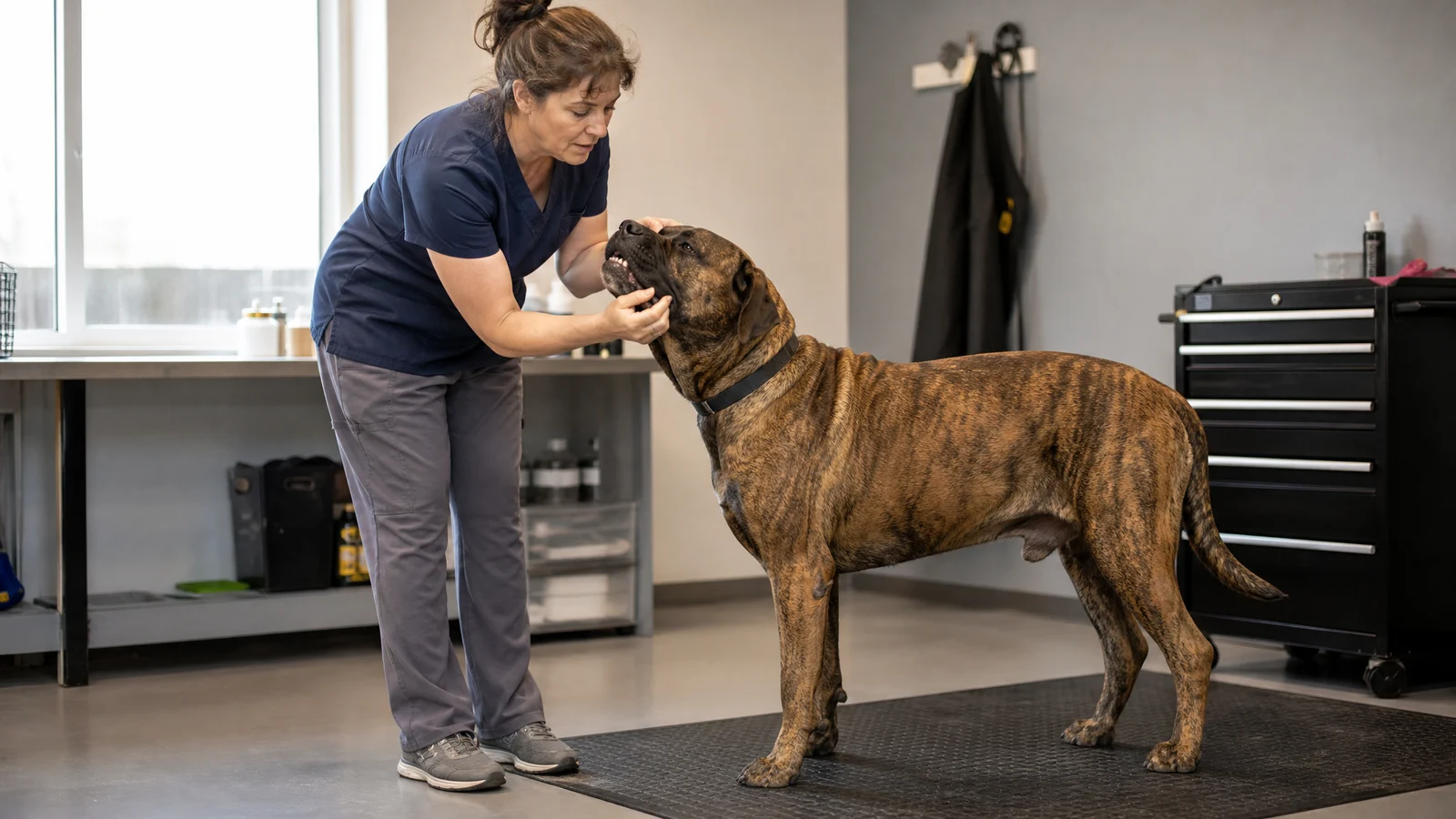 CareTeaching Your Boerboel to Stand for Handling and Examination
 Training basicsImpulse Control Games: Wait, Leave It and Settle