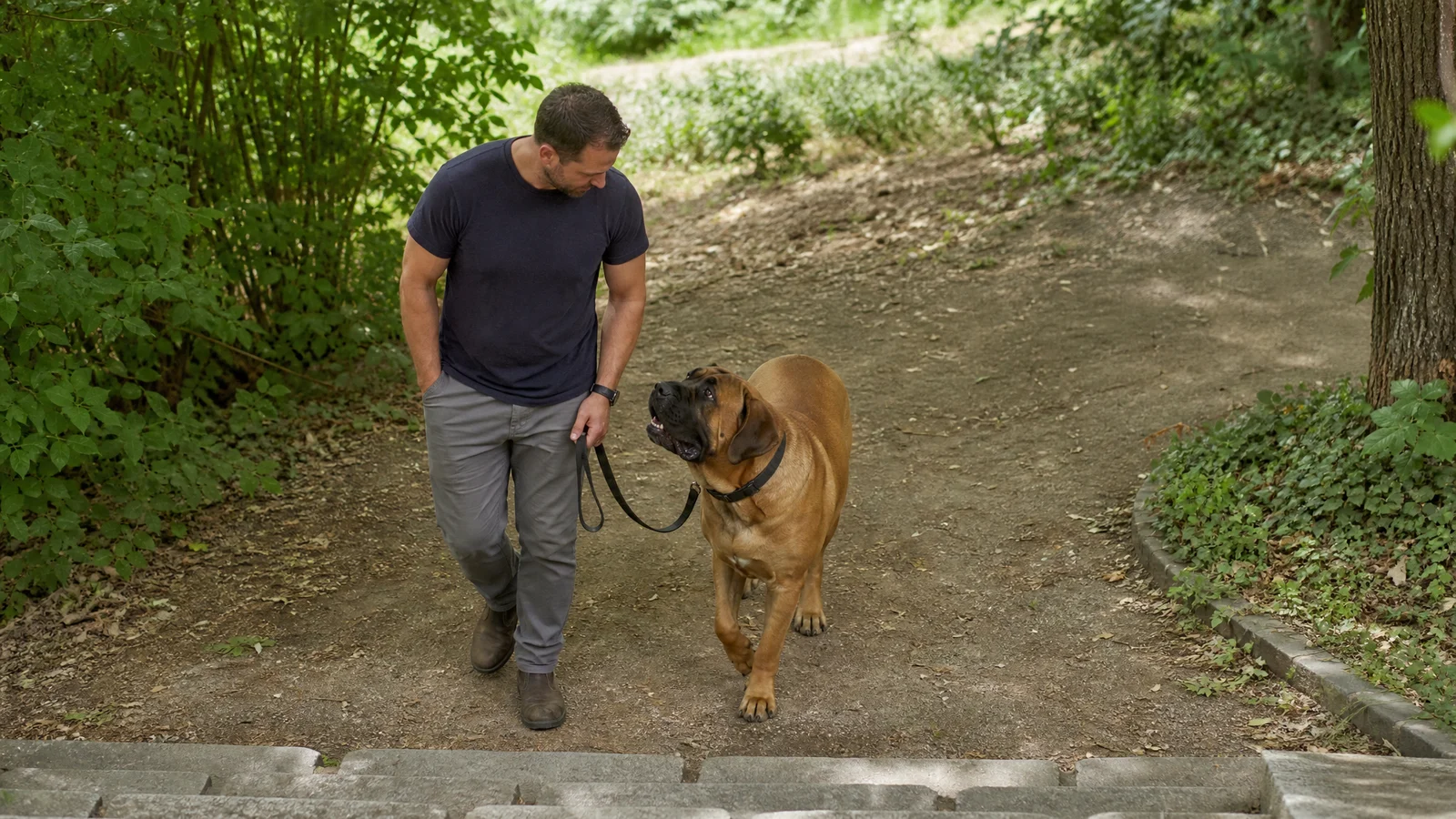
A full-grown Boerboel can weigh 150–200 pounds. Once that mass is moving toward a smell, person or dog, momentum turns a small leash habit into a safety problem. Loose-leash training should begin while the puppy is easy to guide. Early practice changes the habit before strength magnifies every error today.
The leash does not teach the behavior by itself. The dog learns from where rewards arrive, whether pulling gains ground and how much excitement the setting creates. Those mechanisms can be changed only when the handler sees which one is operating. This guide explains body mechanics, orientation, reinforcement history and arousal before building the actual plan for pulling and lunging.
Body Mass Changes Boerboel Leash Training
Mass changes the consequence of acceleration, not the learning principle. A puppy and an adult may both pull because forward movement has worked before. The adult simply brings more force to the same practiced choice, so prevention has unusual value with this breed. Every rewarded loose step during puppyhood is also practice for handling the adult body without a contest of strength.
Set the handler up to move without bracing. Use a well-fitted walking setup, sturdy leash and shoes that support stable steps. Equipment should keep the team secure while training happens, not promise to replace reinforcement and careful route choice. Check fit before each walk as the puppy grows, and confirm that movement remains free and comfortable.
Begin in open space where turns do not trap the handler against furniture, cars or a narrow gate. Hold the leash with relaxed arms and enough slack to show the dog what success feels like. A tight line from the first step cannot communicate the difference you intend to reward. Begin with the dog at rest so the first visible change in the line comes from a deliberate step, not a rush through the exit.
Orientation Starts Boerboel Leash Training
Orientation means the dog voluntarily notices and returns attention to the handler. It comes before heel position or distance because a dog facing the environment cannot read the next movement. Reward the turn of the head, the step toward you and the choice to remain nearby. These small responses create a conversation before the handler asks for a longer stretch of walking.
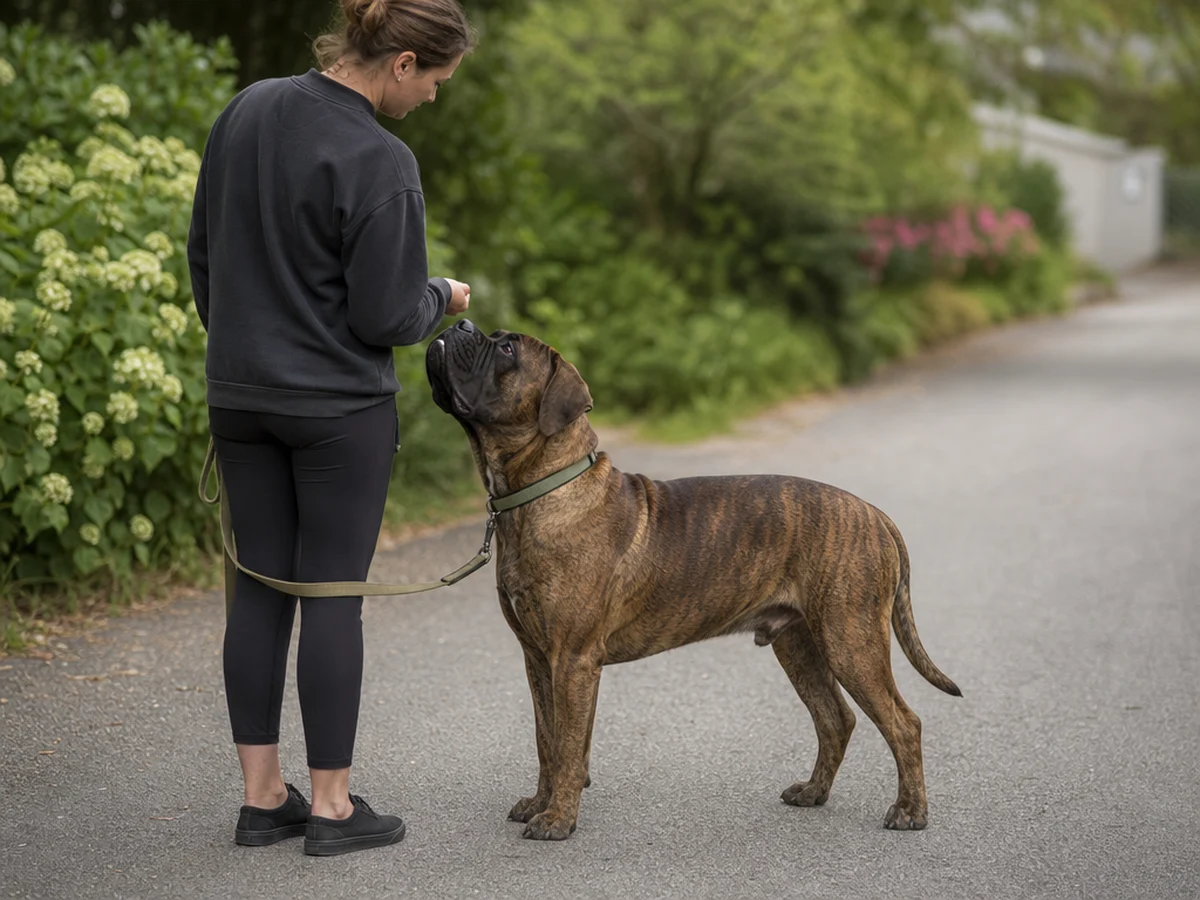
Place the reward beside the leg where you want the dog to travel. Tossing food ahead can restart forward drive, while reaching across the body can pull the dog through your path. Clear delivery builds a useful location without requiring the dog to stare upward throughout the walk.
Practice orientation away from the route first. Mark a glance indoors, then in the yard and near the quiet end of the driveway. The Boerboel training guide explains how familiar cues expand through gradually harder settings. Return to the easiest location whenever orientation slows, then raise difficulty by changing only distance, movement or distraction.
Pulling Builds a Leash Reinforcement History
Pulling persists when tension reaches something valuable. Each step toward a smell, doorway or greeting can reward the tight leash even if the handler never offered food. The history grows through outcomes, so changing the outcome matters more than repeating a cue. Apply the rule near low-value destinations too, because occasional success can keep a pulling habit strong.
Loose-walking guidance centers on one rule: not pulling should be the fastest route to where the dog wants to go. When the leash tightens, forward progress pauses. Slack makes movement available again.
Timing keeps that rule understandable. Stop before the handler is dragged into a long contest, wait for orientation or slack, mark the change and move. If the dog cannot disengage, turn into an easier direction and reward as they come with you.
Life rewards belong in the plan. A loose leash can earn the chance to sniff a tree, cross a quiet patch or continue toward the park. Food explains precise moments, while access teaches that cooperation still leads to the environment. Alternating them prevents the walk from becoming treats with no functional connection to travel.
Arousal Changes Boerboel Leash Training
Arousal is the level of activation in the body. Excitement, frustration and concern can all raise it, narrowing attention and making a familiar cue harder to perform. A dog who succeeds on an empty sidewalk may be unable to offer the same response near a barking dog.
Watch movement before the leash becomes tight. Faster scanning, a closed mouth, weight shifting forward or rewards taken roughly can show that the task is becoming difficult. Increase distance early, while the dog can still turn, eat and move with you.
The breed may remain reserved with strangers and may not accept challenges from other dogs. Proper introductions are part of breed guidance, but a walk does not require introductions. Passing calmly at a workable distance is a complete social outcome. The route can curve away or cross early, showing the dog that the handler will create safe space.
Read the Leash Mechanism
Do not label every tight leash as the same problem. Observe what happens just before the pull, what the dog reaches and whether distance restores attention. The first adjustment should address that mechanism rather than add more pressure to the line. Observe several easy outings before deciding that one moment represents the normal pattern.
Use the table as a starting explanation, then test the adjustment in an easier setting. The dog's response will show whether the mechanism was read correctly.
| Pattern | Likely mechanism | First adjustment |
|---|---|---|
| Steady pull from the door | Forward access has rewarded tension | Practice slack at the threshold before leaving |
| Zigzagging toward smells | Reward location is unclear | Pay beside the leg, then release to sniff |
| Surge toward a familiar place | Destination predicts high value | Approach in short arcs and reward orientation |
| Stiff focus on another dog | Arousal exceeds current skill | Create distance before asking for attention |
| Pulling late in the walk | Difficulty or fatigue has accumulated | Shorten the route and finish on easy steps |
One walk may contain several mechanisms. Treat the doorway, sniffing stretch and dog encounter as separate training pictures. That separation makes progress visible and stops one difficult moment from defining the entire outing. Notes on location, distance and recovery can reveal improvement that is easy to miss during a busy walk.
Build the Boerboel Loose-Leash Plan
The plan now combines the earlier mechanisms in increasing difficulty. Stillness establishes reward placement, first steps teach the tension rule and real routes add access to smells and movement. Advance only when the dog can orient and the handler can keep a genuine curve in the leash.
Stillness Before Distance
Clip on the leash in a quiet place and reward the dog beside you. Shift your weight, take one step and pay for staying near. If the dog moves ahead, remain still and wait for a return rather than following the tension.
Practice both sides if that improves handling, but keep reward placement consistent within a repetition. The dog should learn where reinforcement appears before speed and direction begin changing.
The First Loose Steps
Take a few steps, mark slack and deliver the reward at your side. Then release to a nearby sniff spot. Leash advice notes that progress requires many stops because habit and excitement both contribute to pulling.
Build in small pieces rather than marching until failure. A useful practice loop is:
- Begin after the dog offers orientation and the leash hangs loose.
- Walk a short stretch, marking one or two moments of slack.
- Reward beside the handler, then release to sniff when appropriate.
- Pause or change direction as tension begins, before momentum grows.
- End the repetition with an easy success and a calm break.
From Practice to Real Routes
Add one route feature at a time: a longer straight stretch, a turn, a parked car or distant foot traffic. Do not add duration and distraction together. The dog should recognize the same orientation and slack pattern even as the picture changes. If either part disappears, reduce the route feature until both return, then finish with a short fluent stretch.
Choose routes with exits and sight lines. A narrow sidewalk beside uncontrolled dogs is an advanced test, not a daily requirement. We prefer a quieter path where distance can change before the dog reaches the edge of their current skill.
Leash Training for Lunging at Distance
Lunging is the late, visible part of a sequence. The useful training moment often came earlier, when the dog first noticed the trigger and could still turn. Create distance in an arc, use a visual barrier when available and reward the first reorientation.
Changing direction can restore movement with the handler when stopping alone does not. Practice the turn without triggers first so it feels familiar. During a real encounter, move smoothly instead of waiting for the leash to load with momentum.
Do not use greetings as the measure of improvement. A dog who sees another dog, stays able to eat and leaves with the handler has succeeded. The temperament FAQ explains why calm neutrality is a suitable goal for a reserved, powerful companion.
Seek qualified reward-based help if lunging escalates, distance no longer restores attention or the handler cannot manage the dog's strength safely. Start with a veterinarian when behavior changes suddenly. Regular vet visits also help identify physical discomfort that can alter movement or tolerance. Early support protects learning and the handler's ability to manage the dog's strength safely.
Make Calm Leash Walking the Default
Maintenance begins before the route gets difficult. Ask for orientation at the doorway, reward slack during the quiet opening stretch and create distance while the dog can still respond. Those early choices reduce the amount of momentum and arousal the team must solve later in the walk.
A Boerboel should remain leashed, so calm walking is permanent companion management rather than a temporary puppy lesson. Keep rewarding good choices after the obvious pulling improves, especially at doorways, new routes and the first sight of distractions.
The mechanism remains simple even when the environment is not. Slack earns movement, orientation earns clear reinforcement and distance keeps arousal within a range where learning can happen. Repeated across ordinary walks, those outcomes replace momentum with a safer habit the handler and dog can share for life. Keep practicing before difficult stretches, not only after pulling appears, so the default response is available when it matters.
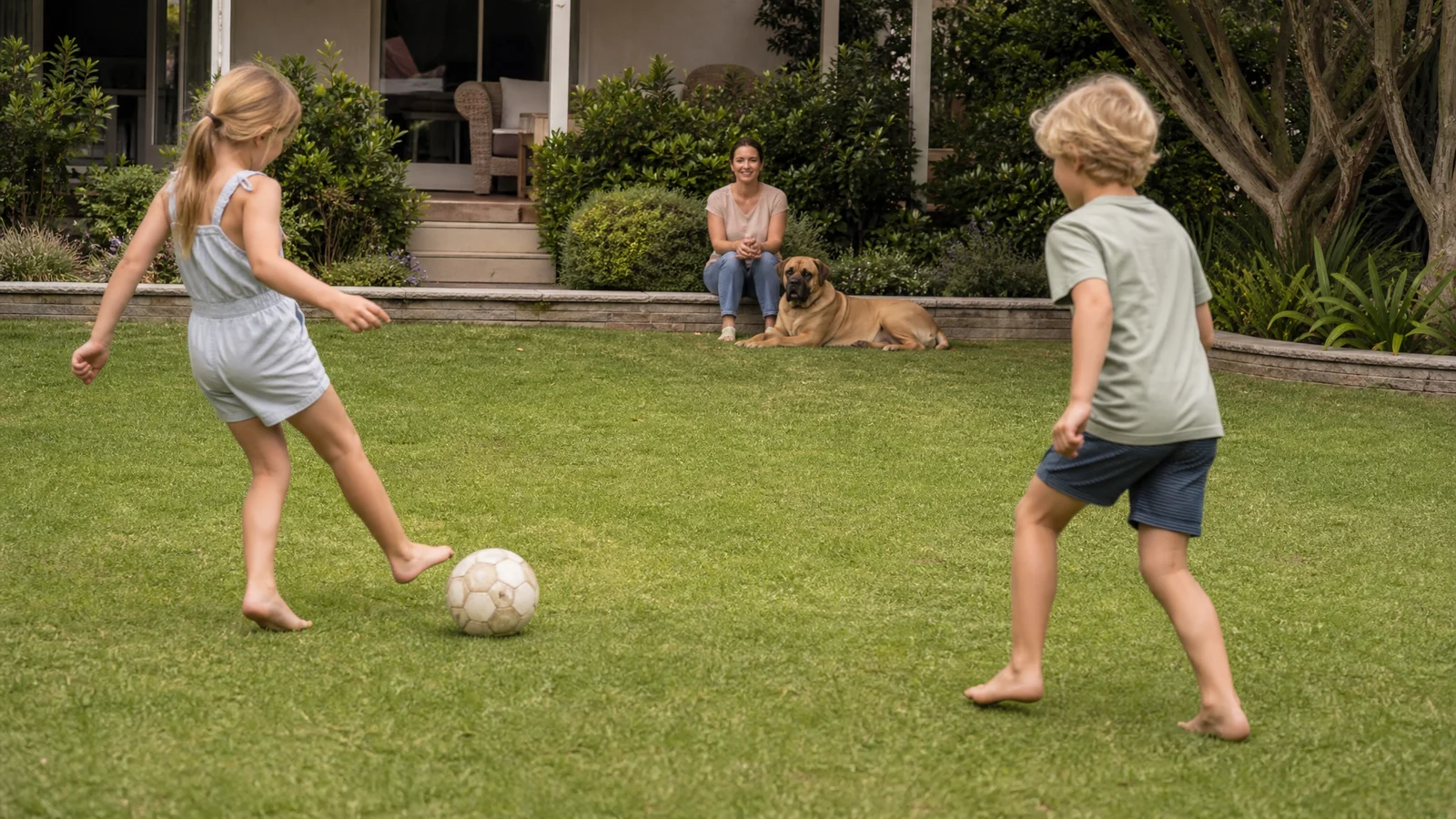 BehaviorIs a Boerboel a Good Family Dog Around Kids and Other Dogs?
 HealthHow to Muzzle Train a Boerboel for Calm Vet Visits
 BehaviorDoorbell Drama: Managing a Boerboel When Visitors Arrive