
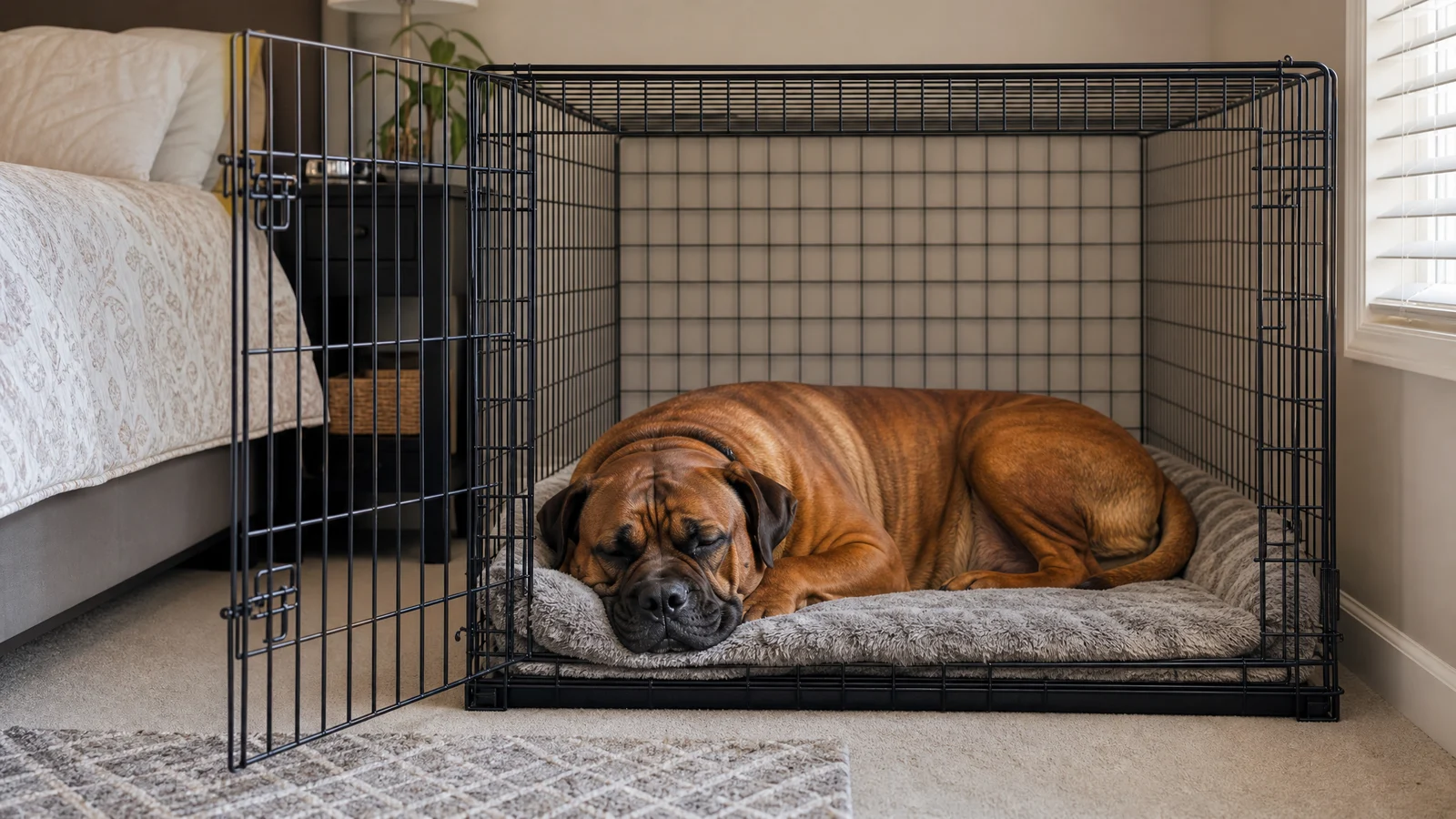
A Boerboel who naps comfortably in a crate has learned to rest in that space. The same dog may still feel distressed when people leave, because crate comfort and absence tolerance are different skills with different training plans.
The distinction prevents a common management error. Closing the door can support a dog who is already relaxed, but confinement cannot create emotional comfort during an absence.
This guide follows the reader from setup and first days through early departures, adolescence, adulthood and setbacks, while keeping both learning tracks clear. Treating them separately makes progress easier to read and prevents a quiet crate session from hiding difficulty with departures. Both deserve patient, observable practice.
Before Boerboel Crate Training Begins
Choose a crate that lets the dog stand, turn and lie in a natural position, then plan for growth rather than waiting until the puppy feels crowded. Put it in a lived-in part of the home where family activity is visible but constant traffic does not pass through the doorway. A location can feel connected without making every footstep the dog's concern.
Prepare the area before asking the dog to enter. Stable flooring, comfortable bedding suited to the individual dog and a door that stays secured open remove surprises. Keep water, temperature and the dog's current needs in mind, and use regular veterinary visits to discuss any change in comfort or mobility.
The household also needs shared rules. Nobody reaches in to pull the puppy out, uses the crate during anger or crowds the entrance. Children leave a resting dog alone. Adults decide who handles meals, potty trips and releases so the puppy receives one predictable pattern. That predictability matters for a breed closely attached to family activity.
Write the two goals separately before training begins. The table prevents progress on one track from being mistaken for progress on the other.
| Skill | What you practice | What progress looks like |
|---|---|---|
| Crate comfort | Entering, resting and brief door movement while people remain nearby | Loose posture, voluntary returns and calm releases |
| Absence tolerance | Departure cues and very short separations below distress | Settling while a person is briefly out of sight |
| Household management | Potty timing, rest and safe supervision | Needs are met before confinement begins |
| Adult maintenance | Occasional easy practice in changing routines | The space remains optional and familiar |
First Days of Boerboel Crate Training
Begin with an open door and no pressure to cross it. Place a reward near the entrance, then just inside, and mark any voluntary investigation. Reward-based training increases behavior by following it with something the dog values, which makes curiosity the engine of this stage.
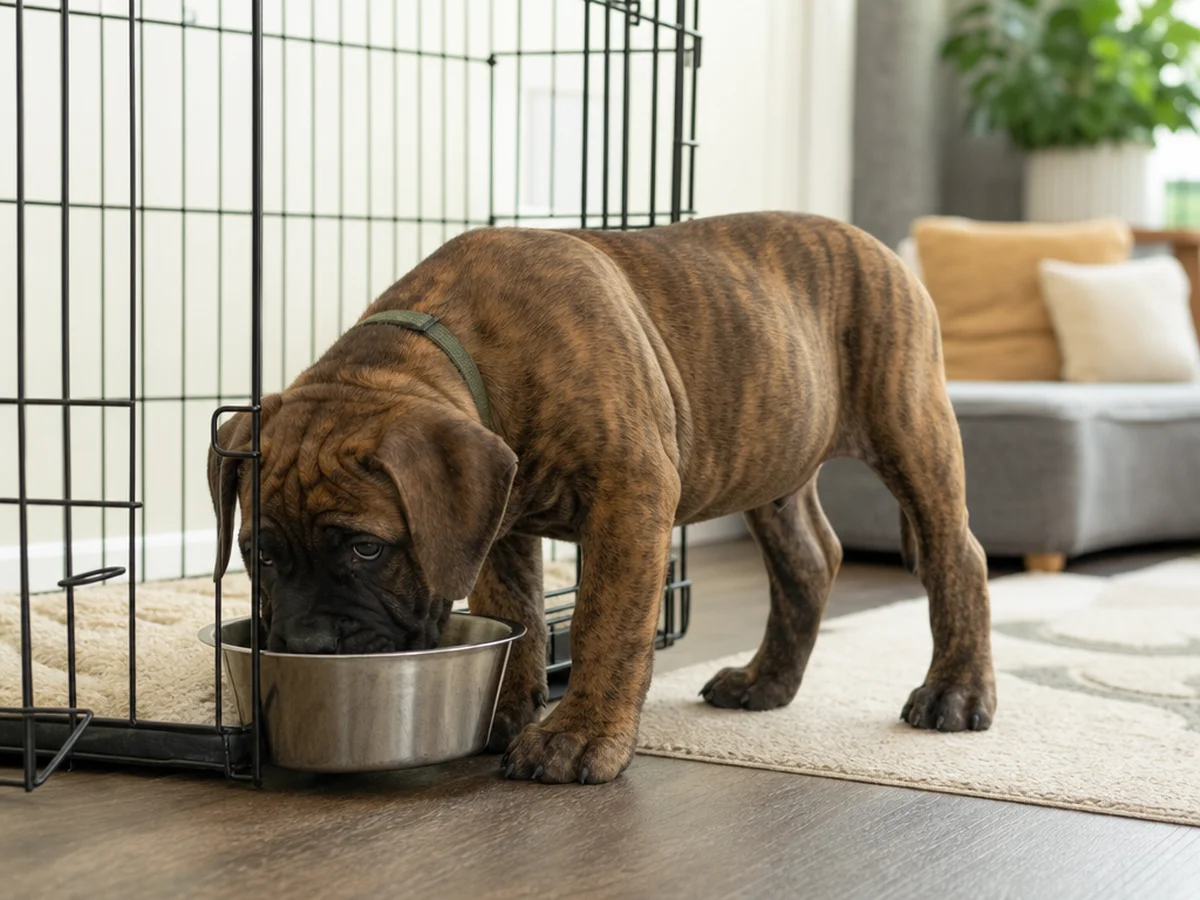
Feed near the entrance first if the puppy hesitates. Move the bowl inward only while posture stays loose and approach remains willing. A dog who stretches forward while keeping the back feet outside needs an easier repetition. Willing approach, not bowl position, is the criterion for progress.
Once the puppy walks in comfortably, reward a pause, a turn and a relaxed down. Add a cue only after entry is already predictable. The cue should name a behavior the dog understands, not become a command that pushes an uncertain puppy into the space.
Door movement starts as its own exercise. Touch the door, reward, then move it slightly and open it again. Build toward a brief closure while you stay beside the crate. Sit, read or work nearby so closed-door practice occurs inside an otherwise ordinary moment. Open during calm, and keep the release quiet so bursting out does not become the most exciting part.
Link crate sessions to the puppy's needs. A potty trip, a little movement and a calm period make rest more likely. The potty training plan helps place those trips before confinement rather than asking a young puppy to wait through an urgent need.
Separate Absence Practice From Crate Training
Practice absence outside the crate plan at first. Let the puppy settle in a safe area while you take a step away, return and reward calm. Increase only while the dog remains comfortable. The point is not to test a limit but to build many experiences in which departure predicts an easy return.
Notice the cues before leaving, such as keys, shoes or movement toward a door. Practice those actions without leaving, then sit down. When they no longer predict a long separation, concern can ease before the absence starts.
The separation guidance says practice should stop well before the dog shows concern, so each return happens while the animal remains comfortable. If pacing, vocalizing or frantic movement begins, the next repetition was too difficult. Return to a duration and setup where calm is possible.
A crate is not automatically the right location for this work. Some dogs rest better behind a gate or in a safe room. Crate guidance specifically warns against using confinement to manage separation anxiety without professional help. Choose the space where the dog feels safest.
We recommend observing rather than guessing. A simple camera can show whether the dog rests, watches the exit or escalates after you leave. The recording is not an invitation to stretch the absence. It helps identify the last comfortable point for the next careful session. Review body position and movement, not only sound, because a quiet dog may still remain tense.
Boerboel Crate Training Through Adolescence
Adolescence can make an established routine look less reliable. The dog is larger, notices more activity and may arrive at rest with more energy. Recheck physical fit first, then return to easy open-door entries and short calm closures instead of assuming the dog is refusing a known skill. Growth changes comfort and leverage, so yesterday's setup may no longer suit today's body.
A growing Boerboel also changes how the room works. Move the crate if a busy doorway, window or household traffic now keeps the dog watchful. The best location allows family proximity without giving the dog a front-row seat to every sound and movement outside.
Keep enrichment and exercise balanced before rest, but do not try to exhaust the dog into compliance. The goal is a nervous system ready to settle, not a body pushed until it has no option. Familiar scent searches, gentle movement and a practiced mat cue can form a quiet bridge into the crate. The trainability FAQ explains why clear, rewarded steps matter as the easygoing puppy phase changes.
Continue absence practice on its own track. A teenager who sleeps in the crate while you work nearby has demonstrated crate comfort. Only calm practice with you out of sight demonstrates growing tolerance of absence, and those repetitions should still remain below distress.
Adult Boerboel Crate Comfort and Alone Time
For an adult, the crate can remain a familiar resting option even when it is rarely closed. Leave access open during ordinary family time and occasionally reward voluntary rest. Easy maintenance prevents the space from predicting only travel, visitors or an unusual disruption.
Adult independence should also remain flexible. Practice benign departure cues and manageable absences when life is stable, not only when a long absence becomes unavoidable. A dog who can settle behind a gate, in a room and in an open crate has more useful options than a dog tied to one arrangement. Flexibility also makes travel, home repairs and schedule changes less dependent on a single piece of equipment.
Changes in work hours, housing or family routine can affect alone time. Reduce difficulty when circumstances shift and rebuild from a comfortable point. The dog's previous skill is helpful history, but it does not guarantee that a new environment feels the same.
Do not use a closed crate to conceal signs of distress. If the dog cannot settle, scratches frantically, soils despite appropriate potty access or tries to escape, stop increasing absences. Start with your veterinarian, then involve a qualified reward-based behavior professional for an individual plan.
Setbacks in Crate Training
A setback is a reason to reassess the stage, not to demand more repetition. Look first at fit, temperature, noise, exercise, potty needs and changes in the household. Then separate what happened during ordinary crate rest from what happened only after people left.
Use the pattern to choose the next response. Each branch identifies a different first adjustment:
- If the dog avoids entering while people remain nearby, rebuild crate comfort with an open door and voluntary rewards.
- If the dog rests beside you but becomes distressed after departure, shorten absence practice and use the safest comfortable space.
- If a once-comfortable dog suddenly resists lying down or moving, arrange a veterinary check before continuing.
- If the crate has become linked to a noisy event or frightening confinement, stop closing it and rebuild neutral experiences gradually.
- If progress stalls despite easier repetitions, ask a qualified professional to observe the setup and create an individual plan.
Keep daily records brief and factual. Note the space, what happened before the session, whether people stayed or left and the first sign of discomfort. The distinction directs training toward the actual problem instead of treating every setback as disobedience. Patterns collected across several easy sessions are more useful than one stressful test.
Preserve easy successes alongside harder training. An open-door nap, a short rest while family moves through the room and a calm release all keep the crate's meaning broad. The dog should encounter the space on ordinary days, not only when the household needs containment.
A Crate Skill That Lasts
Durable crate training gives a Boerboel a comfortable place to rest, travel or wait through household activity. Durable absence training gives the dog confidence that manageable departures end safely. The skills can support each other, but neither one proves the other is complete.
Keep the adult goal broad: calm rest in a suitable space, voluntary entry and the ability to cope with carefully built absences. Reward the easy repetitions long after the puppy stage, adjust when life changes and seek help before distress becomes a rehearsal. A crate should remain a useful option, never the measure of whether anxiety has disappeared.
The lasting result is flexibility. A dog who can rest near people, behind a gate or in a familiar crate has several safe answers to change. Pair that flexibility with gradual absence work, and the household can manage practical needs without asking confinement to solve an emotional problem.
 Exercise and jobsBoerboel Exercise Needs and Brain Games for a Working Breed
 Training basicsHow to Potty Train a Boerboel Puppy
 Training basicsLeash Training a Boerboel: Pulling, Lunging and Loose-Leash Walking