
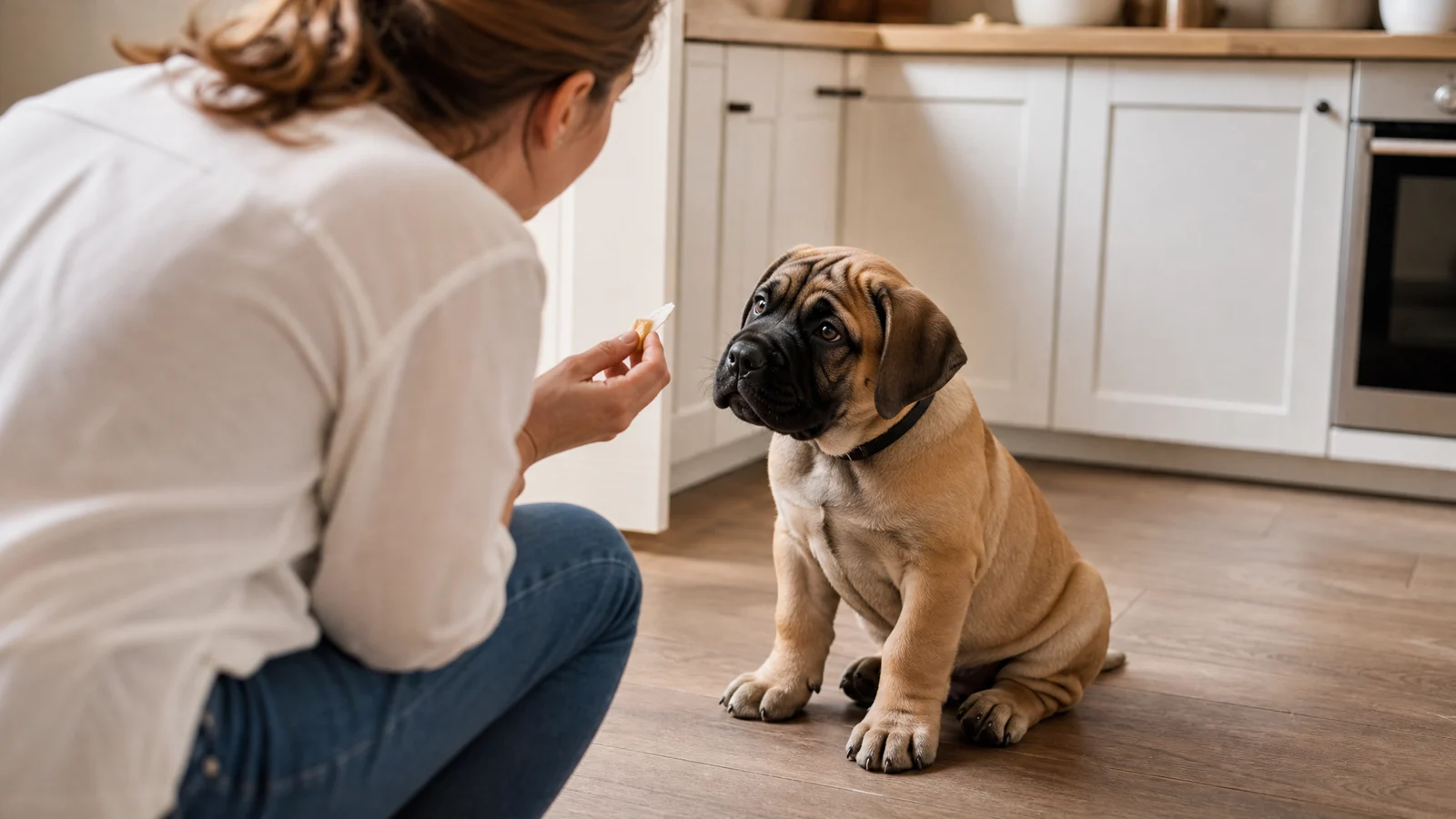
A soft, agreeable puppy trots after you from room to room, takes every cue for a bit of chicken, and seems to have been born knowing what you want. Months later a heavy adolescent leans into the leash at the end of the driveway and looks straight past a cue they once knew well.
What is going on is timing. The AKC notes that Boerboel puppies are easygoing and pliant, and that consistent training must be well underway before those qualities fade. The breed pairs strong protective instincts with a willingness to please, so the cooperation is real, but it has to be built while it is still easy to build.
Below, you'll find a reward-based walk-through from preparing the house to proofing cues away from home, including name response, gentle handling, sit, down, wait and the signs that tell you when to call in help.
Preparing the House for Boerboel Training
Before the first lesson, the work is mostly arrangement. Boerboel training goes better when the house already behaves the way you want the adult dog to live in it, because a habit allowed in a small puppy has to be unlearned later in a very large body.
We have trained this breed for many years, and we can tell you that settling the rules before the puppy arrives spares everyone a round of confusing changes later, since the dog never has to relearn what was once allowed.
House Rules Everyone Shares
Sit down with everyone in the home and answer the questions a Boerboel will otherwise answer on their own: whether the couch is open, whether jumping up is ever acceptable, who feeds, who clips on the leash, and which word means what. A cue only works if the whole household says it the same way, and an intelligent dog notices very quickly which family member lets things slide.
Then give each person a part. One handles meals and the sit before them, another the evening settle, and children, always supervised, practice only the gentlest cues. The breed is loving with children and family, and clear roles keep that affection from turning into a puppy who learns that some people are easier to push than others.
Gear and a Training Spot
The equipment list is short, and it should suit the adult dog you will have rather than the puppy in front of you:
- A well-fitted collar or harness and a sturdy leash of comfortable length that you can hold without strain.
- A treat pouch filled with soft, small treats that can be swallowed quickly, so the lesson keeps its rhythm.
- A mat or bed that stays in the same corner and becomes the place where settling happens.
- Baby gates that let you separate the puppy from visitors, stairs and their own mistakes.
- A clicker, if you like one, though a spoken marker such as yes does the same job.
If you choose the clicker, Battersea's clicker advice is to give the sound meaning first: click, then deliver a treat within 3 seconds, and do it many times somewhere calm. A spoken marker deserves the same patient charging, so the puppy learns that the word always predicts food.
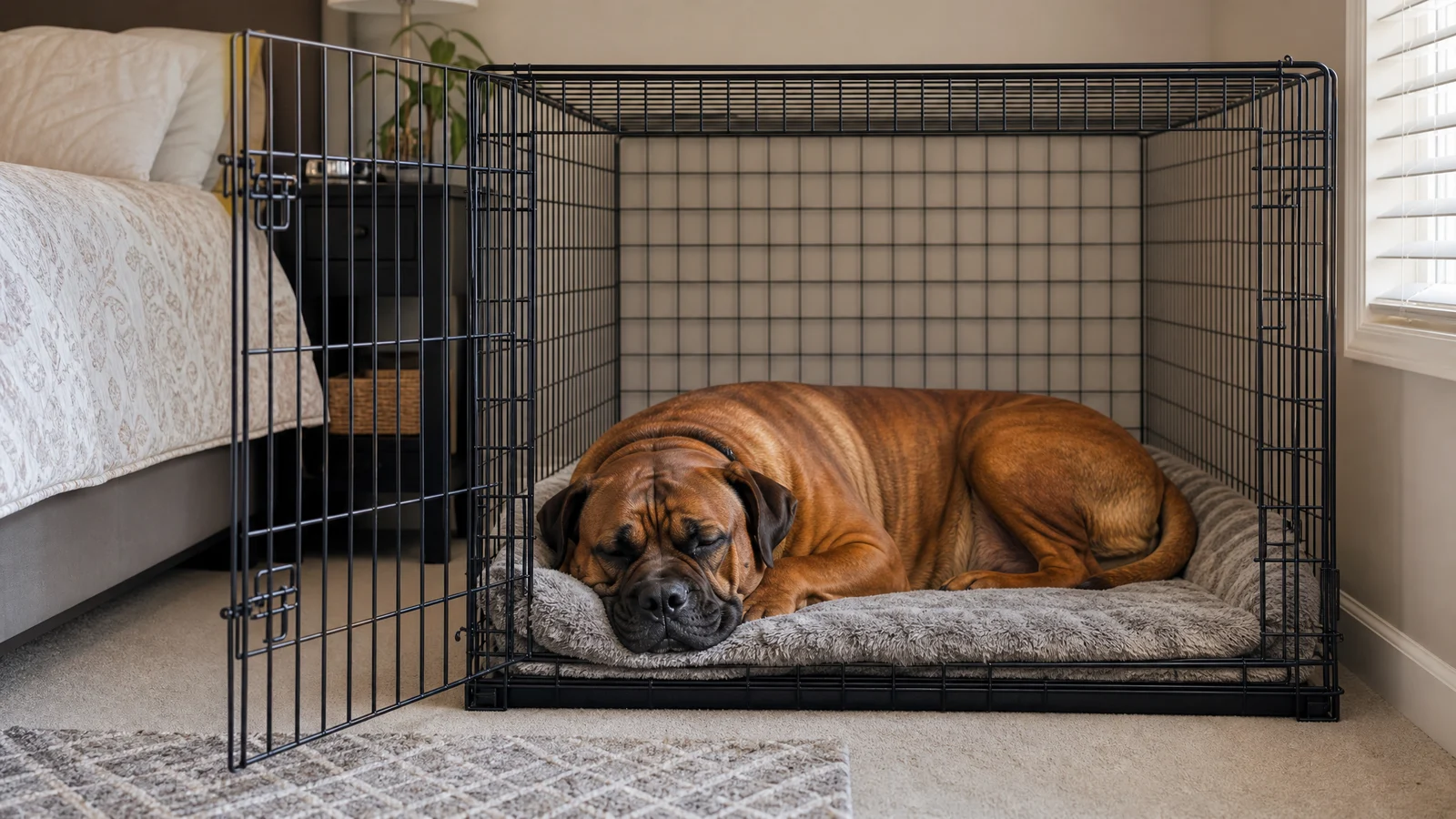
Pick the training spot with equal care. A quiet room with a closed door, no television and no other pets teaches the puppy what a lesson feels like, and the mat gives them somewhere to rest between rounds. A crate or pen belongs in the plan too, and our guide to crate training a Boerboel shows how to make it a place they choose.
Teaching a Boerboel Puppy Their Name and Handling
The first week is small on purpose. You are teaching two ideas, that the sound of their name is good news and that being touched by people is calm and pays well, and neither needs more than a pocket of treats and a few quiet minutes at a time.
Name Response and Treat Delivery
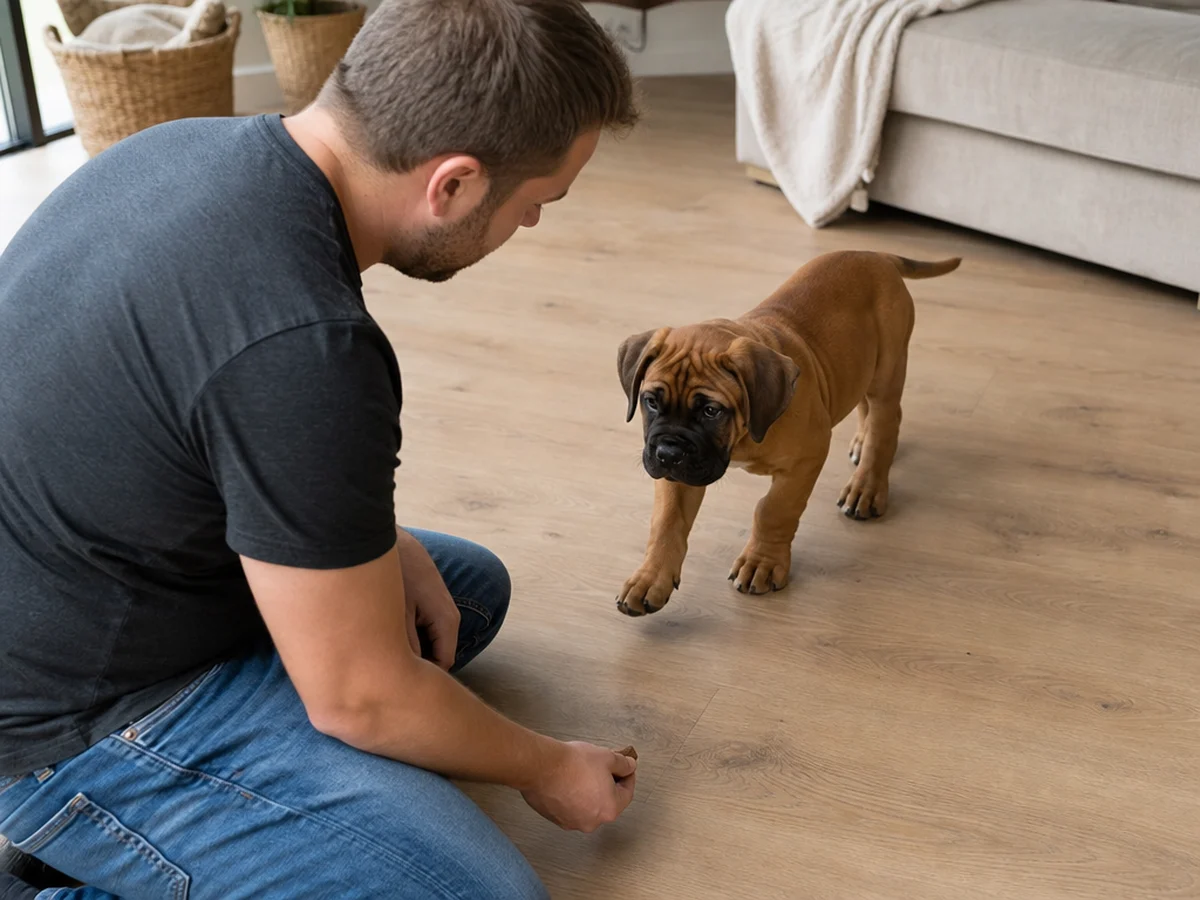
Start in the quiet spot. Say the name once in a bright voice, and the instant the puppy turns toward you, mark and deliver a treat. Repeat it several times, stop while they are still keen, and return to it later in the day rather than stretching the first session.
How the treat arrives matters more than most people expect. Bring it to the puppy's mouth low and close to your leg instead of tossing it, because a low hand teaches them to stay near you, and that same position later becomes the spot for walking beside you. Over the following days, call the name from farther across the room and from behind furniture, and the puppy will be learning the first shape of coming when called without either of you noticing.
Calm Handling of Paws, Mouth and Collar
Handling is taught the same way, in tiny pieces. Touch a paw, mark, treat. Then rest your hand there a moment longer, then lift it slightly, and stop the instant the puppy tenses, because the goal is a dog who offers a foot rather than one who puts up with it.
Do the mouth and collar the same way. Lift a lip and rest a finger along the gum, slide a hand under the collar and hold it gently, and reward calm after each small step. A Boerboel is a big dog to examine, and the breed standard even expects dogs in competition to be trained to allow examination, so this early patience pays off at every regular veterinary visit for the rest of their life.
What Does Daily Obedience Training Look Like?
It looks like very little, repeated often. Structured, long-term obedience started young is what the breed calls for, and in practice that means brief moments woven through an ordinary day instead of one heroic lesson on the weekend. For the stages that follow as your puppy grows, our month-by-month puppy training timeline gives the longer view.
How Long Sessions Should Run
Aim for sessions of just a few minutes, and stop while the puppy is still eager, because a Boerboel who tires of the game mostly learns that games drag on. Many short rounds spread across the day teach more than a single long lesson, and the breed's trainability rating of 4 of 5 shows the willingness is there to build on.
The RSPCA explains that reward-based training works because the dog receives something they truly enjoy, such as food, a toy or praise, and so repeats the behavior that earned it. That is the engine of this plan, and it suits a breed that wants to cooperate.
There is a welfare reason too. In a 2020 study of 92 companion dogs, those whose schools relied on rewards showed less panting, fewer tense postures and smaller cortisol rises after training. A relaxed learner takes in more, and a powerful dog who enjoys lessons is far easier to live with.
A Rhythm That Builds Over Time
A workable day has a sit before the morning meal, a short session at midday on whichever cue is newest, and a settle on the mat while the family has dinner. Life rewards count as well: the door opens, the leash clips on or the toy appears only after the puppy offers something polite. None of these moments looks like training, yet together they add up to countless small lessons every week.
Common advice says to let a puppy be a puppy and begin formal work later. With this breed we would not wait, because the easygoing phase is the cheapest time to teach and it does not last. Each cue taught now is one you will not have to negotiate with a much heavier dog who has stronger opinions.
Sit, Down and Wait Training Step by Step
Teach these cues in order, because each one makes the next easier. Sit is the simplest shape, down grows out of sit, and wait is the habit of holding either one until you say otherwise. All three are best started while the puppy is still pliant and willing to follow a treat anywhere.
Sit
Hold a treat just above the puppy's nose and move it slowly back over the head. As the nose tips up, the bottom lowers, and the moment it touches the floor you mark and reward. Repeat until the puppy folds into the sit almost before your hand moves.
Once the movement is dependable, shrink the lure until it becomes an empty hand signal, and only then add the word just before you move your hand. Saying the word too early simply teaches the puppy to tune it out, which is a lesson they will learn happily.
Down
From a sit, bring a treat straight down between the front paws and then slightly forward along the floor. If the puppy pops up instead of folding, slow your hand and reward any lowering of the chest, then ask for a little more next time. A relaxed down is the foundation for the settle that every large protective dog needs, so it repays the patience.
Add the word once the puppy folds smoothly, and reward generously the first times it happens somewhere new. Let the treat arrive between the paws so they stay down to collect it.
Wait
Wait is where the dog learns that staying put earns the reward. Build it in small steps, and make each one easy before raising the next:
- Ask for a sit, show a flat palm, count a slow breath, then mark and treat.
- Lengthen the pause by a tiny amount each round, and give the treat while the puppy is still in position.
- Step back, return, and reward, then add distance only after the duration is steady.
- Use wait at doorways, at the food bowl and before leaving the car, ending each with a release word.
The release word matters as much as the wait itself. A dog who knows exactly when the job is over holds the position gladly, and a doorway wait becomes the habit that keeps a very strong dog from charging through every gate and front door.
Is Your Boerboel Ready for Distractions?
The usual reason a cue falls apart outside is that it was never solid inside. Before you raise the difficulty, check the cue honestly against a few simple signs, and remember that dogs vary, so your own puppy sets the pace rather than a calendar.
- The puppy sits, downs and waits at the first ask in the living room with no treat visible in your hand.
- The same cues hold in the yard, with birds, cars or neighbors in the background.
- They take a treat gently and look back to you afterward, rather than staring at whatever caught their eye.
- They recover quickly after a small surprise, such as a dropped pan, and return to the task.
- The name still turns their head every time, even in the middle of play.
If one of these is shaky, step back instead of pushing on. Return to the quieter place, use better treats, shorten the sessions and rebuild until the response is smooth again. A cue rushed outdoors and failed teaches the puppy that ignoring you works, and with a dog of this size that lesson is expensive.
Readiness also shifts with growth. As the puppy matures, confidence rises and cues that were rock solid may wobble, so repeat the checks every few weeks and treat each wobble as information about what to practice rather than as defiance.
Proofing Obedience Cues Away From Home
Proofing means practicing a known cue in places and situations that get harder in small steps, until it holds when the dog's attention is elsewhere. The Boerboel is a protective, territorial breed, so each setting below deserves its own careful ladder. Keep the leash on, keep the rewards high, and alter a single element per step.
Visitors at the Door
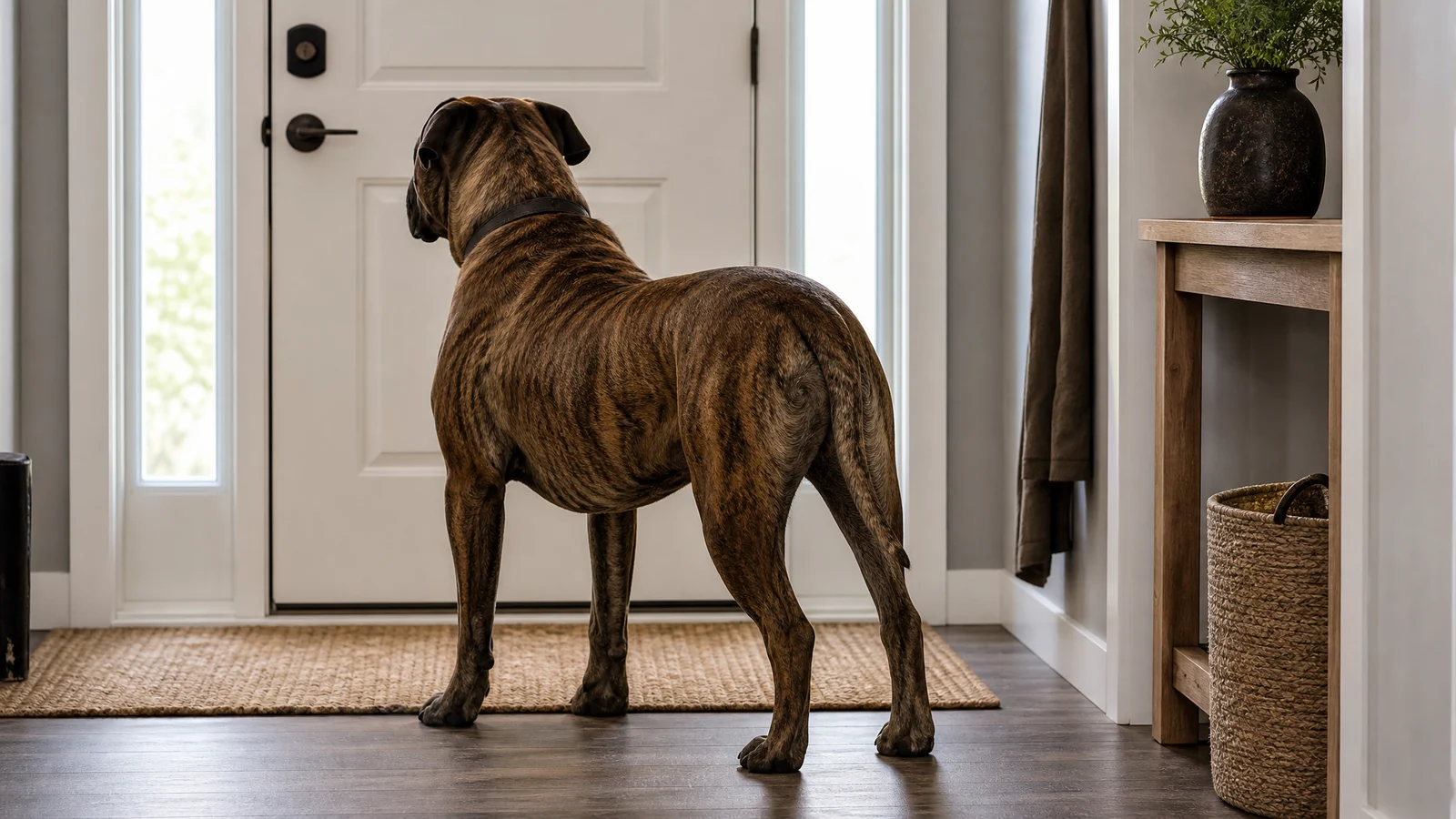
Begin with a helper you trust who knocks softly while the puppy waits on the mat behind a gate. Reward calm, then let the helper come in and sit, then add a handshake and conversation. Many Boerboels stay reserved and aloof with strangers even when well raised, so plan proper introductions on the dog's terms and never force a greeting.
The aim is a routine the dog can predict: the doorbell rings, they go to the mat, you greet the guest, and they are released only when you decide. This gives the protective instinct a calm, rewarded outlet by asking the dog for nothing more than settling.
Other Dogs
Boerboels do not take kindly to challenges from other dogs, and dog parks are not a good fit for the breed. Practice instead at a comfortable distance on leash, where the puppy can see another dog across a wide space and still take a treat. Mark and reward every glance back to you, and close the distance only when they stay relaxed.
Because of that protective instinct, a Boerboel should never be allowed off leash in public. Treat it as a permanent rule of management, and keep encounters brief, planned and calm.
Noise and Busy Places
Sound is easiest to introduce at home. Play everyday recordings such as traffic, a doorbell or a vacuum at low volume while the puppy eats or works for treats, and raise the volume gradually over many days. Then take sit, down and wait to a quiet street, a bench outside a shop and eventually a busier sidewalk, always rewarding the dog for recovering after a startle.
End every outing on a success, even a small one. If the dog stiffens, stares or cannot take a treat, you have moved too fast, so increase the distance and try again at an easier level.
Training Progress Signs and When to Get Help
Progress with a Boerboel is easier to see in how the dog recovers than in how perfectly they obey. Watch for the signs below over weeks rather than days, and keep up regular veterinary visits so that anything physical is caught early.
- Responses come faster, often before you finish the cue, and the puppy looks to you first when something new appears.
- The dog settles more quickly after excitement, a visitor or a walk, and rests on the mat without being asked twice.
- Sit, down and wait hold up in the yard, on the street and at the door, not only in the living room.
- Handling at the vet or groomer is calm, and the dog offers a paw or stands for a check.
Some changes should not be waited out. Start with your veterinarian to rule out pain or illness, then find a qualified trainer or behavior professional who relies on reward-based methods.
Watch for a dog who stiffens, stares or goes still when a person or another dog approaches. Cues that were reliable may suddenly be ignored, even in the quiet house with good treats. Guarding of food, toys or spaces can grow more intense, and a dog who growls at family members needs attention right away. Lunging or reactivity on leash that gets worse despite patient, distance-based practice is another sign to act on.
None of these means the dog is a lost cause, and early help is far easier than late rescue. The easygoing puppy will not stay easygoing by luck, and the steady, rewarded training you start now is what keeps them manageable as an adult.
 BehaviorAre Boerboels Aggressive? Guarding Instinct at Home
 Training basicsCrate Training a Boerboel and Preventing Separation Anxiety
 Exercise and jobsBoerboel Exercise Needs and Brain Games for a Working Breed