
Are Boerboels easy to train? They can learn readily, but willing to learn does not mean effortless to manage. The breed standard describes an intelligent dog with a willingness to please, while breed guidance also calls for structured, long-term obedience that begins young. The distinction matters because a rapidly learned cue can still fail when the setting changes. Daily behavior reveals more about trainability than a single polished lesson ever can.
The useful answer depends on temperament, reinforcement and the situations in which a cue must work. This article covers the easygoing puppy phase, household consistency, rewards, strangers, other dogs, mental work, progress and the point at which professional support makes sense.
What Shapes Boerboel Trainability
Trainability is the ease with which learning becomes reliable behavior. Intelligence can speed up the first part, yet repetition, motivation and context decide whether the behavior lasts. With a powerful breed, reliability in ordinary life matters more than how quickly a trick appears in the kitchen. Measure learning by safe choices around doors, visitors and walks, not by novelty alone.
Are Boerboels Intelligent
Yes. The official breed standard pairs intelligence with a willingness to please. That combination gives a handler useful raw material, because the dog can notice patterns and has a reason to cooperate with people. Short sessions expose those strengths without asking the dog to repeat a solved exercise until interest fades.
Intelligence also notices inconsistency. If pulling sometimes reaches a smell or jumping sometimes earns attention, the dog learns those patterns too. We recommend making the wanted choice easy to recognize and rewarding it promptly, so cleverness works with the household rather than around it.
Does Willingness Mean Instant Obedience
No. Willingness describes a tendency, not a finished skill. A cue has to be taught, practiced in several places and rewarded often enough to compete with the environment. A dog who responds indoors may honestly not understand that the same word applies near a visitor or on a busy sidewalk. Generalization teaches that familiar response across carefully changed locations and distractions.
Separate knowing from doing under pressure. If the dog succeeds in a quiet room and fails outside, lower the distraction rather than repeating the cue. That change preserves the meaning of the word and gives the dog another chance to earn reinforcement.
Why Does the Puppy Phase Matter
Boerboel puppies are described as easygoing and pliant. Breed guidance warns that an inexperienced person may assume those qualities will remain, when consistent training needs to be underway before they fade. The cooperative beginning is therefore a teaching opportunity, not proof that no plan is needed. A routine learned before the dog is physically imposing is easier for every family member to practice safely.
Use that period for name response, handling, loose-leash steps, door waits and calm settling. The complete training guide places those skills in a practical sequence. Early habits give the maturing dog familiar answers when confidence and distractions make choices harder.
How Does Temperament Affect Home Training?
Boerboel temperament combines family attachment, confidence, reserve and protective awareness. Home training works best when it neither suppresses those traits nor leaves the dog to direct them. Clear routines show the dog which calm behavior earns access to family life.
What Kind of Consistency Works
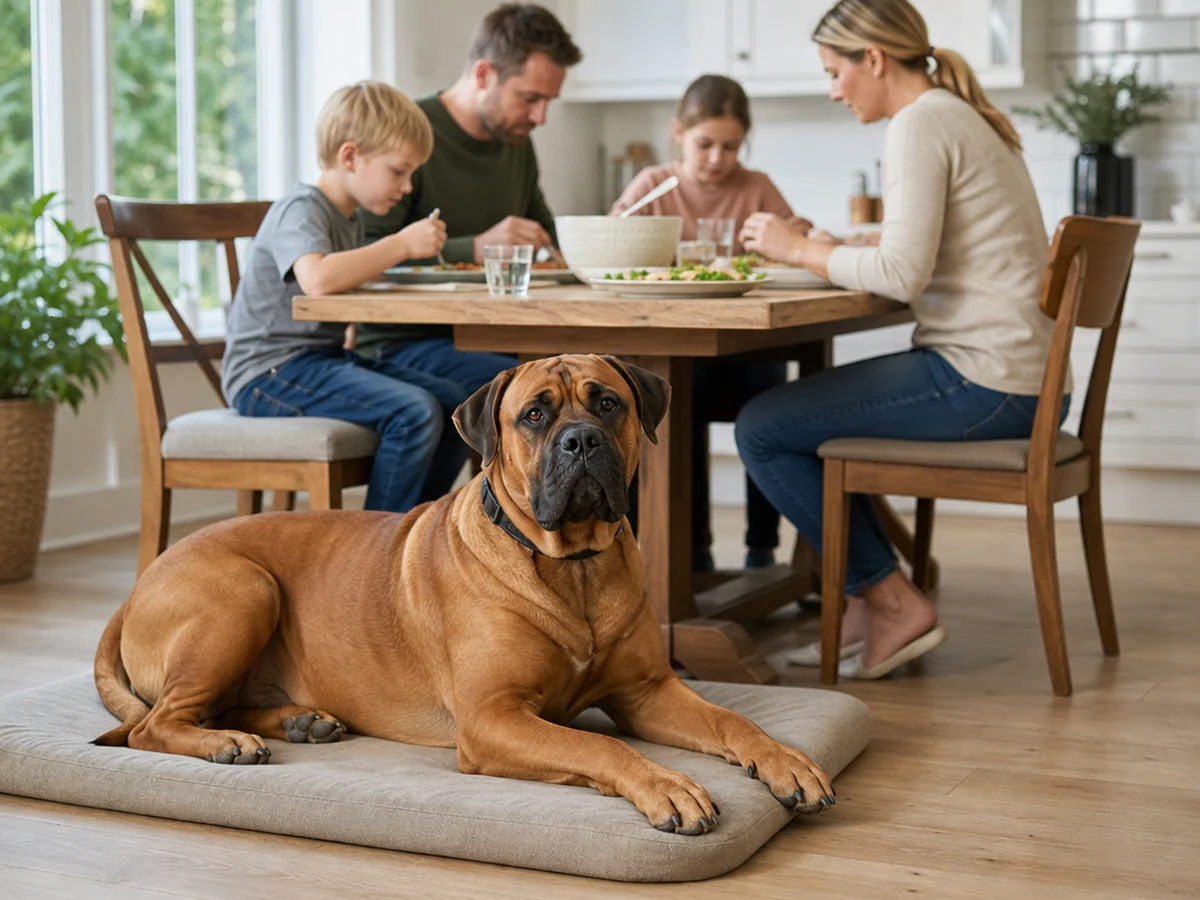
Consistency means the cue, consequence and household rule stay predictable. Everyone uses the same word for the same behavior, and everyone rewards the same polite choices. The dog should not have to discover which person allows a rush through the door or accepts paws on a guest.
Write down a few rules that affect safety, then rehearse them in easy moments. A sit before the leash clips on and a mat settle during dinner create many low-pressure repetitions. Those repetitions are more valuable than a long lesson held only when behavior has already gone wrong. Predictability lowers conflict because the dog can see how to earn the next ordinary privilege.
Which Rewards Fit This Temperament
Use something the individual dog wants at that moment. Food works well for precise repetitions, toys can support play and access to a sniff can reward a loose leash. Reward-based methods teach the dog what to do while preserving willingness to participate.
Reward placement adds information. Deliver food on the mat for settling, close to your leg for walking position and where the dog is standing for a calm wait. The location turns a general payment into a clear explanation of which choice worked. Vary the reward over time while keeping the information precise, so praise, play and access can support food.
Can the Whole Family Participate
Yes, with adult planning and supervision around children. Family members can reward name response, simple positions and calm rest, but each person should know the same cue and release word. The breed is described as loving with children and family, yet affection does not remove the need for managed interactions.
Keep family practice simple enough to succeed. Choose rules that adults can supervise and children can understand without handling the dog directly:
- Ask for four paws on the floor before greetings begin.
- Reward the dog on a mat while meals and door activity happen.
- Trade for an object instead of reaching into the dog's mouth.
- Let an adult handle the leash whenever strength or distractions could create risk.
- End a session while the dog remains relaxed and interested.
A family routine should reduce ambiguity, not turn every person into a trainer. Brief practice attached to normal events gives the dog one dependable language across the day.
What Changes Beyond Temperament at Home?
A known cue becomes harder when distance, novelty or emotion enters the picture. Outside the living room, the handler must manage the environment as carefully as the reward. Training should expand by small, observable steps rather than by dropping the dog into the hardest setting. Success at each layer shows readiness, while hesitation identifies where to simplify.
How Should Strangers Be Handled
The breed may be reserved and aloof. A separate standard says Boerboels should be discerning and accept friendly strangers after proper introductions. The goal is calm neutrality and responsiveness, not enthusiasm for contact with every new person.
Set up enough space for the dog to notice a person and then return attention to the handler. Reward that reorientation, then leave before staring or tension builds. At home, gates, leashes and a practiced mat routine make introductions predictable while allowing the dog to remain politely distant. A guest can ignore the dog at first, removing social pressure while calm behavior earns reinforcement.
What About Other Dogs
Breed material notes that Boerboels may not take kindly to challenges from other dogs. Treat dog-to-dog work as careful management rather than a test of friendliness. Parallel movement with a calm, known dog offers more control than face-to-face contact in a crowded setting.
Distance is part of training. If your dog can eat, move smoothly and answer a familiar cue, the current distance may be workable. If the body stiffens or attention locks on, move away and recover. Our leash training plan explains how to preserve that learning space. Passing calmly at a distance is a complete success, even when direct greeting is never part of the plan.
Does Mental Work Improve Training
Mental activity can complement physical exercise by giving the dog a problem with clear rules. Training, food puzzles, scent searches and new skills all ask for thought. The enrichment guidance notes that meals can become opportunities for mental stimulation through food puzzles.
Match the problem to the dog's current skill. An easy search builds persistence, while an impossible puzzle builds frustration. After mental work, look for a comfortable settle rather than demanding another task immediately. The ability to stop is part of useful enrichment. Rotate easy and slightly newer puzzles so the dog experiences fluent success and manageable thought without carrying frustration into the household.
Boerboel Temperament and Training Help
Help is not reserved for a crisis. A qualified reward-based professional can improve timing, arrange safer practice and see details the household misses. Regular veterinary visits also belong in the plan because a physical change can affect willingness, movement or behavior.
What Does Good Progress Look Like
Progress appears in easier recovery and more frequent voluntary check-ins. The dog turns toward the handler after noticing something, takes rewards gently and can settle after activity. Familiar cues begin to work in more than one room and then in carefully chosen outside settings.
Look for trends across repeated practice rather than perfection on one day. A difficult outing may reflect a crowded route or poor sleep. If the overall pattern shows faster reorientation, softer movement and steadier responses, the training is becoming useful. Keep brief notes on setting and distance so improvement remains visible.
When Is a Plateau Normal
A plateau is normal when the dog has mastered one context but not the next. Change a single feature, such as distance from a visitor, length of a wait or number of steps on a loose leash. That approach makes the missing skill visible and keeps the dog successful enough to learn.
Revisit easier repetitions during adolescence or after a routine change. The dog has not necessarily forgotten. The environment may now carry more value than the old reward. Better reinforcement and a simpler setup often restore the response without changing the cue. Rebuilding fluency is productive training because it strengthens the exact link the harder setting exposed as weak.
Which Signs Call for Professional Support
Seek help when the dog freezes, growls, lunges, guards items or spaces, cannot recover around ordinary triggers, or becomes harder to handle safely. Begin with a veterinarian if behavior changes suddenly, then work with a qualified professional who uses rewards and understands large, powerful dogs.
A Trainable Boerboel in Daily Life
The direct verdict is conditional but useful. Boerboels can be highly trainable because they are intelligent and willing to please. They are not automatically easy, and their size and temperament make casual inconsistency costly.
Patient teaching, careful management and early support turn willingness into dependable companion behavior. Keep the standard high but the next step achievable. A dog who understands how calm choices earn valued outcomes has a practical reason to keep working with the family. That partnership, repeated in ordinary moments, is the practical meaning of trainability.
 Puppy trainingYour Boerboel Puppy Month by Month: Training From 8 Weeks to 2 Years
 Exercise and jobsBoerboel Sports and Jobs: Putting the Breed's Instincts to Work
 Training basicsHow to Start Boerboel Training Before the Puppy Phase Fades